Oil price surge and Middle East conflict impact global markets
Source:Indian Express ↗
Why It Matters
Global oil price shocks and shifting US monetary policy directly impact India's macroeconomic stability by exacerbating imported inflation, putting downward pressure on the Indian Rupee, and triggering foreign portfolio investment (FPI) outflows from domestic markets. Additionally, instability in the Middle East threatens India's vital energy supplies and diaspora.
Summary
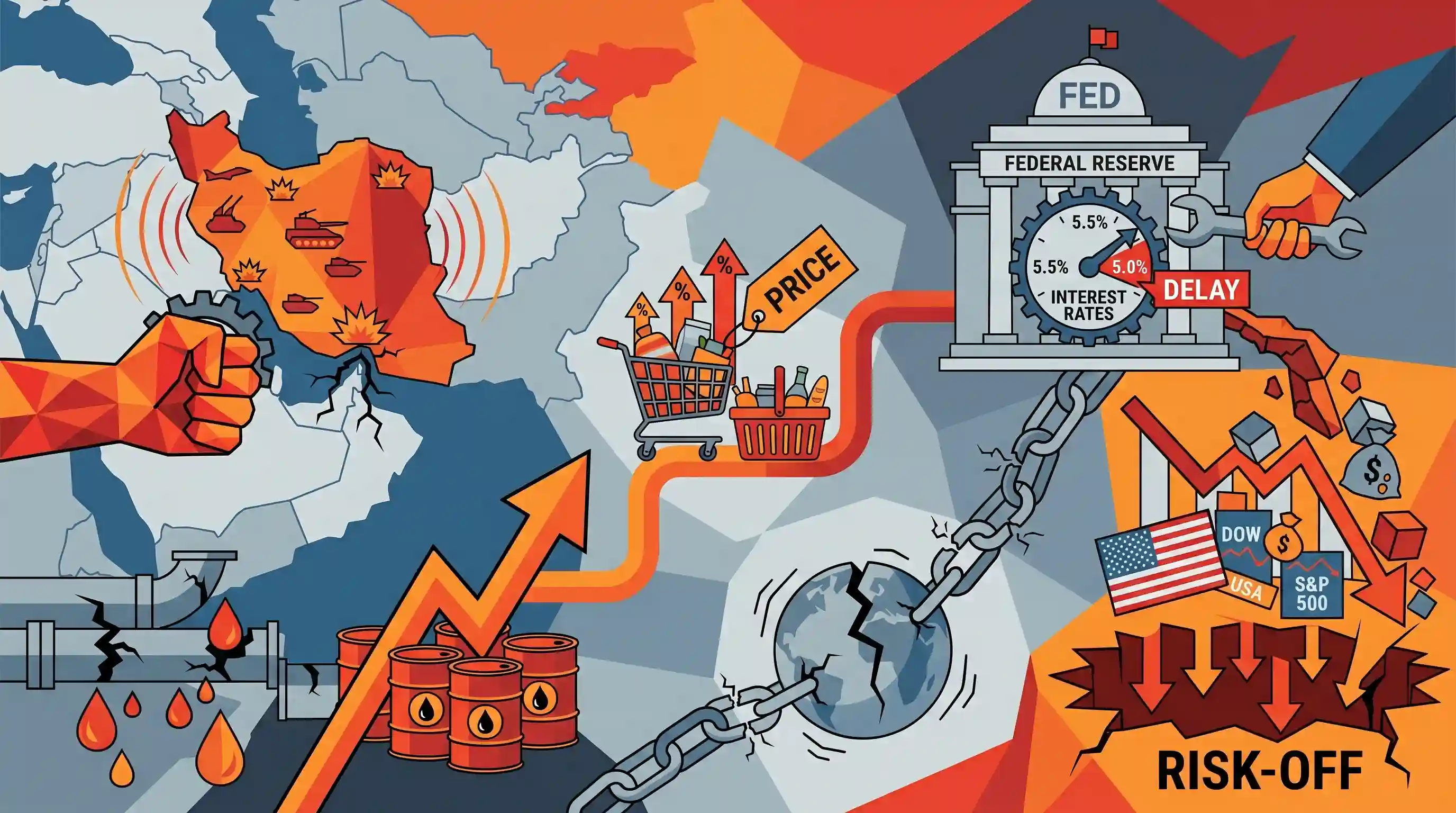
Escalating geopolitical tensions involving Iran in the Middle East have sparked fears of a wider conflict, directly threatening global oil supply chains and driving up crude oil prices. This surge in energy costs has intensified inflation concerns, leading investors to anticipate that central banks like the US Federal Reserve might delay expected interest rate cuts. Consequently, US stock markets experienced a significant tumble due to a broader risk-off sentiment and concerns over global macroeconomic stability.
Key Points
- Geopolitical tensions involving Iran in the Middle East have escalated, raising fears of supply chain disruptions in the global oil market.
- The threat to oil supplies has driven up global crude oil prices, exacerbating concerns about energy security.
- Pricier oil feeds into broader inflation, prompting fears that the US Federal Reserve may delay interest rate cuts or maintain a tight monetary policy.
- Anticipation of persistent inflation and elevated interest rates led to a sell-off in US stock markets as investors shifted to risk-off sentiment.
Important Terms
US Federal Reserve (Fed)

The central banking system of the United States. Its decisions on interest rates (Federal Funds Rate) influence global liquidity and capital flows to emerging markets like India.
UPSC context
GS-III (Economy); essential for understanding Foreign Portfolio Investment (FPI) volatility and the value of the Indian Rupee.
Cost-Push Inflation
Inflation triggered by a rise in the cost of production inputs—such as crude oil or wages—which reduces the total supply of goods and increases prices.
UPSC context
GS-III (Economy); key to explaining how external energy shocks translate into domestic price rises.
Risk-off Sentiment
An investment environment where investors sell "riskier" assets (like stocks or emerging market currencies) and move capital to "safe havens" like gold or US Treasuries during crises.
UPSC context
GS-III (Economy); helps analyze sudden capital flight (FPI outflows) from India during geopolitical uncertainty.
Strait of Hormuz
A narrow chokepoint between the Persian Gulf and the Gulf of Oman through which approximately 20% of the world's total oil consumption transits.
UPSC context
GS-I (Geography) and GS-II (International Relations); critical maritime artery for India’s energy and trade security.
Current Account Deficit (CAD)
A measurement of a country's trade where the value of imported goods, services, and transfers exceeds exports. Oil price spikes typically widen India’s CAD.
UPSC context
GS-III (Economy); a primary indicator of external sector stability and Balance of Payments (BoP) health.
Monetary Policy
A central bank's actions to manage the money supply and interest rates to achieve goals like price stability (inflation control) and sustainable economic growth.
UPSC context
GS-III (Economy); tests the relationship between RBI’s Repo Rate decisions and global central bank actions.
Prelims Trap
"A tight monetary policy by the US Federal Reserve increases Foreign Portfolio Investment (FPI) into emerging markets like India."
Higher US rates cause capital flight from emerging markets, not inflows, because the interest rate differential between the US and India narrows.
Static Concepts Connected
How do US Federal Reserve rate decisions affect Indian markets?
- Capital Flight: Higher US rates narrow the interest differential, causing FPIs to pull money out of Indian equities to seek safer, higher yields.
- Currency Depreciation: Capital outflows increase demand for the Dollar in the forex market, leading to the depreciation of the Indian Rupee.
- Imported Inflation: A weaker Rupee makes imports (especially crude oil) costlier, exacerbating domestic inflation and widening the Current Account Deficit.
What is the strategic importance of the Strait of Hormuz?
- Location: It serves as the critical maritime link connecting the Persian Gulf to the Gulf of Oman and the Arabian Sea.
- Bordering Nations: It is bounded by Iran to the north, and the Musandam Peninsula (Oman) and the UAE to the south.
- Global Trade: It handles approximately 20% of global oil trade, making global energy markets highly sensitive to any blockade or conflict here.
Cross-Topic Patterns
Twin Deficit & Currency Risks
Rising crude prices increase India's Current Account Deficit, compounding Rupee depreciation caused by simultaneous FPI outflows responding to tight US monetary policies.
Chokepoints & Petroleum Reserves
Vulnerability of the Strait of Hormuz to regional conflict directly ties into India's push for expanding Strategic Petroleum Reserves (SPRs) to buffer supply shocks.

Expect a multi-statement prelims question linking US Fed policy, FPI outflows, and Rupee depreciation via imported inflation dynamics.
Linked PYQs · 5
Linked PYQs · 5
- 2022PrelimsGS1
With reference to the Indian economy, consider the following statements: 1. If the inflation is too high, Reserve Bank of India (RBI) is likely to buy government securities. 2. If the rupee is rapidly depreciating, RBI is likely to sell dollars in the market. 3. If interest rates in the USA or European Union were to fall, that is likely to induce RBI to buy dollars. Which of the statements given above are correct?
- 2025MainsGS2
"Energy security constitutes the dominant kingpin of India's foreign policy, and is linked with India's overarching influence in Middle Eastern countries.” How would you integrate energy security with India's foreign policy trajectories in the coming years?
- 2017MainsGS2
The question of India's Energy Security constitutes the most important part of India's economic progress. Analyze India's energy policy cooperation with West Asian countries.
- 2018MainsGS3
How would the recent phenomena of protectionism and currency manipulations in world trade affect macroeconomic stability of India?
- 2019PrelimsGS1
Which of the following is issued by registered foreign portfolio investors to overseas investors who want to be part of the Indian stock market without registering themselves directly?
