Economic impact of potential US steel and aluminium tariff rollback
Source:Indian Express ↗
Why It Matters
Protectionism and its economic fallout are frequent themes in UPSC Mains (GS3 Economy and GS2 IR). Understanding who actually pays the cost of a tariff (the incidence of indirect taxes on cross-border trade) provides critical analytical depth for answering questions on de-globalization, trade wars, and the ripple effects of US economic policies on global markets.
Summary
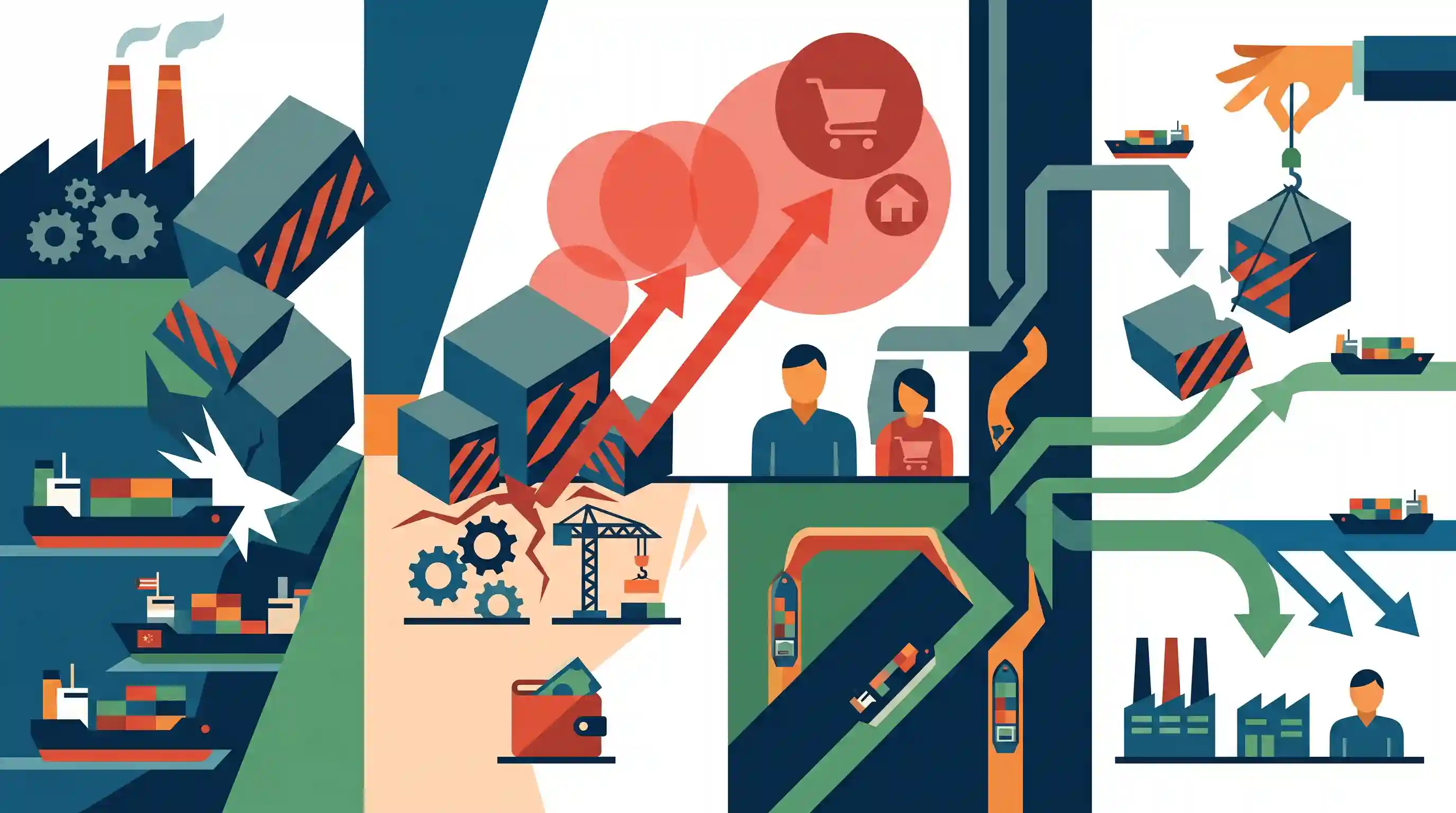
The article explains the economic realities behind the potential rollback of US tariffs on imported steel and aluminium. Imposed under the guise of national security, these tariffs were meant to protect domestic industries and penalize exporters. However, the economic burden of these tariffs falls almost entirely on domestic businesses and consumers who face higher input costs and retail prices, contributing to inflation. The potential rollback highlights the limits of protectionism and trade wars, demonstrating how unilateral tariff barriers often backfire on the importing country's own broader economy while disrupting global supply chains.
Key Points
- The US administration is reportedly considering a rollback of the Trump-era tariffs on imported steel (25%) and aluminium (10%) to help cool down decades-high domestic inflation.
- While tariffs are politically pitched as a penalty paid by exporting nations (like China), the actual economic burden (incidence of tax) is borne by domestic importers, businesses, and ultimately consumers in the form of higher prices.
- Tariffs on base metals like steel and aluminium increase input costs for downstream domestic industries, such as automotive and construction, fueling broader inflationary pressures.
- Unilateral protectionist measures often trigger retaliatory tariffs from affected trading partners, escalating into trade wars that bypass the WTO and disrupt global multilateral trade.
Important Terms
Section 232 (Trade Expansion Act of 1962)

A US law empowering the President to restrict imports if a Commerce Department investigation deems them a threat to national security. Used for steel and aluminium tariffs.
UPSC context
GS II/III; tests knowledge of unilateral trade measures, national security exceptions, and their impact on multilateral trade.
Protectionism
Economic policy of shielding domestic industries from foreign competition through tariffs, quotas, or subsidies, often to protect jobs or strategic sectors.
UPSC context
GS III (Economy); evaluates understanding of trade barriers, the infant industry argument, and the costs of deglobalization.
World Trade Organization (WTO)
The global international organization dealing with the rules of trade between nations, centered on agreements and a dispute settlement mechanism.
UPSC context
GS II; critical for topics on international institutions, dispute resolution, and the erosion of multilateralism.
Trade War
A cycle of retaliatory trade barriers where nations progressively raise tariffs on each other's exports, disrupting global trade and economic growth.
UPSC context
GS II/III; relevant for bilateral relations (India-US/US-China) and analyzing global economic volatility and slowdowns.
Global Supply Chain
The interconnected international network used to produce and deliver goods, from raw material sourcing to final consumer delivery across multiple countries.
UPSC context
GS III; tests understanding of production networks, 'China+1' strategy, and supply chain resilience against geopolitical shocks.
Cost-Push Inflation
Inflation triggered by a significant increase in the costs of production (like raw materials), forcing producers to raise prices for consumers.
UPSC context
GS III (Indian Economy); important for explaining how external tariff shocks impact domestic price levels and consumer purchasing power.
Prelims Trap
"Import tariffs are financial penalties paid by the exporting country's government to the importing nation."
Tariffs are collected from domestic importers at the border. The economic burden (incidence) falls on domestic businesses and consumers via higher prices, not the exporting government.
Static Concepts Connected
What is the Most-Favoured-Nation (MFN) principle under the WTO?
- Core Definition: It requires non-discrimination; granting a trade favor (like lower duties) to one nation means extending it to all WTO members.
- Allowed Exceptions: Nations can bypass MFN for Regional Trade Agreements (FTAs/Customs Unions) or to give preferential treatment to developing countries (GSP).
- Violation Mechanics: Unilateral tariffs on specific countries violate MFN unless justified under specific exemptions like the Article XXI national security clause.
How do tariffs on intermediate goods trigger cost-push inflation?
- Input Cost Shock: Tariffs artificially inflate the procurement price of essential raw materials (like steel and aluminium) for domestic manufacturers.
- Cascading Price Effect: Downstream industries (automotive, real estate) cannot absorb the shock, passing the increased production costs to end consumers, driving retail inflation.
Cross-Topic Patterns
GATT Article XXI and Tech Wars
The 'national security' loophole (GATT Article XXI) used for steel tariffs is now the primary legal cover for US-China semiconductor blockades and critical mineral export bans.
Tariff barriers vs. Currency devaluation
While tariffs aim to penalize imports, exporting nations often subtly devalue their currency to keep goods artificially cheap globally, neutralizing the tariff's protective intent.

Expect a prelims statement linking the incidence of import tariffs directly to domestic cost-push inflation and WTO's MFN exceptions.
Linked PYQs · 2
Linked PYQs · 2
- 2025MainsGS3
What are the challenges before the Indian economy when the world is moving away from free trade and multilateralism to protectionism and bilateralism? How can these challenges be met?
- 2018MainsGS2
What are the key areas of reform if the WTO has to survive in the present context of "Trade War', especially keeping in mind the interest of India?
