Removal of US special envoy for Iraq amidst political disputes
Source:Indian Express ↗
Why It Matters
The political stability of Iraq and the US-Iran geopolitical rivalry directly impact global energy markets. For India, maintaining energy security requires stability in West Asia. Furthermore, the potential resurgence of sectarian violence or terror networks like ISIS in Iraq holds significant implications for global and regional security frameworks.
Summary
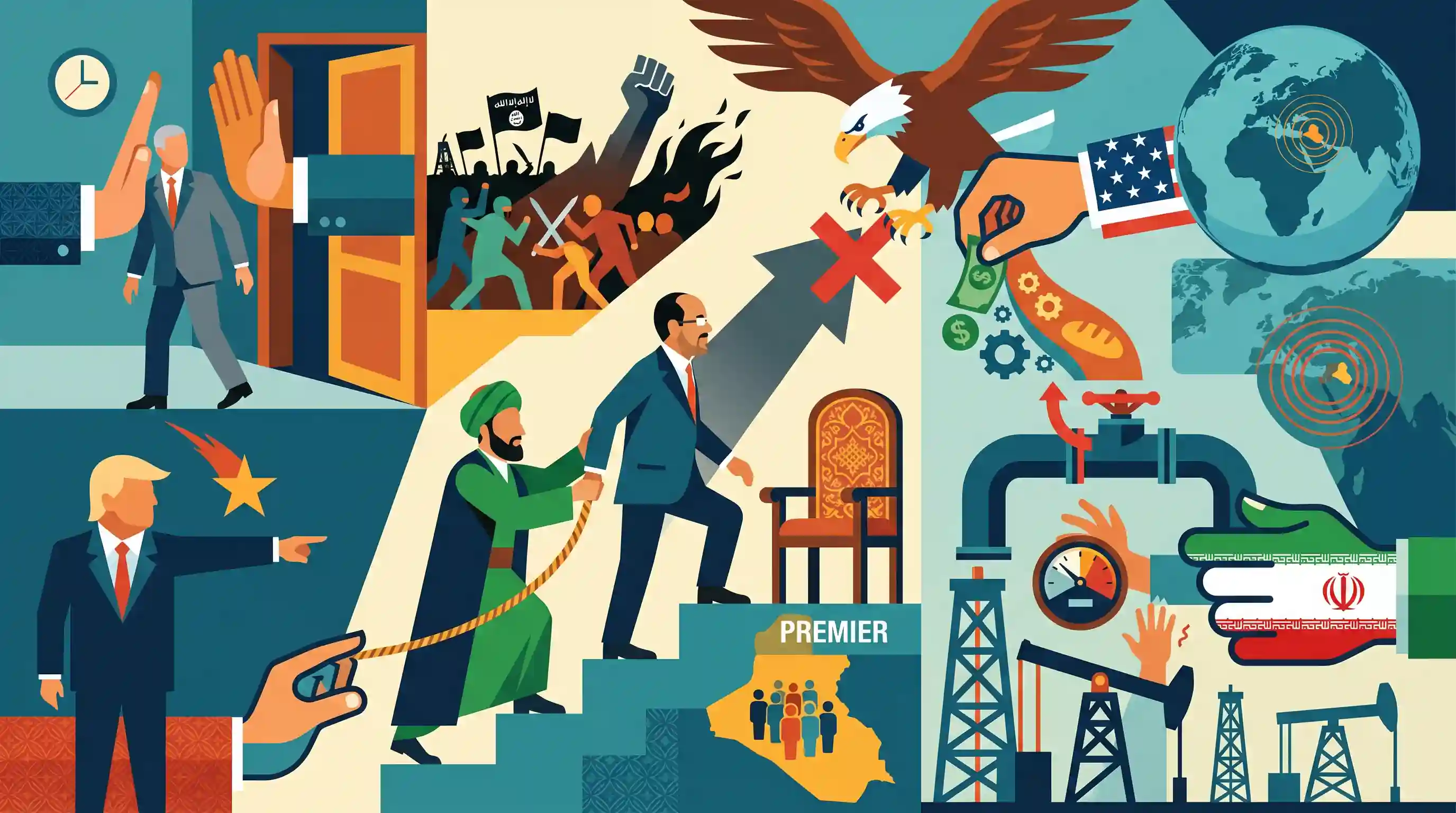
Mark Savaya, the US special envoy for Iraq recently appointed by Donald Trump, has reportedly been removed from his post. Sources indicate Savaya was ousted due to his failure to block the nomination of former Iraqi Prime Minister Nouri al-Maliki as the country's new premier. Washington strongly opposes Maliki, warning that his appointment would trigger a halt in US support to Iraq, a major global oil producer. The US blames Maliki for past policies that allegedly stoked sectarian violence and enabled the rise of ISIS, while also viewing him as too closely aligned with Iran-backed factions. The incident underscores the continuous US-Iran geopolitical rivalry for influence in Baghdad and the fragile political dynamics in the Middle East.
Key Points
- Mark Savaya, recently appointed by Donald Trump as the US special envoy for Iraq, has reportedly been removed from his post.
- Savaya was ousted allegedly for failing to prevent the nomination of Nouri al-Maliki as Iraq's new prime minister.
- Washington strongly opposes Maliki's return to power, threatening to withdraw support for Iraq if he is appointed.
- The US accuses Maliki of being aligned with Iran-backed factions and holds him responsible for policies that previously stoked sectarian strife and allowed the rise of ISIS.
- The development highlights the intense ongoing geopolitical contest between the US and Iran for influence over Baghdad and the broader Middle East.
Important Terms
ISIS (Islamic State)

A transnational jihadist organization that declared a caliphate in Iraq and Syria in 2014; though territorially defeated in 2017, it persists as a decentralized insurgency and regional security threat.
UPSC context
GS Paper III (Internal Security); tests understanding of global terrorist networks, radicalization, and their impact on regional and Indian security interests.
Special Envoy
A high-ranking diplomat appointed by the executive to represent national interests regarding a specific region or conflict, often operating with direct authority from the head of state.
UPSC context
GS Paper II (International Relations); tests knowledge of diplomatic instruments, the executive's role in foreign policy, and unconventional diplomatic appointments.
Nouri al-Maliki
Iraqi Prime Minister (2006–2014) whose tenure was marked by sectarian policies and strong ties to Iran; his potential 2026 return remains a flashpoint for US-Iraq-Iran relations.
UPSC context
GS Paper II (International Relations); tests awareness of key political figures in West Asia affecting global energy security and India's strategic interests.
Geopolitics of West Asia
The strategic competition for regional dominance involving global powers (USA, Russia) and regional actors (Iran, Saudi Arabia, Israel), centered on energy resources and religious-political influence.
UPSC context
GS Paper II (International Relations); core theme involving bilateral/regional groupings and their direct impact on India’s energy security and diaspora.
Sectarianism
Political or social friction driven by rigid adherence to a particular religious sect; in Iraq, it primarily manifests as the power struggle between Shia and Sunni factions.
UPSC context
GS Paper I (Society/History) and GS Paper II; tests understanding of identity-based conflict as a driver of global instability and migration.
Coordination Framework
A powerful coalition of predominantly Shia political parties in Iraq, closely aligned with Iran, which holds significant influence over the nomination of Iraq's Prime Minister.
UPSC context
GS Paper II (International Relations); tests nuanced knowledge of foreign domestic political alliances that impact regional stability and bilateral ties.
Prelims Trap
"The 'Muhasasa' system is an ancient Islamic constitutional mechanism."
Muhasasa is a modern post-2003 ethno-sectarian power-sharing arrangement introduced in Iraq following the US invasion, not a historical Islamic tradition.
Static Concepts Connected
Why is Iraq politically unstable and how does it affect India?
- Muhasasa system: The post-2003 sectarian power-sharing system divides roles among Shias, Sunnis, and Kurds, fueling chronic political deadlock.
- Proxy battleground: Iraq is the primary theater for US-Iran geopolitical rivalry, with Iran heavily backing powerful Shia political factions and militias.
- Energy dependency: Iraq remains one of India's top crude oil suppliers; domestic instability threatens global supply lines and India's energy security.
How did state policies contribute to the rise of ISIS in Iraq?
- Sectarian marginalization: Post-2006 Shia-dominated exclusionary policies alienated Sunni communities, creating a fertile recruitment ground for jihadist insurgency.
- Institutional collapse: De-Ba'athification dismantled the Iraqi army and civil service, creating a severe administrative and security vacuum.
- Resource capture: Terror networks exploited weak state control over oil reservoirs to fund their global terror operations.
Cross-Topic Patterns
US-Iran proxy war & Indian energy
US pressure on Iraq due to Iranian influence mirrors past CAATSA pressures. India must balance strategic US ties with its heavy reliance on Iraqi crude.
State failure & terrorism
The link between Maliki's exclusionary policies and the rise of ISIS is a classic case study of how internal political alienation breeds transnational terrorism.

Expect a Mains GS-2/GS-3 question linking US-Iran proxy dynamics in Iraq to global crude volatility and India's energy security strategy.
Linked PYQs · 4
Linked PYQs · 4
- 2025MainsGS2
"Energy security constitutes the dominant kingpin of India's foreign policy, and is linked with India's overarching influence in Middle Eastern countries.” How would you integrate energy security with India's foreign policy trajectories in the coming years?
- 2017MainsGS2
The question of India's Energy Security constitutes the most important part of India's economic progress. Analyze India's energy policy cooperation with West Asian countries.
- 2021MainsGS3
Analyse the complexity and intensity of terrorism, its causes, linkages and obnoxious nexus. Also suggest measures required to be taken to eradicate the menace of terrorism.
- 2024MainsGS2
‘Terrorism has become a significant threat to global peace and security.’ Evaluate the effectiveness of the United Nations Security Council's Counter Terrorism Committee (CTC) and its associated bodies in addressing and mitigating this threat at the international level.
