US Sanctions Waiver Expiry for Chabahar Port Operations
Source:The Hindu ↗
Why It Matters
Highlights the vulnerability of India's strategic autonomy and key connectivity infrastructure (Chabahar, INSTC, IMEC) to extraterritorial US sanctions and shifting US-Iran dynamics. Directly relevant to GS-2 questions on India's interests in West/Central Asia and navigating great power politics.
Summary
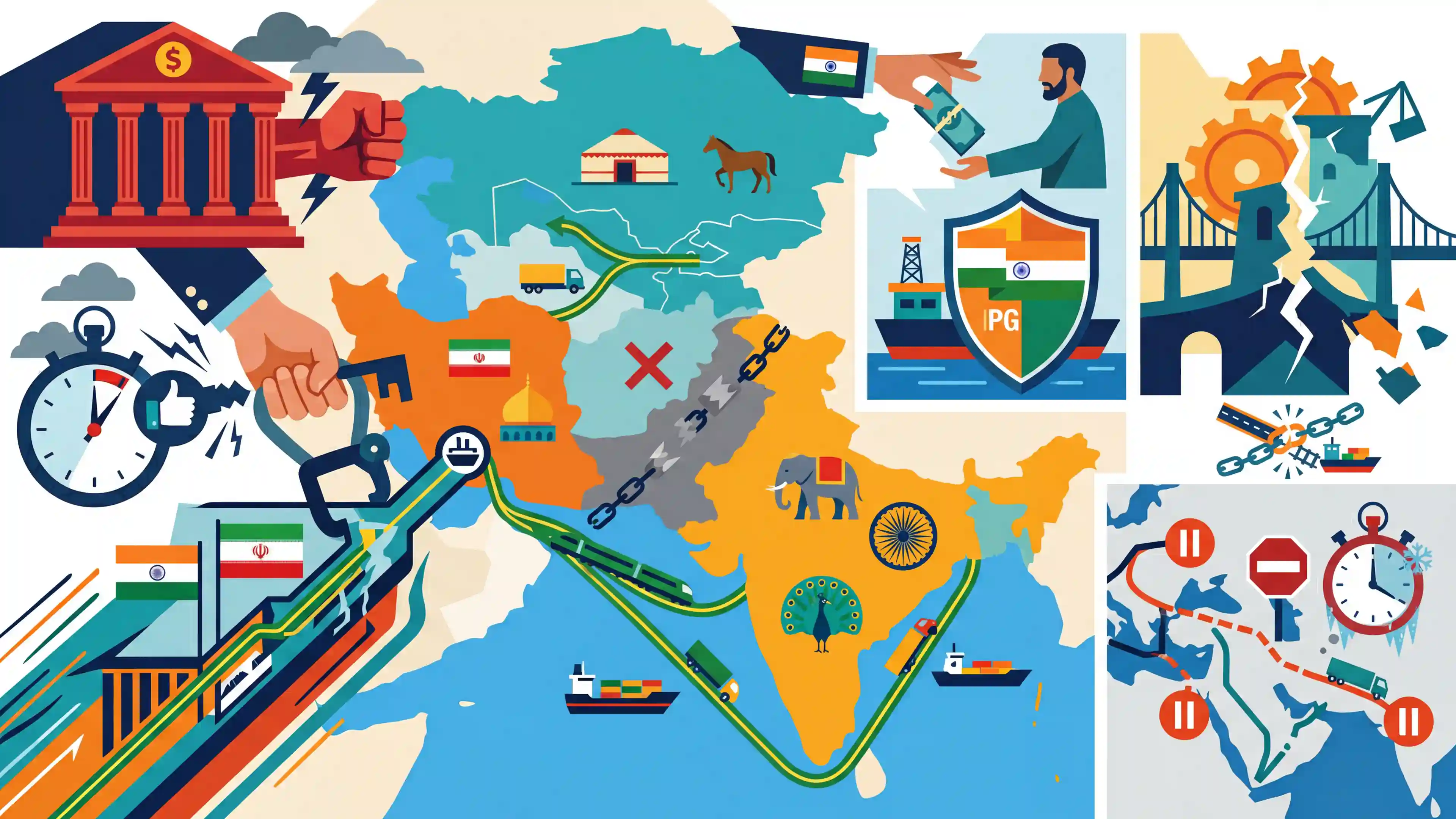
The US Treasury has ended the sanctions waiver for India's operations at the Chabahar port in Iran, setting a deadline of April 26, 2026. Stemming from the Trump administration's 'Operation Economic Fury' and NSPM-2, the move directly threatens India's critical connectivity project, which aims to bypass Pakistan to reach Afghanistan and Central Asia. In response, India is exploring temporary measures, such as transferring its stake in the Shahid Beheshti Terminal to an Iranian company to shield its entities (like IPGCFZ) from US sanctions. This development represents a significant setback for India's broader strategic connectivity ambitions, particularly as alternatives like the IMEC project face their own delays.
Key Points
- The US Treasury has announced the end of the sanctions waiver for India's operations at Iran's Chabahar port, effective April 26, 2026.
- The revocation stems from the Trump administration's 'Operation Economic Fury' and NSPM-2 directives aimed at financially isolating Iran.
- India recently signed a 10-year agreement (May 2024) to develop the Shahid Beheshti Terminal at Chabahar, a critical transit route to Afghanistan and Central Asia that bypasses Pakistan.
- To shield its state-owned entities (IPGL and its subsidiary) from US sanctions, New Delhi is considering temporarily transferring its stake to an Iranian company.
- The sanctions threat deals a severe blow to India's strategic connectivity ambitions, especially as the alternative IMEC route faces delays due to Middle East conflicts.
Important Terms
Operation Economic Fury

A 2026 US economic pressure campaign against Iran utilizing naval blockades and secondary sanctions to disrupt oil smuggling and financial revenue streams.
UPSC context
GS II: India-US-Iran relations; tests impact of US "maximum pressure" on India's strategic autonomy and regional connectivity.
National Security Presidential Memorandum 2 (NSPM-2)
A 2025 US Presidential Memorandum mandating the rescission of sanctions waivers for Iran, ending the exemption for India’s operations at the Chabahar port.
UPSC context
GS II: Bilateral agreements/policies; evaluates knowledge of US policy shifts and legal mechanisms affecting India’s connectivity goals.
India-Middle East-Europe Economic Corridor (IMEC)
A multimodal trade corridor linking India, the Middle East, and Europe via ports and rail, designed as a sustainable alternative to China’s BRI.
UPSC context
GS II: International Relations; awareness of global infrastructure projects and India’s strategic trade alternatives in the Middle East.
Shahid Beheshti Terminal
The specific terminal within Iran's Chabahar Port managed by India to facilitate trade with Afghanistan and Central Asia, bypassing Pakistan.
UPSC context
GS II: IR/Connectivity; focuses on India’s "Look West" policy and access to landlocked Central Asian markets.
India Ports Global Limited (IPGL)
A Special Purpose Vehicle under India's Shipping Ministry established to develop and manage the Chabahar port as India's first major overseas port project.
UPSC context
GS II/III: Infrastructure/IR; concerns India's maritime diplomacy and the role of PSUs in foreign strategic objectives.
India Ports Global Chabahar Free Zone (IPGCFZ)
A wholly-owned subsidiary of IPGL incorporated in Iran to handle operations at Chabahar; it is central to India's sanction-shielding efforts.
UPSC context
GS II: IR/Strategic Projects; tests understanding of corporate structuring to navigate international sanctions on strategic assets.
Prelims Trap
Chabahar port enjoys a permanent UN-mandated exemption from all international sanctions.
Aspirants confuse unilateral US sanctions with UN sanctions. Chabahar previously had a temporary, unilateral US waiver for Afghan reconstruction, not a permanent UN-backed exemption.
Static Concepts Connected
What are Secondary Sanctions and how do they work?
- Primary Sanctions: These bar a sanctioning country's own citizens and domestic companies from doing business with the targeted entity or nation.
- Secondary Sanctions: These target third-party nations and foreign entities, threatening to cut them off from the sanctioning country's financial system (e.g., US dollar) if they trade with the sanctioned state.
- Strategic Impact: They bypass UN mandates, acting as unilateral economic statecraft that severely challenges the strategic autonomy of neutral trading partners like India.
What is the geographic and strategic significance of Chabahar Port?
- Strategic Location: Situated in southeastern Iran along the Gulf of Oman, it lies safely outside the highly volatile maritime chokepoint of the Strait of Hormuz.
- Bypassing Pakistan: It allows India to circumvent overland transit denial by Pakistan, establishing a direct maritime-land gateway to Afghanistan and the resource-rich Central Asian Republics.
- INSTC Synergy: It serves as a critical node for the International North-South Transport Corridor (INSTC), aiming to drastically cut freight times between the Indian Ocean, Russia, and Europe.
Cross-Topic Patterns
Sanctions and Strategic Autonomy
The revocation of the Chabahar waiver mirrors past friction over CAATSA and S-400 purchases, testing India's ability to maintain independent foreign policy amidst unilateral US economic statecraft.
Corridor Chokepoints: IMEC vs INSTC
As US sanctions squeeze Chabahar (an INSTC node) and West Asian conflicts stall the IMEC route, India’s multi-aligned Eurasian connectivity strategy faces simultaneous geopolitical bottlenecks.

Expect a multi-statement question contrasting Chabahar/INSTC with IMEC, focusing on geopolitical chokepoints and US secondary sanctions.
Linked PYQs · 4
Linked PYQs · 4
- 2018MainsGS2
In what ways would the ongoing US-Iran Nuclear Pact Controversy affect the national interest of India? How should India respond to this situation?
- 2012MainsGS2
How have the US sanctions against Iran affected India's bilateral relations with Iran?
- 2024MainsGS2
Critically analyse India's evolving diplomatic, economic and strategic relations with the Central Asian Republics (CARs) highlighting their increasing significance in regional and global geopolitics.
- 2017PrelimsGS1
What is the importance of developing Chabahar Port by India?
