US Russia Sanctions Impact on India Strategic Autonomy and Trade
Source:Indian Express ↗
આ શા માટે મહત્વનું છે
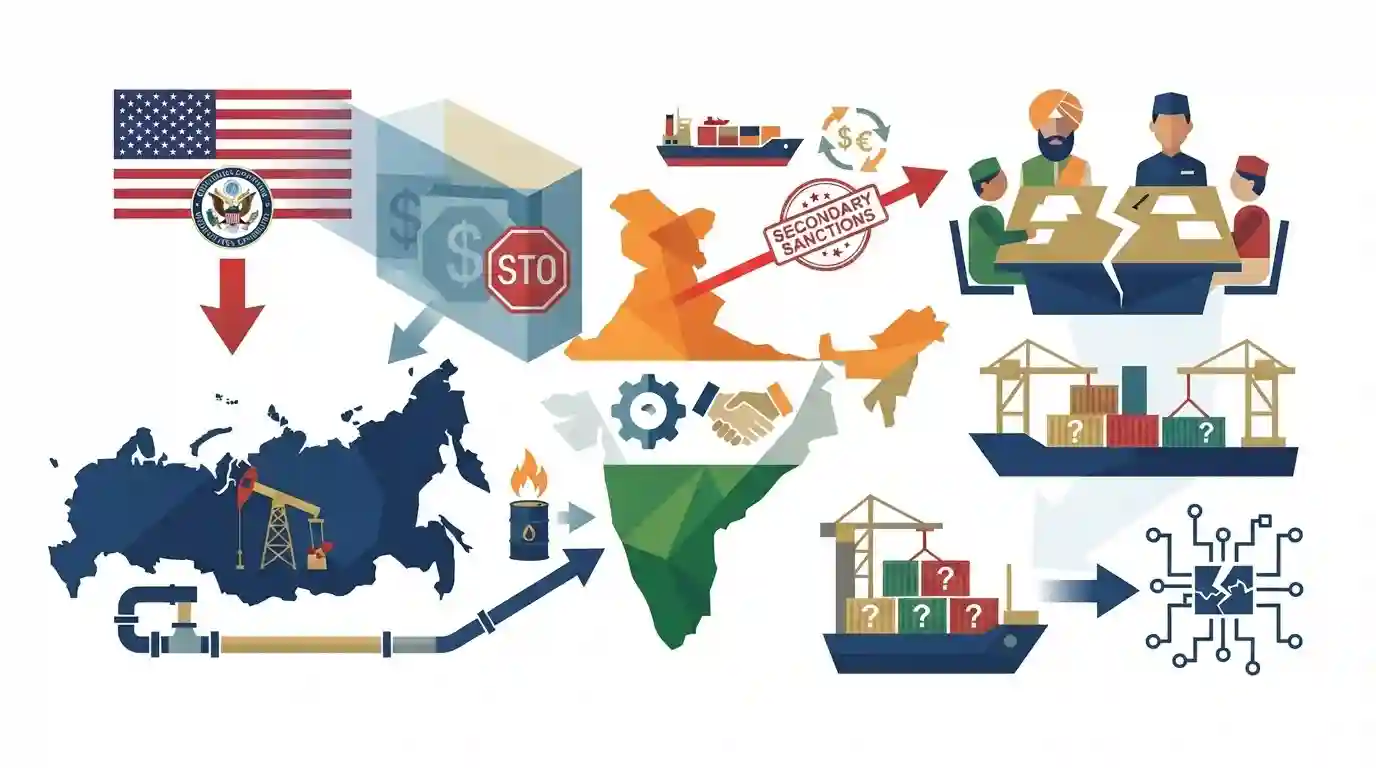
It impacts India's strategic autonomy, energy security, and bilateral economic engagements with Western partners amidst tightening global sanctions regimes against Russia.
સારાંશ
The article explains the implications of proposed US-Russia sanctions bills on India's trade talks and economic diplomacy, highlighting the challenges posed by secondary sanctions on energy and international commerce.
મુખ્ય મુદ્દા
- The proposed US-Russia sanctions bill introduces potential secondary sanctions and trade friction that could impact India's economic and strategic engagements.
- India's independent foreign policy stance and continued trade diversification—such as oil imports from Russia—frequently navigate complex Western legislative frameworks.
- Bilateral trade talks between India and the US must balance strategic convergence with divergent positions on secondary sanctions and geopolitical positioning.
મહત્વપૂર્ણ શબ્દો
US-Russia Sanctions Bill

Legislative measures proposed or enacted by the US Congress targeting Russian economic sectors, which can include secondary sanctions or high tariffs on nations purchasing Russian oil and gas, directly impacting India's trade and energy security.
UPSC context
Important for GS Paper II (International Relations - Bilateral, regional and global groupings and agreements involving India and/or affecting India's interests).
US Congress
The bicameral legislature of the federal government of the United States, comprising the Senate and the House of Representatives, responsible for enacting legislation such as foreign sanctions bills and trade policies.
UPSC context
Relevant for GS Paper II (Effect of policies and politics of developed and developing countries on India's interests, Indian diaspora).
Government of India
The executive and administrative authority of the Republic of India, responsible for formulating foreign policy, navigating economic diplomacy, and ensuring national energy security amidst external trade shocks.
UPSC context
Core concept for GS Paper II and III, evaluating India's strategic autonomy and sovereign responses to international sanctions and trade pressures.
પ્રિલિમ્સ ટ્રેપ
Proposed US secondary sanctions against third countries automatically override bilateral trade agreements under international law or WTO dispute mechanisms.
Aspirants often assume US secondary sanctions automatically violate WTO norms or carry automatic UN Security Council backing, whereas they are unilateral domestic legislative tools.
સંલગ્ન સ્થિર ખ્યાલો
What are secondary sanctions and how do they differ from primary sanctions under international law?
- Primary Sanctions: Prohibit domestic entities/citizens from transacting with a targeted foreign country or entity.
- Secondary Sanctions: Target third-country entities and non-citizens doing business with the sanctioned nation, operating extraterritorially outside the sanctioning country's jurisdiction.
- Sovereignty Conflict: Often contested under international law as infringements on state sovereignty, yet enforced via dominance over global financial clearing systems like USD.
આંતર-વિષય પેટર્ન
Secondary Sanctions & Strategic Autonomy
Washington's secondary trade measures against Moscow test the operational limits of New Delhi's multi-alignment doctrine and strategic autonomy in international forums.
Extraterritorial US Legislation & WTO Trade Talks
Bilateral commercial talks are increasingly shaped by extraterritorial legislation, forcing trade negotiators to factor geopolitical security into market access agreements.

Secondary sanctions + CAATSA/US legislation waivers + India's energy diversification will feature as a 2-statement Prelims MCQs.
સંલગ્ન PYQ · 2
સંલગ્ન PYQ · 2
- 2012MainsGS2
How have the US sanctions against Iran affected India's bilateral relations with Iran?
- 2019MainsGS2
‘What introduces friction into the ties between India and the United States is that Washington is still unable to find for India a position in its global strategy, which would satisfy India's national self-esteem and ambitions.’ Explain with suitable examples.
