WTO Dispute Settlement and US Steel Tariff Challenge
Source:Indian Express ↗
Why It Matters
Demonstrates the practical challenges in enforcing WTO dispute rulings and the impact of developed countries' protectionist policies on Indian trade. It highlights the urgent need for structural reforms within the WTO, particularly its dispute settlement mechanism, a recurring theme in Mains questions.
Summary
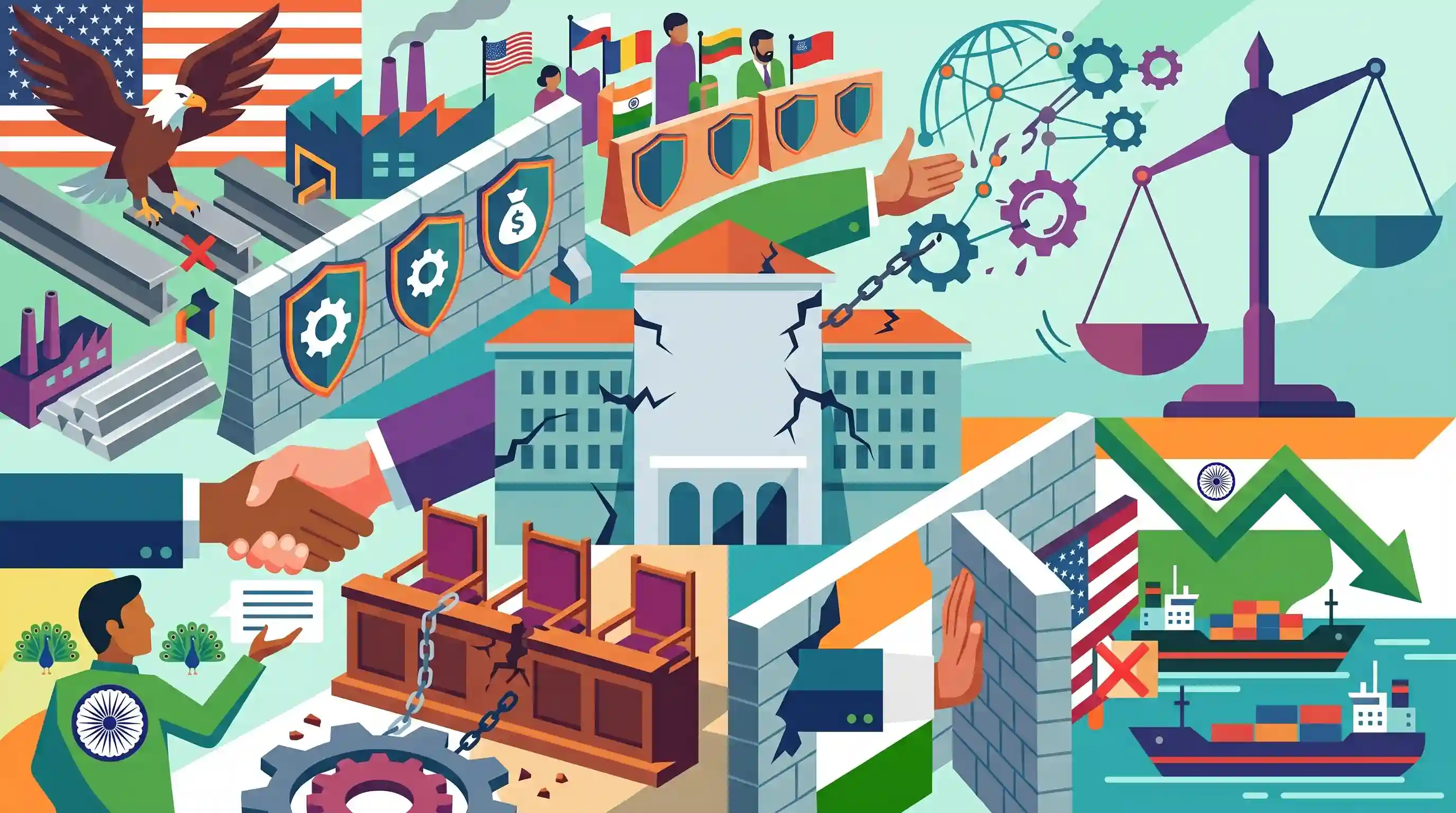
The United States has rejected India’s challenge at the World Trade Organization (WTO) concerning US tariffs on steel and aluminium, citing legal and procedural grounds. The dismissal underscores ongoing bilateral trade frictions and highlights the broader crisis within the WTO’s dispute settlement mechanism, particularly the paralyzed Appellate Body. Furthermore, it reflects a rising global trend of protectionism, where nations increasingly invoke "national security" to impose tariffs, posing significant challenges to the multilateral rules-based trading framework and impacting Indian economic interests.
Key Points
- The United States has dismissed India's challenge at the World Trade Organization (WTO) regarding US tariffs on Indian steel and aluminium, citing legal and procedural grounds.
- The dispute originated from the US imposing additional tariffs on steel and aluminium imports, often justified under "national security" exceptions.
- The US action highlights the ongoing paralysis of the WTO's dispute settlement mechanism, particularly the non-functional Appellate Body which the US itself has blocked.
- This development underscores the broader global trend of rising protectionism and the shifting away from multilateral rules-based free trade towards bilateralism and trade wars.
Important Terms
World Trade Organization (WTO)

A global intergovernmental organization (est. 1995) that regulates international trade. It provides a rules-based framework for negotiations, monitors trade policies, and operates a binding dispute settlement mechanism for its 164 member nations.
UPSC context
GS Paper 2/3: Essential for topics on international organizations, global trade governance, and India's economic diplomacy in multilateral forums.
WTO Appellate Body
A standing committee of seven judges that hears appeals in WTO trade disputes. It is currently non-functional (since 2019) due to a US-led blockade on new appointments, stalling the final resolution of trade conflicts.
UPSC context
GS Paper 2: Tests knowledge of international dispute resolution, institutional reforms, and the impact of 'judicial paralysis' on India's interests.
General Agreement on Tariffs and Trade (GATT)
A 1947 multilateral treaty aimed at reducing trade barriers like tariffs and quotas. While replaced by the WTO in 1995, its core rules on goods (GATT 1994) remain the legal foundation of global trade.
UPSC context
GS Paper 2/Economy: Fundamental historical context for the evolution of the global trading system and its non-discrimination principles.
Safeguard Measures
Emergency 'escape clause' actions taken by a country to temporarily restrict imports of a product if its domestic industry is being seriously injured by a sudden, sharp surge in imports.
UPSC context
GS Paper 3: Relevant for trade policy and legal nuances of how nations protect domestic industries under WTO rules.
Section 232
A provision of the US Trade Expansion Act of 1962 that allows the President to impose tariffs on imports if they are deemed a threat to 'national security,' often criticized as a protectionist tool.
UPSC context
GS Paper 2: International relations; specifically, the effect of developed countries' domestic policies on India's export interests and bilateral ties.
Prelims Trap
"India joined the Multi-Party Interim Appeal Arbitration Arrangement (MPIA) to resolve its WTO disputes."
False. While over 50 members (including the EU and China) established the MPIA to bypass the paralyzed WTO Appellate Body, India and the US have refused to join.
Static Concepts Connected
What is the National Security Exception under the WTO?
- GATT Article XXI: Allows member states to breach standard multilateral trade obligations if they deem the measure necessary to protect essential security interests.
- Panel review: Historically treated as self-judging by the invoking country, but recent WTO panels assert the authority to objectively review these claims to prevent protectionist abuse.
- Rising usage: Increasingly invoked by major economies (e.g., US Section 232 tariffs on steel and aluminium) to bypass standard WTO rules without facing immediate retaliatory sanctions.
How is the WTO Dispute Settlement Mechanism structured?
- Two-tier system: It involves a 60-day consultation phase, followed by an initial Dispute Panel, and finally an Appellate Body for legal reviews.
- Reverse consensus: Rulings are adopted automatically under the "reverse consensus" rule, meaning they pass unless every single member country votes to reject them.
- Current paralysis: The Appellate Body has been non-functional since 2019 because the US has systematically blocked the appointment of new judges, paralyzing the final tier.
Cross-Topic Patterns
WTO paralysis + Bilateral FTAs
As multilateral dispute resolution collapses, countries like India are aggressively pursuing bilateral FTAs (e.g., UAE, Australia) containing independent, binding arbitration chapters to secure their trade interests.
National Security vs Green Protectionism
The US uses GATT Article XXI (security) for steel tariffs, while the EU pushes the Carbon Border Adjustment Mechanism (environment). Both reflect structural developed-world protectionism impacting Indian exports.

Expect a Prelims question on WTO dispute mechanisms, specifically testing GATT Article XXI exceptions and India's abstention from the MPIA.
Linked PYQs · 3
Linked PYQs · 3
- 2018MainsGS2
What are the key areas of reform if the WTO has to survive in the present context of "Trade War', especially keeping in mind the interest of India?
- 2025MainsGS3
What are the challenges before the Indian economy when the world is moving away from free trade and multilateralism to protectionism and bilateralism? How can these challenges be met?
- 2010PrelimsGS1
As regards the use of international food safety standards as reference point for the dispute settlements, which one of the following does WTO collaborate with?
