US Pushes Meta for Pre-Release AI Security Review
Source:The Hindu ↗
Why It Matters
Highlights the intersection of emerging technologies (AI), national security, and geopolitics. The push for regulatory frameworks (even voluntary) to preempt cyber and military threats from AI is highly relevant for GS3 (S&T and Cyber Security) and GS2 (International Relations and tech decoupling).
Summary
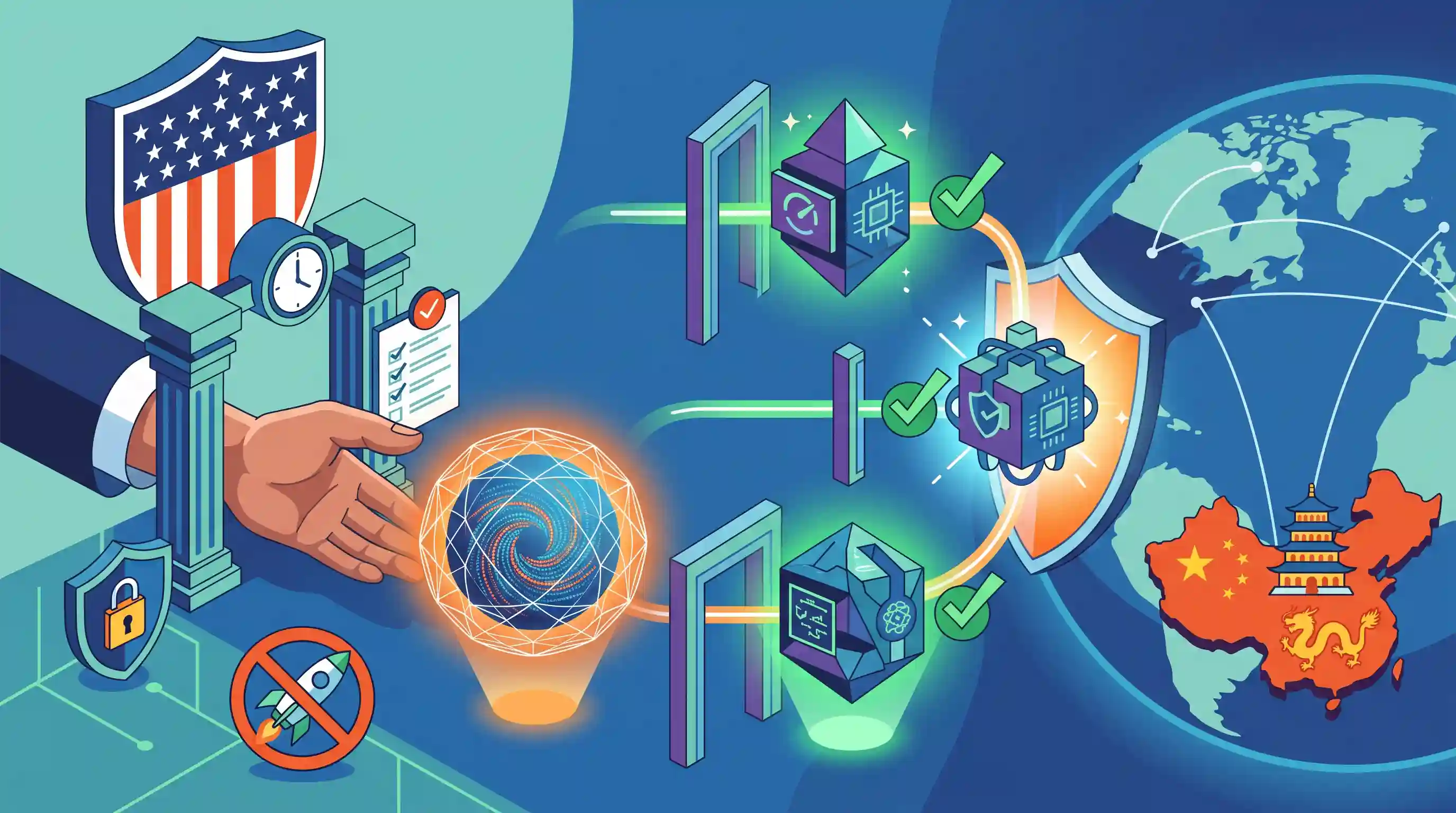
The US administration under Donald Trump is urging Meta to participate in a voluntary national security review for its new Muse Spark AI model. Following a recent executive order, the framework allows the US government a 30-day window to evaluate advanced 'frontier' models for threats like cyberattacks and military misuse prior to release. While competitors like OpenAI and Google DeepMind have complied, Meta has yet to formally commit. The move reflects increasing geopolitical focus on AI regulation to secure technological dominance, particularly against China.
Key Points
- The US government is pressuring Meta to submit its new AI model, Muse Spark, to a 30-day voluntary national security review before its wider release.
- Tech companies including OpenAI, Anthropic, Google DeepMind, Microsoft, and xAI have already agreed to participate in this early access evaluation framework.
- The framework was established by a June 2 executive order to identify security risks such as cyberattacks or military misuse associated with advanced 'frontier' AI models.
- This move is part of broader techno-nationalist policies aimed at maintaining US leadership in AI over China, which includes restricting foreign nationals' access to models and sanctioning Chinese tech firms.
Important Terms
June 2 Executive Order on AI

A 2026 US presidential directive titled 'Promoting Advanced Artificial Intelligence Innovation and Security' establishing a voluntary 30-day pre-release review window for the government to evaluate advanced AI models for security risks.
UPSC context
GS Paper 3: Science & Tech; illustrates global trends in technology governance and the shift toward proactive national security oversight of private-sector AI.
Covered Frontier Models
Highly advanced AI systems identified by the US government as possessing significant cyber capabilities or dual-use potential, meeting classified performance thresholds that trigger voluntary national security evaluations.
UPSC context
GS Paper 3: Science & Tech; critical for understanding the classification of high-impact emerging technologies that require specific regulatory and security frameworks.
CAISI (Center for AI Standards and Innovation)
A NIST-housed entity under the US Commerce Department that serves as the primary federal interface for evaluating frontier AI models and conducting pre-deployment research on potential security vulnerabilities.
UPSC context
GS Paper 2: Governance/Institutional frameworks; represents the institutionalization of AI safety and standard-setting in major global economies.
National Security Review (AI)
A pre-deployment evaluation process where government agencies assess advanced AI models for risks like autonomous hacking, bioweapon assistance, or military exploitation before they are released to the public.
UPSC context
GS Paper 3: Internal Security; tests understanding of how emerging technologies are integrated into national security protocols and cyber defense strategies.
Muse Spark
Meta's advanced 2026 AI model featuring proprietary code and reasoning capabilities; currently the subject of US government pressure regarding participation in voluntary security evaluation frameworks.
UPSC context
GS Paper 3: Science & Tech; a specific case study of corporate-government friction in the regulation of proprietary frontier AI models.
Dual-Use Technology
Technologies, such as advanced AI, that have legitimate civilian applications while also possessing potential for significant military or destructive use, leading to increased government oversight.
UPSC context
GS Paper 3: Internal Security/Science & Tech; a recurring theme in UPSC regarding the ethics and regulation of powerful scientific innovations.
Prelims Trap
"The United States recently enacted a binding, statutory AI Act to regulate frontier models based on risk classification."
The US approach relies on Executive Orders and voluntary pre-release evaluations by tech companies, unlike the European Union, which has enacted a binding, risk-based AI Act.
Static Concepts Connected
How does India currently approach the regulation of Artificial Intelligence?
- Pro-innovation stance: India emphasizes "Innovation over Restraint," avoiding prescriptive, standalone AI legislation to foster digital growth and startup innovation.
- Existing statutes: AI governance is managed through existing frameworks like the Digital Personal Data Protection (DPDP) Act, 2023, and the IT Act, 2000.
- Advisory-based oversight: The government largely relies on non-binding advisories for platforms regarding deepfakes and algorithmic bias rather than mandatory pre-deployment licensing.
What defines 'Techno-nationalism' in contemporary international relations?
- Strategic asset doctrine: A geopolitical doctrine treating advanced technologies (AI, semiconductors, critical data) as strategic national assets tied directly to state security and hegemony.
- Protectionist measures: Implemented via export controls, foreign investment screenings, early access reviews, and technology sanctions to restrict geopolitical rivals like China.
- Domestic securitization: Drives states to subsidize domestic manufacturing (e.g., US CHIPS Act, India's PLI schemes) to reduce supply chain vulnerabilities.
Cross-Topic Patterns
Divergent tech regimes & Digital Trade
The fragmentation of AI rules (EU's binding laws vs US voluntary reviews) parallels battles over data localization and digital taxation, complicating WTO negotiations on global digital trade.
Frontier AI and Hybrid Warfare
Advanced generative AI lowers the barrier for state-sponsored cyberattacks and sophisticated disinformation, directly embedding domestic tech governance into national security and hybrid warfare doctrines.

Comparative AI governance (EU AI Act vs US voluntary EOs vs India's DPDP Act) is highly probable as a multi-statement Prelims question.
Linked PYQs · 3
Linked PYQs · 3
- 2023MainsGS3
Introduce the concept of Artificial Intelligence (AI). How does Al help clinical diagnosis? Do you perceive any threat to privacy of the individual in the use of Al in healthcare?
- 2017MainsGS3
Discuss the potential threats of Cyber attack and the security framework to prevent it.
- 2021MainsGS2
“The USA is facing an existential threat in the form of a China, that is much more challenging than the erstwhile Soviet Union.” Explain.
