US Pacific Naval Strikes and Narco-Terrorism Geopolitics
Source:The Hindu ↗
Why It Matters
This development is highly relevant for understanding the evolving nexus between organized crime, drug trafficking, and terrorism (narco-terrorism). It also raises critical questions about international law, sovereignty, and the use of military force in countering transnational criminal networks.
Summary
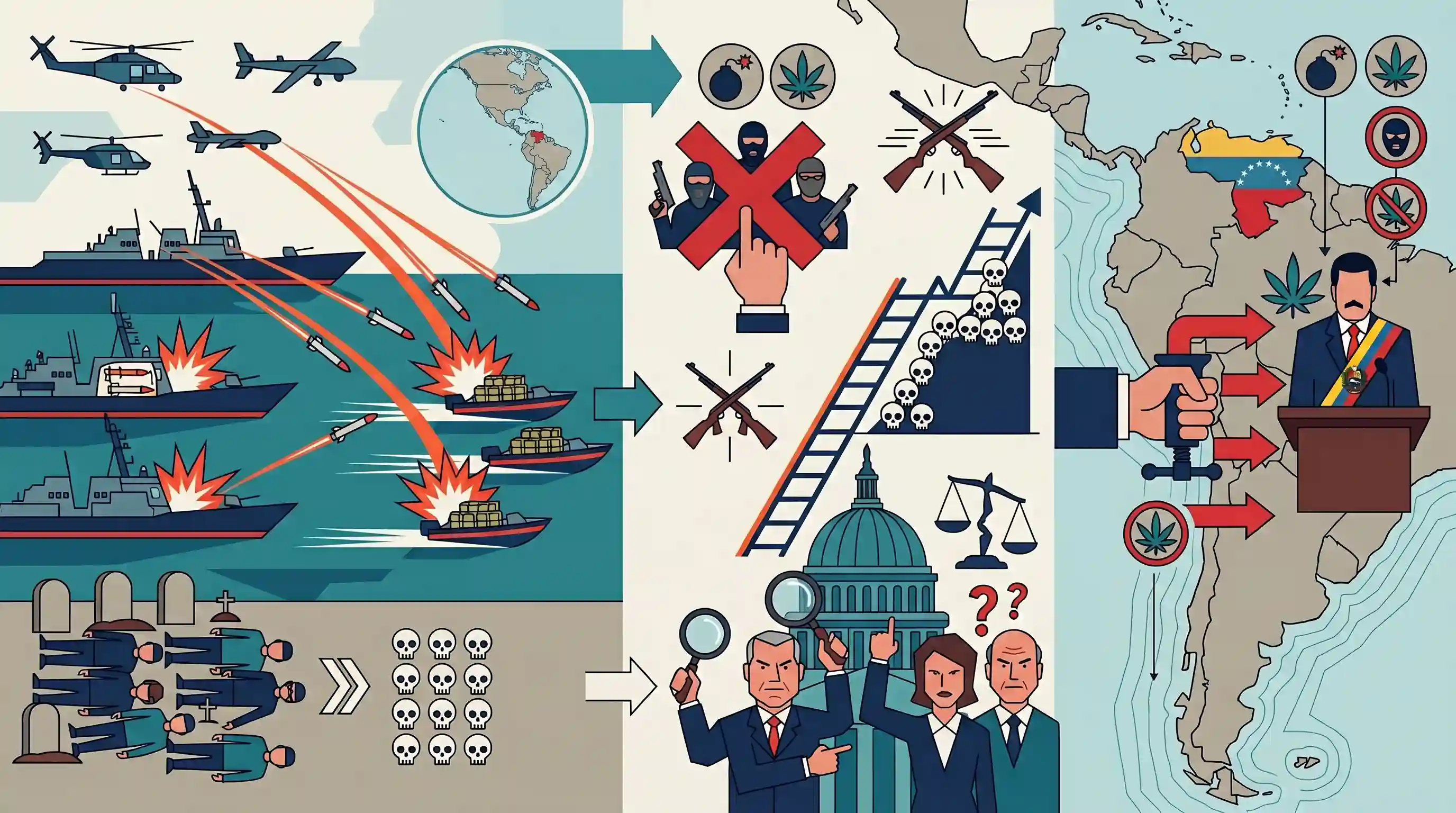
The U.S. military recently carried out strikes on three suspected drug-smuggling vessels in the eastern Pacific Ocean, killing eight individuals. These actions are part of an escalated anti-narcotics campaign by the Trump administration, which has designated drug cartels as terrorist organizations and framed the situation as an "armed conflict." The ongoing operations have resulted in at least 95 fatalities and have drawn mounting scrutiny from U.S. lawmakers over the legality and ethics of such military engagements. Additionally, the maritime campaign serves as a strategic maneuver to intensify geopolitical pressure on Venezuelan President Nicolas Maduro, who faces U.S. charges of narco-terrorism.
Key Points
- The U.S. military conducted lethal strikes on three suspected drug-smuggling vessels in the eastern Pacific Ocean, killing eight people.
- The strikes are part of an aggressive campaign by the Trump administration against drug cartels, which it labels as "designated terrorist organisations."
- The campaign has led to at least 95 deaths across 25 known strikes, prompting serious scrutiny and closed-door briefings among U.S. lawmakers.
- The operations are also geopolitically motivated, acting as a pressure tactic against Venezuelan President Nicolas Maduro, whom the U.S. has charged with narco-terrorism.
- President Donald Trump has characterized the ongoing operations against the cartels as an "armed conflict," blurring the lines between military action, counter-terrorism, and law enforcement.
Important Terms
Narco-Terrorism

The intersection of drug trafficking and terrorism, where illicit drug profits finance terror operations or traffickers use terrorist tactics (assassination, bombing) to intimidate states and influence government policy.
UPSC context
GS Paper 3: Internal Security. Tests understanding of the drug-terror nexus and challenges to national security like the Golden Crescent/Triangle.
Transnational Organized Crime (TOC)
Illegal activities carried out by networks operating across national borders for financial gain, including drug trafficking, money laundering, and human smuggling, often undermining state governance and security.
UPSC context
GS Paper 3: Security. Vital for topics on organized crime, its linkages with terrorism, and international police cooperation (INTERPOL).
Foreign Terrorist Organization (FTO)
A legal designation by the U.S. State Department for non-U.S. groups that engage in terrorism, enabling sanctions, asset freezes, and expanded military authority under certain security frameworks.
UPSC context
GS Paper 2: International Relations. Relevant for global counter-terrorism regimes and the legal frameworks governing international security interventions.
Armed Conflict
A legal status occurring when there is a resort to armed force between States or protracted armed violence between governmental authorities and organized armed groups.
UPSC context
GS Paper 2: International Law. Tests knowledge of the Geneva Conventions and the legal justification for using military force against non-state actors.
U.S. Southern Command (SOUTHCOM)
A unified U.S. military command responsible for planning and operations in Central America, South America, and the Caribbean, frequently leading anti-narcotics maritime missions.
UPSC context
GS Paper 2: International Relations. Relevant for studying regional security architectures and U.S. influence in the Western Hemisphere.
Prelims Trap
"Under UNCLOS, foreign military vessels possess universal jurisdiction to conduct lethal strikes on suspected drug-smuggling vessels in international waters."
Under UNCLOS, universal jurisdiction applies to piracy and the slave trade. Suppressing drug trafficking on the high seas generally requires the explicit consent of the vessel's flag state.
Static Concepts Connected
What are the jurisdictional rights over illicit activities on the high seas under UNCLOS?
- Universal Jurisdiction (Piracy): Every state may seize a pirate ship and arrest suspects on the high seas.
- Illicit Drugs (Cooperation): States must cooperate to suppress illicit drug trade, but boarding a foreign vessel requires the flag state's consent.
- Right of Visit (Article 110): Warships can board foreign vessels only for suspected piracy, slave trade, or unauthorized broadcasting, not unilaterally for drugs.
How does narco-terrorism specifically threaten India's internal security matrix?
- Geographic Vulnerability: India is sandwiched between the world's largest opium-producing regions: the Golden Crescent (West) and Golden Triangle (East).
- Terror Financing: The illicit drug trade directly funds insurgent groups in the North-East and cross-border terrorist outfits operating in J&K.
- State-Sponsored Crime: There is an established nexus between organized crime syndicates and hostile state intelligence agencies aiming to destabilize border regions.
Cross-Topic Patterns
Blurring Law Enforcement & Armed Conflict
The US designating cartels as "terrorist organizations" to justify military strikes bypasses traditional law enforcement, mirroring global debates over targeted drone strikes and extrajudicial killings under international humanitarian law.
Drug interdiction as regime pressure
Linking drug trafficking to state leadership (Venezuela's Maduro) demonstrates how counter-narcotics frameworks are increasingly weaponized as geopolitical tools to justify aggressive posturing, sanctions, and potential regime change.

Expect a multi-statement Prelims question on UNCLOS exceptions (Article 110 'Right of Visit') contrasting piracy vs. drug trafficking.
Linked PYQs · 2
Linked PYQs · 2
- 2022MainsGS3
Discuss the types of organised crimes. Describe the linkages between terrorists and organised crime that exist at the national and transnational levels.
- 2024MainsGS3
Explain how narco-terrorism has emerged as a serious threat across the country. Suggest suitable measures to counter narco-terrorism.
