Strategic Significance of Kharg Island and Global Energy Risks
Source:Indian Express ↗
Why It Matters
The Middle East is a volatile region critical for India's energy imports. Understanding the strategic significance of chokepoints and energy nodes like Kharg Island helps aspirants analyze geopolitical risks to India's energy security, foreign policy in West Asia, and broader macroeconomic stability.
Summary
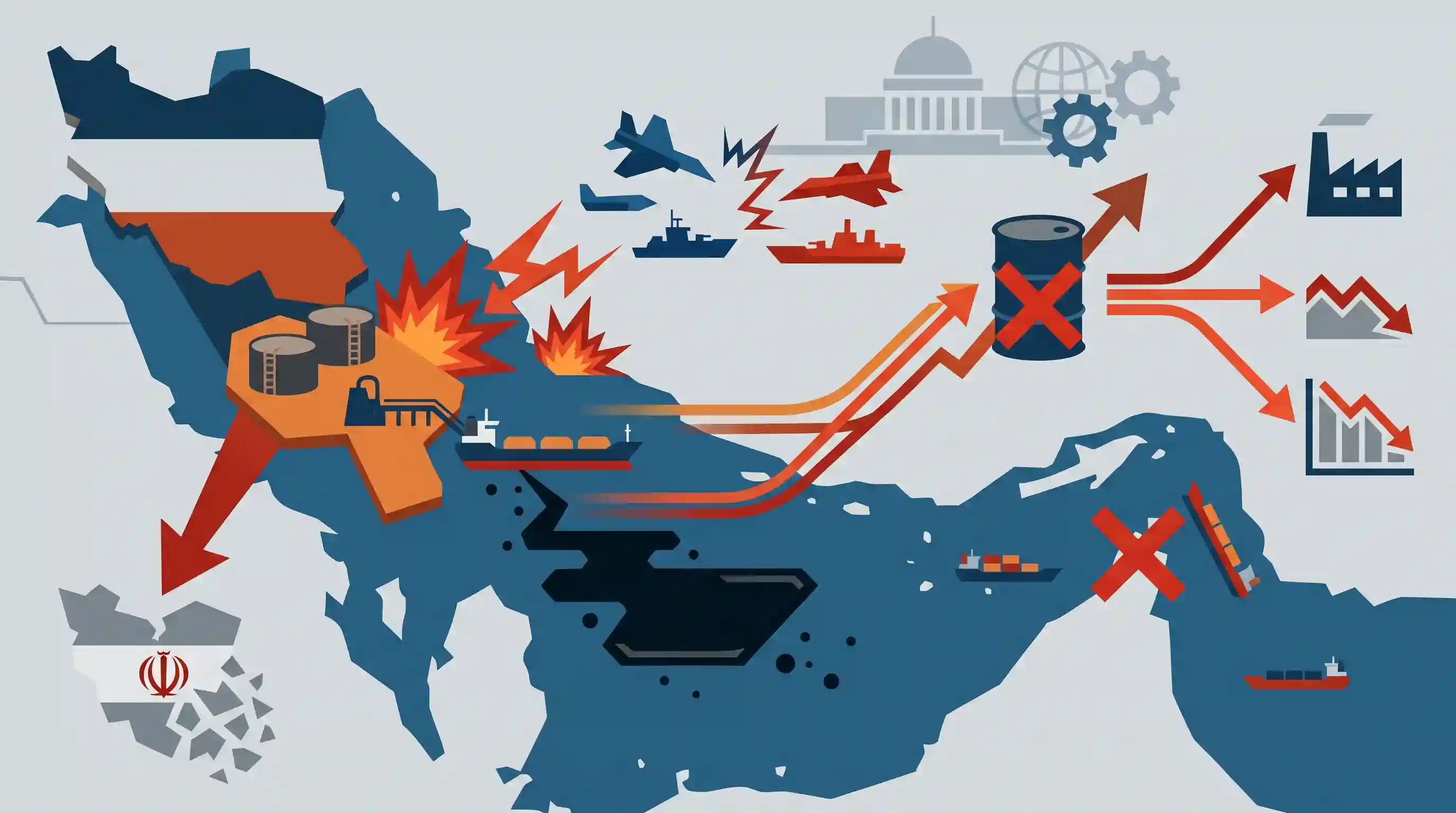
The article discusses the immense strategic significance of Iran's Kharg Island, its primary oil export terminal in the Persian Gulf, and the severe global risks associated with any US or allied military action against it. Targeting Kharg Island would not only cripple Iran's economy but also send shockwaves through global energy markets, leading to soaring oil prices. This would have profound macroeconomic consequences for oil-importing nations like India and could trigger a wider regional war, potentially closing critical maritime chokepoints like the Strait of Hormuz and causing devastating marine oil pollution.
Key Points
- Kharg Island, located in the Persian Gulf, serves as Iran's most critical oil export terminal, handling the vast majority of its crude oil exports.
- Any military action, such as a US or Israeli takeover or attack on the island, poses severe risks to global energy markets by abruptly cutting off Iranian oil supplies.
- A disruption of operations at Kharg Island would likely cause a sudden spike in global oil prices, exacerbating inflationary pressures and heavily impacting import-dependent economies like India.
- Such a move risks significant regional escalation, potentially triggering retaliatory actions by Iran, such as attempting to close the strategic Strait of Hormuz.
- Attacking major oil infrastructure also carries the threat of catastrophic environmental damage from oil spills in the Persian Gulf ecosystem.
Important Terms
Kharg Island

Iran's primary maritime oil terminal in the Persian Gulf, facilitating nearly 90% of its crude exports. Its deep-water jetties accommodate ultra-large carriers, making it the central hub of Iran's energy infrastructure and national revenue.
UPSC context
GS Paper 1 (Geography: Mapping) and GS Paper 2 (International Relations: Geopolitics of West Asia and energy corridors).
Strait of Hormuz
A strategically vital maritime passage between Iran and Oman, connecting the Persian Gulf with the Gulf of Oman. It is the world's most important oil chokepoint, handling approximately one-fifth of global oil consumption.
UPSC context
GS Paper 1 (Geography) and GS Paper 2 (IR: Security of Sea Lines of Communication and India's energy dependence).
OPEC
An intergovernmental organization of major oil-exporting nations established in 1960. It coordinates petroleum policies among members to stabilize global oil markets and ensure a steady supply for consumers and fair returns for producers.
UPSC context
GS Paper 2 (International Institutions) and GS Paper 3 (Indian Economy: Global trade and energy price volatility).
Energy Security
The reliable and affordable availability of energy sources for national consumption. It encompasses diversifying energy types and sources, as well as maintaining strategic reserves to cushion against global supply disruptions.
UPSC context
GS Paper 3 (Energy; Economic Development) and GS Paper 2 (IR: Strategic Autonomy in foreign policy).
Maritime Chokepoint
A narrow, geographically restricted passage like a strait or canal through which a large volume of global trade and energy supplies must pass. These points are critical nodes in international shipping.
UPSC context
GS Paper 1 (Geography) and GS Paper 2 (IR: Protection of maritime trade routes and international navigation).
Persian Gulf
A shallow marginal sea of the Indian Ocean bordered by Iran and the Arabian Peninsula. It holds the world's largest offshore oilfield and serves as the primary outlet for West Asian hydrocarbon exports.
UPSC context
GS Paper 1 (Physical Geography) and GS Paper 2 (IR: Bilateral relations with GCC countries and Iran).
Prelims Trap
Kharg Island is located in the Red Sea and controls maritime access to the Bab-el-Mandeb strait.
Kharg Island is an Iranian island located deep inside the Persian Gulf, not the Red Sea. It is a major oil terminal, not a strait.
Static Concepts Connected
How does a crude oil price shock affect India's macroeconomy?
- CAD Widening: Higher oil import bills directly increase the Current Account Deficit (CAD) as India imports over 80% of its crude requirements.
- Imported Inflation: Surging fuel prices cause cascading cost-push inflation across domestic manufacturing, transport, and logistics.
- Currency Depreciation: Increased dollar demand by oil marketing companies to pay for expensive oil weakens the Indian Rupee.
What are the key strategic maritime chokepoints of West Asia?
- Strait of Hormuz: Connects the Persian Gulf to the Gulf of Oman and Arabian Sea; a vital transit point for about 20% of global oil supply.
- Bab-el-Mandeb: Connects the Red Sea to the Gulf of Aden; acts as the southern gatekeeper for the Suez Canal and European trade.
Cross-Topic Patterns
Geopolitics dictates Indian Macroeconomics
West Asian conflicts frequently serve as the root cause for domestic Indian economic issues like cost-push inflation, widening CAD, and currency depreciation.
Energy Security & SPRs
Threats to Gulf oil terminals highlight the critical need for India's Strategic Petroleum Reserves (SPR) program (e.g., Mangaluru, Padur, Chandikhol) to mitigate sudden supply-side shocks.

Expect a 2026 hybrid Prelims question linking Persian Gulf geography (islands/straits) directly to India's imported inflation and CAD.
Linked PYQs · 4
Linked PYQs · 4
- 2024PrelimsGS1
Consider the following statements : Statement-I : Sumed pipeline is a strategic route for Persian Gulf oil and natural gas shipments to Europe. Statement-II : Sumed pipeline connects the Red Sea with the Mediterranean Sea. Which one of the following is correct in respect of the above statements?
- 2025MainsGS2
"Energy security constitutes the dominant kingpin of India's foreign policy, and is linked with India's overarching influence in Middle Eastern countries.” How would you integrate energy security with India's foreign policy trajectories in the coming years?
- 2017MainsGS2
The question of India's Energy Security constitutes the most important part of India's economic progress. Analyze India's energy policy cooperation with West Asian countries.
- 2023MainsGS3
What is oil pollution? What are its impacts on the marine ecosystem? In what way is oil pollution particularly harmful for a country like India?
