Persian Gulf Geopolitical Escalation and Energy Security
Source:Indian Express ↗
ఇది ఎందుకు ముఖ్యం
Crucial for understanding India's foreign policy challenges, energy security matrix, and diaspora safety in the Persian Gulf amidst US-Iran escalation.
సారాంశం
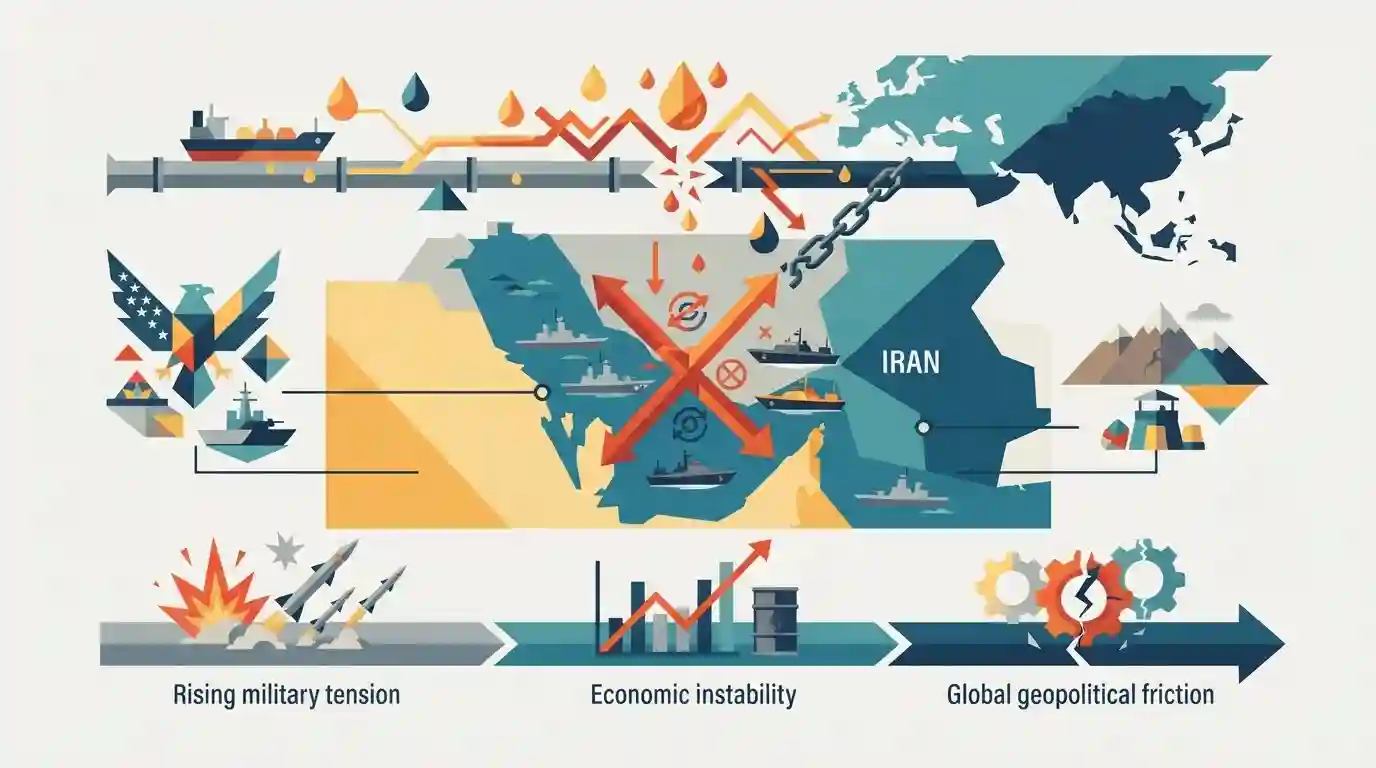
The editorial discusses the escalating military and economic tensions between the US and Iran in the Persian Gulf region, highlighting the severe consequences for global energy security, maritime trade routes like the Strait of Hormuz, and international geopolitical stability.
ముఖ్య అంశాలు
- Escalation of military and economic tensions between the US and Iran in the Persian Gulf.
- Critical implications for global energy security and crude oil supply routes via the Strait of Hormuz.
- Impact on international trade, macroeconomic stability, and geopolitical alignments involving major global powers.
- Direct security implications for India given its heavy energy and trade dependence on West Asia.
ముఖ్యమైన పదాలు
US

A major global superpower whose military and economic actions in the Persian Gulf significantly influence international energy markets, maritime security, and global geopolitical stability.
UPSC context
Important for GS Paper II (International Relations - Bilateral/Global Groupings and US foreign policy in West Asia).
Iran
A key West Asian nation whose geopolitical friction with the United States shapes regional security dynamics, energy transit choke points, and international trade routes.
UPSC context
Important for GS Paper II (International Relations - West Asia Geopolitics and Energy Security).
ప్రిలిమ్స్ ఉచ్చు
India's aggressive crude basket diversification has insulated its domestic economy from Persian Gulf maritime supply shocks.
Aspirants often assume India has completely eliminated its West Asian crude dependency through diversification. While diversified, India still imports a critical share of its crude, LNG, and nearly all of its vital LPG through the Persian Gulf.
అనుసంధానమైన స్థిర భావనలు
What are the strategic chokepoints of global maritime trade and energy transit?
- Hormuz Chokepoint: Strait of Hormuz handles roughly 20% of global petroleum consumption, connecting Persian Gulf producers to open oceans.
- Bab-el-Mandeb: Bab-el-Mandeb links the Red Sea to the Gulf of Aden, serving as the southern maritime access to the Suez Canal.
- Malacca Strait: Malacca Strait is a narrow passage between Malaysia and Indonesia critical for East Asian energy and merchandise imports.
అంతర-అంశ నమూనాలు
Strait of Hormuz Chokepoint + Macroeconomic Vulnerability
West Asian maritime chokepoint closures directly spike global freight rates, widen India's current account deficit, and strain fiscal balances via ballooning fertilizer and oil import subsidies.
West Asia Geopolitics + India's Alternative Trade Corridors
Energy security concerns in the Persian Gulf accelerate India's strategic push toward Central Asia (INSTC) and alternate energy pacts like the IMEC corridor.

Strait of Hormuz chokepoint vulnerability + India's import dependence (oil/LPG) likely to be tested via statement-based MCQs.
అనుసంధాన PYQలు · 2
అనుసంధాన PYQలు · 2
- 2025MainsGS2
"Energy security constitutes the dominant kingpin of India's foreign policy, and is linked with India's overarching influence in Middle Eastern countries.” How would you integrate energy security with India's foreign policy trajectories in the coming years?
- 2017MainsGS2
The question of India's Energy Security constitutes the most important part of India's economic progress. Analyze India's energy policy cooperation with West Asian countries.
