US Immigration Policy Changes on H1B Visas and Work Permits
Source:Indian Express ↗
Why It Matters
Tightening US immigration policies directly affects the large Indian diaspora and professionals working in the US. Changes to the H-1B and related visa programs have implications for the Indian IT sector, remittances, and the broader India-US bilateral relationship.
Summary
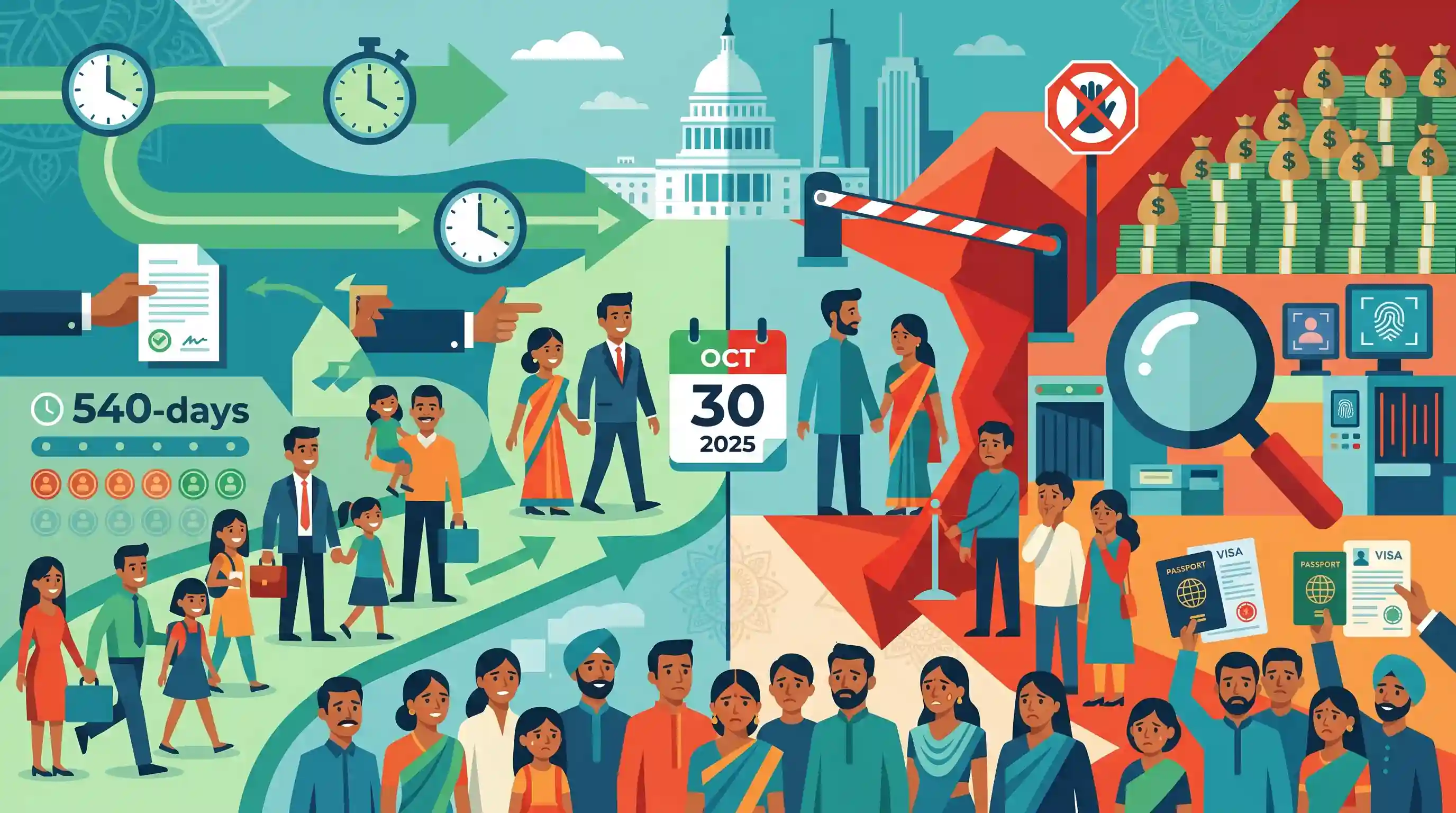
The US government has announced the end of automatic work permit extensions (Employment Authorisation Documents or EADs) for applications filed on or after October 30, 2025. This move, aimed at enhancing screening and vetting, follows the Trump administration's recent hike of the H-1B visa fee to $100,000. It reverses the Biden administration's policy of offering a 540-day automatic extension. The decision will heavily impact thousands of Indian professionals, immigrants, and spouses of H-1B, L, and E visa holders.
Key Points
- The US government is ending automatic extensions for Employment Authorisation Documents (EADs) for applications filed on or after October 30, 2025.
- The policy shift aims to improve "screening and vetting" processes before granting employment authorization.
- This reverses the Biden administration's policy, which provided a 540-day automatic extension for EAD renewals.
- The move follows a recent decision by the Trump administration to increase the annual H-1B visa fee to $100,000.
- The end of automatic extensions will significantly affect spouses of H-1B, L, and E visa holders, alongside refugees and asylees, impacting thousands of Indian professionals.
Important Terms
H-1B visa

A non-immigrant US work visa allowing employers to temporarily hire foreign workers in "specialty occupations" requiring technical expertise and a bachelor’s degree.
UPSC context
GS Paper-II (International Relations/Diaspora); tests understanding of skilled migration and its impact on India-US bilateral ties.
L visa (L-1)
A non-immigrant visa for intra-company transferees (managers, executives, or specialists) moving from a foreign office to a US office of the same multinational company.
UPSC context
GS Paper-III (Economy); relevant for corporate mobility and the operational strategies of Indian IT firms.
Employment Authorisation Documents (EADs)
An official work permit (Form I-766) issued to certain non-citizens, including H-4 spouses and students on OPT, to work legally in the US.
UPSC context
GS Paper-II (Diaspora); tests knowledge of work rights for dependents and the impact of administrative policy shifts.
USCIS
The US federal agency within DHS responsible for overseeing lawful immigration, naturalization, and the adjudication of visa petitions and work permits.
UPSC context
GS Paper-II (International Relations); relevant for understanding the regulatory framework of international migration.
Department of Homeland Security (DHS)
The cabinet-level department of the US government responsible for public security, including anti-terrorism, border security, and immigration policy enforcement.
UPSC context
GS Paper-II (Polity/International Relations); tests understanding of the executive bodies shaping global mobility and security.
E visa
Non-immigrant visas for Treaty Traders (E-1) and Treaty Investors (E-2) based on commerce treaties between the US and the applicant's country.
UPSC context
GS Paper-II (International Relations); covers less common but important investor-based migration pathways.
Prelims Trap
"H-1B visas and cross-border IT professionals fall under WTO GATS Mode 1."
Cross-border movement of IT professionals falls strictly under GATS Mode 4 (Presence of natural persons). Mode 1 refers to cross-border supply without physical movement.
Static Concepts Connected
What are the four modes of service supply under WTO GATS?
- Mode 1 (Cross-border): Services crossing borders without human movement (e.g., software services supplied over the internet).
- Mode 2 (Consumption abroad): The consumer travels to the supplier's country (e.g., medical tourism, international students).
- Mode 3 (Commercial presence): A foreign company establishes a local branch or subsidiary to provide services (e.g., US bank in India).
- Mode 4 (Natural persons): Temporary movement of individuals to another country to provide a service (e.g., Indian IT professionals on H-1B visas).
What are the key macroeconomic trends in India's inward remittances?
- US Top Source: The United States has recently surpassed the UAE to become the single largest source of remittances to India (accounting for over 20%).
- Shift to Advanced Economies: There is a structural shift from low-skilled blue-collar Gulf migration to high-skilled, white-collar emigration to advanced western economies.
- BoP Component: Remittances are recorded as net private transfers under 'invisibles' in the Current Account, acting as a critical buffer for India's external sector.
Cross-Topic Patterns
Remittances & Current Account Cushion
Restrictive US visa policies threaten India's largest remittance corridor. These remittances are critical 'invisibles' in the Balance of Payments that help offset India's chronic merchandise trade deficit.
H-4 Visas & Gender Disparities
With over 90% of H-4 dependents being Indian women, US work-permit revocations disproportionately harm female workforce participation and economic independence within the Indian diaspora.

Expect a GS2 Mains question linking US visa barriers (H-1B/EAD) to WTO GATS Mode 4 and impacts on India's IT exports and remittances.
Linked PYQs · 1
Linked PYQs · 1
- 2020MainsGS2
Indian diaspora has a decisive role to play in the politics and economy of America and European Countries'. Comment with examples.
