US Selective Engagement in Global Climate and Scientific Bodies
Source:Indian Express ↗
Why It Matters
Understanding the distinction between normative and functional international organizations is crucial for UPSC aspirants. It highlights the complexities of global climate governance and provides context for evaluating how domestic politics in major powers like the US shape international agreements, directly impacting global efforts like the Paris Agreement.
Summary
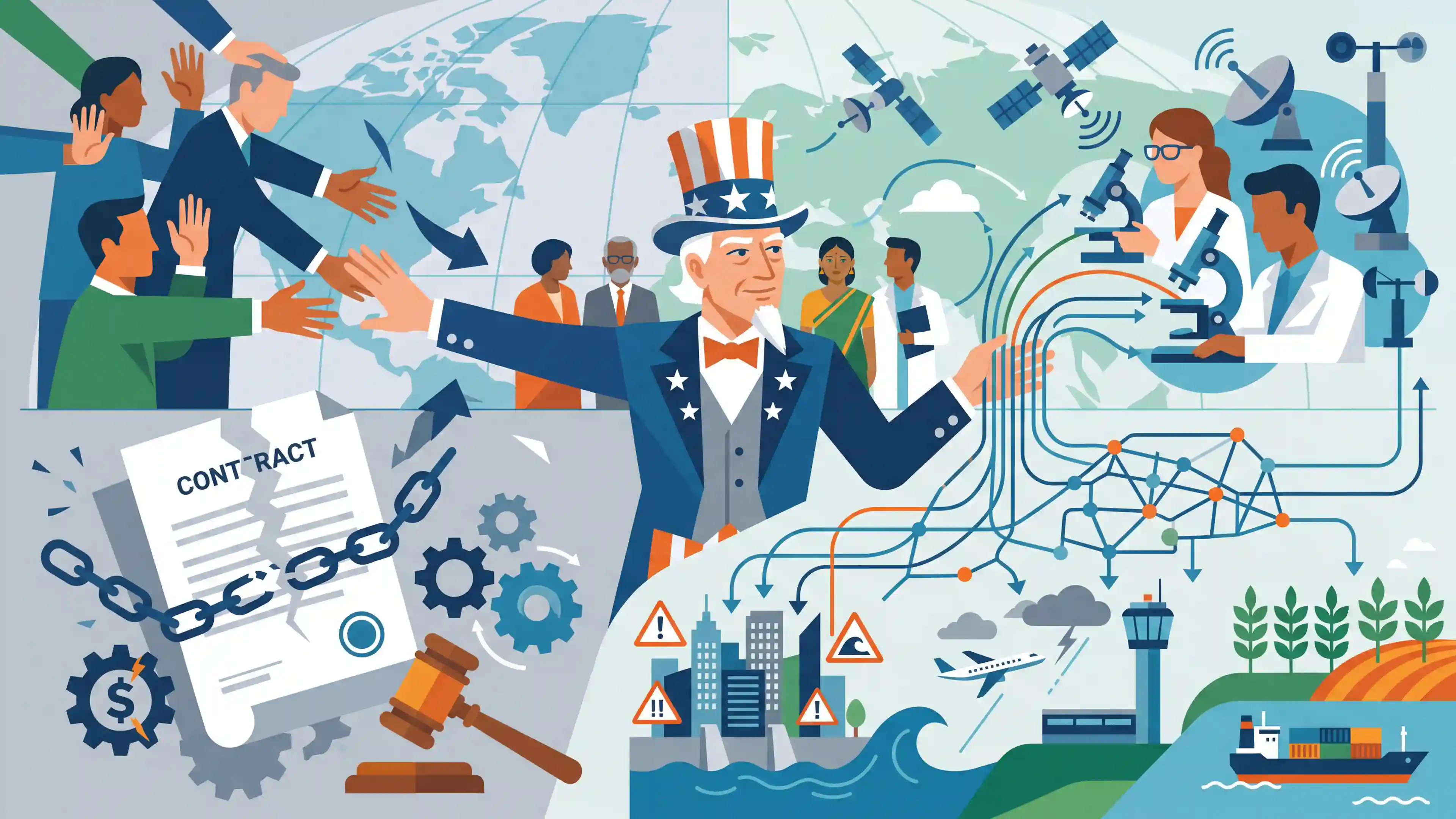
The article explores the strategic calculus behind the United States' selective engagement with global climate organizations. While the US frequently pulls out of policy-driven frameworks such as the Paris Agreement—citing economic disadvantages and sovereignty concerns—it carefully maintains its membership in scientific and technical bodies like the World Meteorological Organization (WMO) and the Intergovernmental Panel on Climate Change (IPCC). The rationale is deeply pragmatic: technical bodies facilitate the critical exchange of weather and scientific data necessary for disaster response, aviation, and economic stability. This selective withdrawal underscores a transactional approach to international relations, where the US prioritizes tangible domestic benefits over binding global climate commitments.
Key Points
- The United States has demonstrated a selective approach to multilateral climate diplomacy, often withdrawing from normative or policy-oriented agreements while remaining in technical bodies.
- Exits from frameworks like the Paris Agreement are largely driven by domestic political priorities, concerns over economic burdens, and a desire to protect national sovereignty over emission targets.
- Conversely, the US tends to stay in scientific and observational organizations such as the World Meteorological Organization (WMO) and the IPCC.
- Membership in technical bodies is maintained because it provides essential benefits like global meteorological data, which is crucial for aviation safety, disaster management, and national security.
- This dichotomy highlights a transactional view of international organizations, where participation is dictated by direct, practical national interests rather than collective global climate goals.
Important Terms
United Nations Framework Convention on Climate Change (UNFCCC)

The 1992 foundational treaty aimed at stabilizing greenhouse gas concentrations to prevent dangerous human interference with the climate system. It serves as the parent framework for the Kyoto Protocol and Paris Agreement.
UPSC context
GS Paper III (Environment). The primary global framework for climate diplomacy and India's participation in annual COP negotiations.
Paris Agreement
A 2015 legally binding international treaty aimed at limiting global warming to well below 2°C, preferably 1.5°C, through individual climate action plans called Nationally Determined Contributions (NDCs).
UPSC context
GS Paper III (Environment) & II (IR). Central to global mitigation efforts and India's commitment to climate targets.
Intergovernmental Panel on Climate Change (IPCC)
The UN body, established in 1988 by WMO and UNEP, responsible for assessing the science related to climate change to provide a scientific basis for government policy.
UPSC context
GS Paper III (Environment). Its Assessment Reports (like AR6) are the gold standard for evidence-based environment policy questions.
World Meteorological Organization (WMO)
A specialized UN agency for meteorology, operational hydrology, and related geophysical sciences. It facilitates the critical global exchange of weather and scientific data used in disaster response and aviation.
UPSC context
GS Paper II (International Organizations). Vital for understanding global scientific cooperation and international disaster management frameworks.
Kyoto Protocol
A 1997 treaty (effective 2005) that set the first legally binding emission reduction targets for industrialized nations, distinguishing them from developing countries based on historical responsibility.
UPSC context
GS Paper III (Environment). Essential historical context for climate justice and the legal evolution of international environmental obligations.
Common But Differentiated Responsibilities (CBDR)
A pillar of international environmental law acknowledging that while all states share the obligation to address climate change, their responsibilities and capabilities differ based on historical contributions.
UPSC context
GS Paper III (Environment). A core concept in debates on climate equity and the North-South divide in global governance.
Prelims Trap
The IPCC formulates binding climate policies and emission reduction targets for its member nations.
The IPCC is explicitly 'policy-relevant but not policy-prescriptive.' It only assesses published scientific literature; it does not set binding targets, conduct original research, or formulate policies.
Static Concepts Connected
How do the mandates of the IPCC and UNFCCC differ?
- IPCC Role: Assesses published scientific, technical, and socio-economic information regarding climate change. It does not conduct original research.
- UNFCCC Role: Serves as the parent treaty for global climate negotiations (like the Paris Agreement) that actively establishes policy frameworks and emission goals.
- Mandate Distinction: IPCC provides the scientific basis (policy-relevant), whereas the UNFCCC negotiates member-state commitments and actions (policy-prescriptive).
What is the core mandate of the World Meteorological Organization (WMO)?
- UN Agency: It is a specialized agency of the United Nations responsible for meteorology, operational hydrology, and related geophysical sciences.
- Data Exchange: Facilitates the free and unrestricted exchange of meteorological data globally, which is critical for aviation, shipping, and disaster management.
- Standardization: Standardizes meteorological observations to ensure uniform and comparable data collection across borders.
Cross-Topic Patterns
Transactional Multilateralism & Global Commons
The US 'a la carte' approach to global governance (staying in WMO, leaving UNFCCC) highlights the vulnerability of funding and enforcing global commons treaties to domestic political shifts.
CBDR-RC principle vs Domestic Politics
US exits from the Paris Agreement consistently pivot on rejecting Common But Differentiated Responsibilities (CBDR), framing emission targets as unfair economic burdens compared to developing nations like China.

Expect a 2026 Prelims question contrasting the distinct mandates of the WMO (data), IPCC (assessment), and UNFCCC (policy).
Linked PYQs · 4
Linked PYQs · 4
- 2019MainsGS2
‘Too little cash, too much politics, leaves UNESCO fighting for life.’ Discuss the statement in the light of US' withdrawal and its accusation of the cultural body as being 'anti-Israel bias'.
- 2025MainsGS3
Write a review on India's climate commitments under the Paris Agreement (2015) and mention how these have been further strengthened in COP26 (2021). In this direction, how has the first Nationally Determined Contribution intended by India been updated in 2022?
- 2025PrelimsGS1
Consider the following statements : Statement I: Article 6 of the Paris Agreement on climate change is frequently discussed in global discussions on sustainable development and climate change. Statement II: Article 6 of the Paris Agreement on climate change sets out the principles of carbon markets. Statement III : Article 6 of the Paris Agreement on climate change intends to promote inter-country non-market strategies to reach their climate targets. Which one of the following is correct in respect of the above statements?
- 2010PrelimsGS1
The United Nations Framework Convention on Climate Change (UNFCCC) is an international treaty drawn at
