Diplomatic engagement and mediation in US-Iran relations
Source:Indian Express ↗
Why It Matters
US-Iran relations heavily influence the geopolitical stability of the Middle East, which directly affects India's energy security, diaspora safety, and strategic investments like the Chabahar Port. Understanding Oman's role as a mediator also sheds light on the regional dynamics of West Asia.
Summary
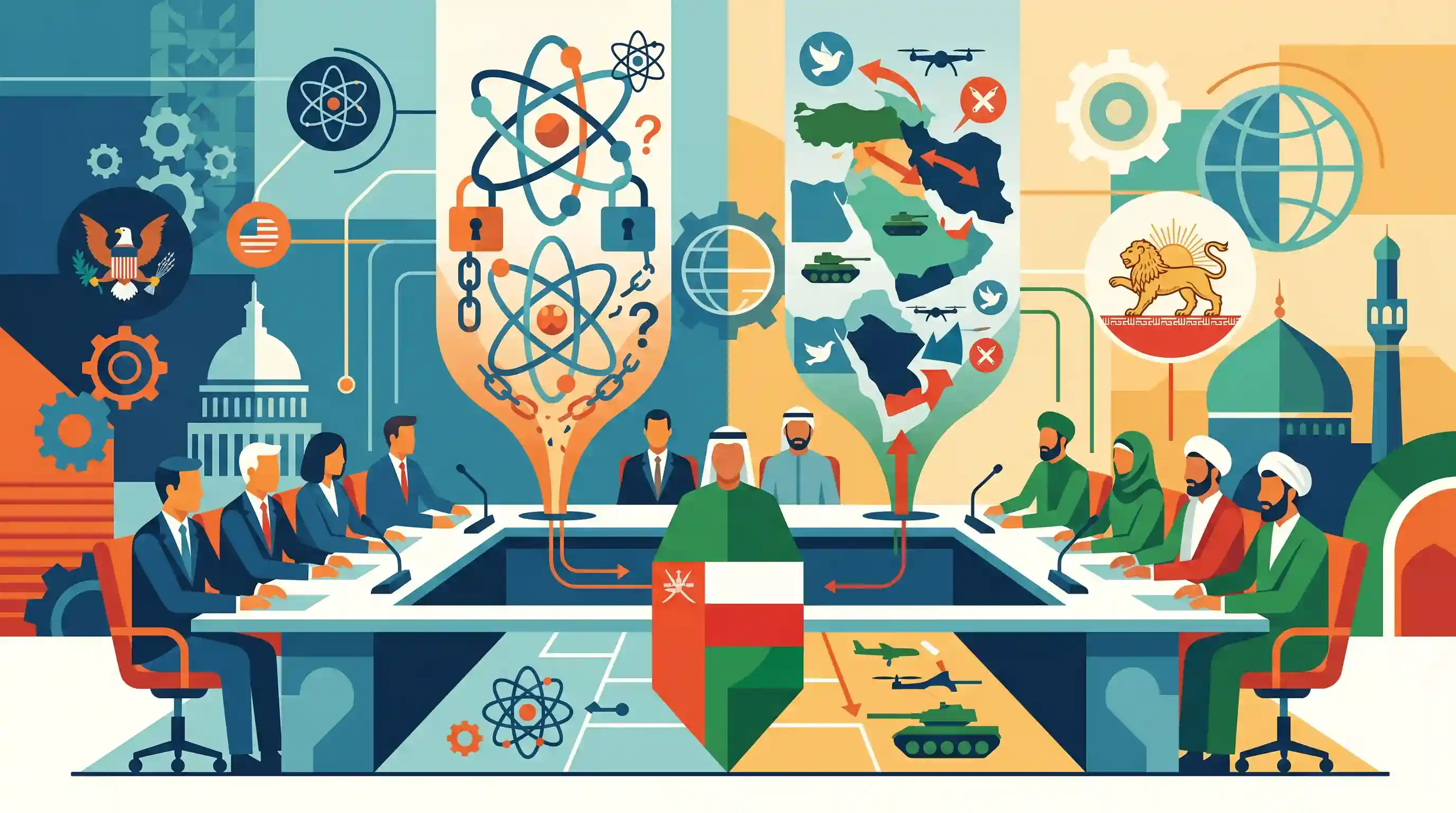
The United States and Iran have agreed to hold talks in Oman, highlighting ongoing diplomatic efforts to manage tensions between the two nations. However, they remain at odds over the meeting's agenda, reflecting deep-seated differences on critical issues such as the nuclear deal (JCPOA) and regional security. The talks also reaffirm Oman's vital position as a trusted mediator in the Middle East.
Key Points
- The United States and Iran have agreed to hold diplomatic talks in Oman.
- Despite agreeing to meet, both sides reportedly remain at odds over the specific agenda of the discussions.
- The development underscores Oman's ongoing and crucial role as a neutral mediator in Middle Eastern geopolitics.
- Such diplomatic engagements are critical for managing regional tensions and potentially addressing issues related to the nuclear pact (JCPOA).
Important Terms
Joint Comprehensive Plan of Action (JCPOA)

The 2015 agreement between Iran and the P5+1 powers limiting Iran's nuclear programme for sanctions relief; its 2025 collapse and 'snapback' sanctions drive current tensions.
UPSC context
GS-II: International Relations. Essential for West Asia geopolitics, nuclear diplomacy, and India's energy security/connectivity (Chabahar).
Backchannel Diplomacy
Unofficial or indirect communication between states, often through neutral intermediaries like Oman, to negotiate sensitive issues without public scrutiny or formal diplomatic recognition.
UPSC context
GS-II: Diplomatic methods. Tests understanding of mediation roles and conflict resolution in volatile regions.
Snapback Mechanism
A provision in UN Resolution 2231 allowing JCPOA signatories to unilaterally reimpose all pre-2015 UN sanctions if Iran violates the deal; triggered in late 2025.
UPSC context
GS-II: International Agreements. Tests knowledge of UN enforcement mechanisms and the legal collapse of the nuclear deal.
P5+1
The group of six world powers—China, France, Russia, the UK, and the US, plus Germany—that negotiated the 2015 nuclear agreement with Iran.
UPSC context
GS-II: Global groupings. Relevant for understanding major power dynamics and multilateral security negotiations.
Strait of Hormuz
A critical maritime chokepoint between the Persian Gulf and Gulf of Oman; handles 20% of world oil and acts as a major strategic lever.
UPSC context
GS-I & GS-II: Geography and IR. Critical for global trade, maritime security, and regional energy stability.
Nuclear Non-Proliferation Treaty (NPT)
A global treaty to prevent nuclear weapon spread and promote peaceful nuclear energy; Iran's potential withdrawal is a central security concern in 2026.
UPSC context
GS-II: International security. Core topic for disarmament and India’s unique stance as a non-signatory.
Prelims Trap
Oman shares a direct coastline with the Persian Gulf.
Oman does not border the main Persian Gulf. Its Musandam exclave forms the southern shore of the Strait of Hormuz connecting to the Gulf of Oman.
Static Concepts Connected
Which geographical features define the Strait of Hormuz?
- Water bodies: It connects the Persian Gulf in the west to the Gulf of Oman and the Arabian Sea in the southeast.
- Flanking nations: It is bounded by Iran to the north and Oman's Musandam Peninsula exclave to the south.
- Strategic transit: It is a critical maritime chokepoint that facilitates approximately 20% of global petroleum transit.
What is the Joint Comprehensive Plan of Action (JCPOA)?
- Core objective: Signed in 2015 to restrict Iran's nuclear program in exchange for the lifting of international economic sanctions.
- Signatories: Negotiated between Iran and the P5+1 (US, UK, France, Russia, China, and Germany) along with the European Union.
- US withdrawal: The US unilaterally withdrew in 2018 under the Trump administration, triggering Iran's subsequent uranium enrichment beyond agreed limits.
Cross-Topic Patterns
Sanctions, energy security, and Rupee trade
The collapse of the JCPOA previously forced India to halt Iranian oil imports, accelerating RBI's push for Rupee Vostro accounts to bypass dollar-denominated secondary sanctions.
Strait of Hormuz vs. Bab el-Mandeb
Oman's neutral diplomacy at the Strait of Hormuz contrasts sharply with Houthi aggression at the Bab el-Mandeb, highlighting the geopolitical volatility of Middle Eastern maritime chokepoints.

Expect a 2026 Prelims map question coupling Oman's Musandam Peninsula, the Strait of Hormuz, and India's maritime access to Chabahar.
Linked PYQs · 2
Linked PYQs · 2
- 2018MainsGS2
In what ways would the ongoing US-Iran Nuclear Pact Controversy affect the national interest of India? How should India respond to this situation?
- 2012MainsGS2
How have the US sanctions against Iran affected India's bilateral relations with Iran?
