US Russia Sanctions Bill Proposes Tariffs Impacting India Ties
Source:Indian Express ↗
આ શા માટે મહત્વનું છે
It highlights the friction between Western secondary sanctions and India's independent foreign policy, especially regarding energy security and defense ties with Russia.
સારાંશ
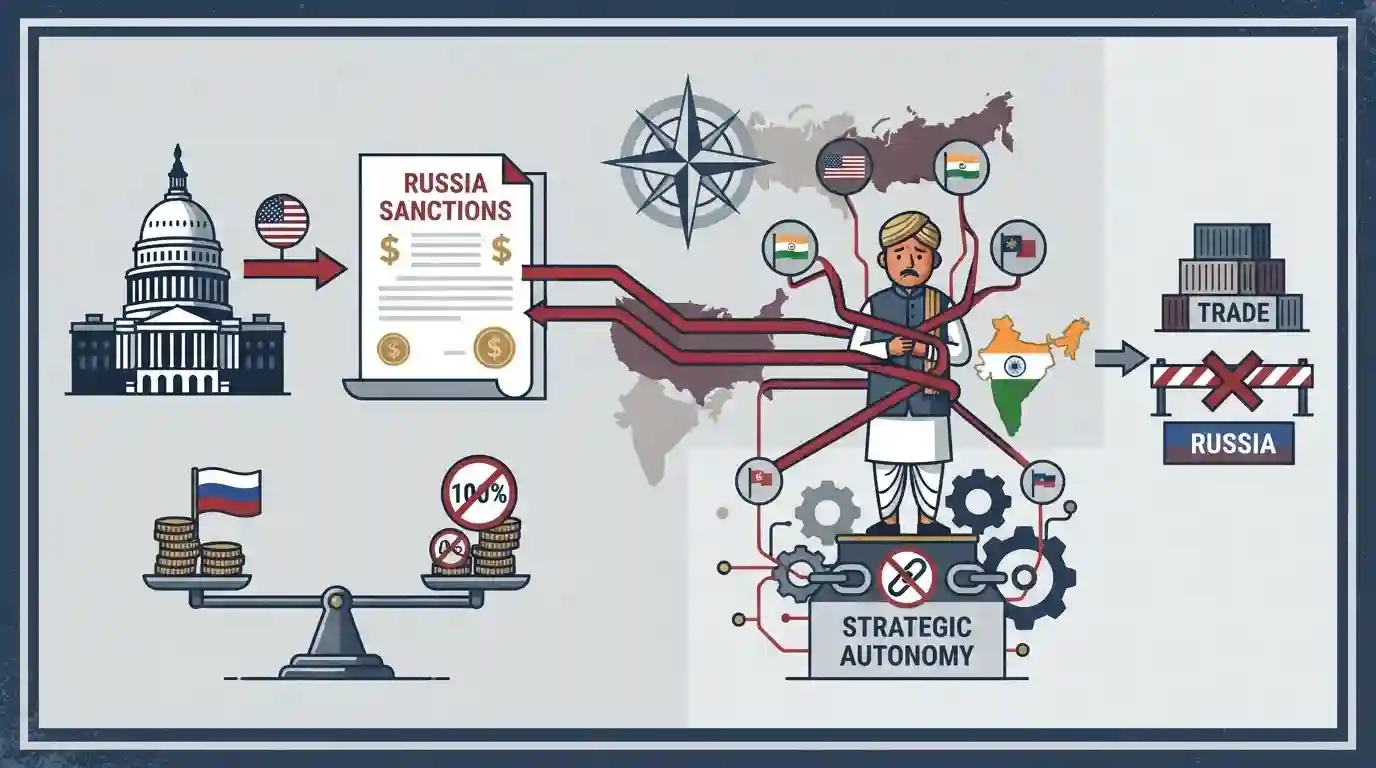
A US sanctions bill targeting Russia has named India, proposing severe measures such as potential 100 percent tariffs for trade or economic cooperation with Moscow. This development underscores the mounting diplomatic and economic pressure on India's strategic autonomy amid ongoing geopolitical tensions.
મુખ્ય મુદ્દા
- The US proposed a Russia sanctions bill that includes provisions naming India among nations facing potential secondary sanctions or high tariffs due to ties with Russia.
- The bill mentions a possible 100% tariff threat linked to trade practices or energy purchases involving Russia, highlighting increasing Western pressure on emerging economies practising strategic autonomy.
- This reflects the complex friction points in India-US relations amid broader geopolitical realignments over the Russia-Ukraine conflict.
મહત્વપૂર્ણ શબ્દો
Russia Sanctions Bill

Proposed US legislative measures targeting Moscow's economic partners, featuring amendments that threaten secondary tariffs of up to 100 percent on nations trading oil or engaging in economic cooperation with Russia.
UPSC context
GS Paper II (International Relations - India-US relations and global geopolitics). Tests understanding of secondary sanctions and strategic autonomy.
US Congress
The bicameral federal legislature of the United States, comprising the Senate and the House of Representatives, responsible for enacting foreign policy legislation and economic sanctions.
UPSC context
GS Paper II (International Relations). Tests knowledge of foreign policy institutions and legislative tools impacting Indian trade and foreign policy.
Russian Government
The central executive authority of the Russian Federation, which faces extensive international sanctions and trade curbs from Western nations following its military actions in Ukraine.
UPSC context
GS Paper II (International Relations). Tests awareness of major geopolitical actors, bilateral partnerships, and global economic dependencies.
પ્રિલિમ્સ ટ્રેપ
proposing severe measures such as potential 100 percent tariffs
A proposed bill in the US Congress is not automatically a law or enacted statute; aspirants often mistake congressional bills for finalized US trade policy.
સંલગ્ન સ્થિર ખ્યાલો
What are secondary sanctions and how do they differ from primary sanctions under international law?
- Primary Scope: Primary sanctions prohibit domestic entities/citizens from trading with a targeted country.
- Extraterritorial Reach: Secondary sanctions penalize third-country entities that trade with the targeted country, often extraterritorially.
- Legality Debate: They lack explicit authorization from the UN Security Council, raising debates under international customary law and sovereignty.
આંતર-વિષય પેટર્ન
Sanctions vs. WTO Tariff Bindings
Secondary sanctions and trade weaponization frequently conflict with WTO non-discrimination principles and General Agreement on Tariffs and Trade (GATT) rules.
Energy Security vs. Plurilateral Coalitions
India's energy diversification and discounted oil imports illustrate the friction between unilateral Western sanctions and plurilateral groupings like BRICS.

US secondary sanctions bills naming India will likely be paired with CAATSA waivers or Indo-US tech-trade pacts in a multi-statement MCQ.
સંલગ્ન PYQ · 2
સંલગ્ન PYQ · 2
- 2020MainsGS2
What is the significance of Indo-US defence deals over Indo-Russian defence deals? Discuss with reference to stability in the Indo-Pacific region.
- 2025MainsGS3
What are the challenges before the Indian economy when the world is moving away from free trade and multilateralism to protectionism and bilateralism? How can these challenges be met?
