West Asia Conflict Dynamics and Strait of Hormuz Geopolitics
Source:Indian Express ↗
Why It Matters
West Asian geopolitics, energy security (chokepoints like the Strait of Hormuz), and bilateral relations involving the Indian diaspora are recurring and highly significant topics in both UPSC Prelims and Mains (GS1 and GS2).
Summary
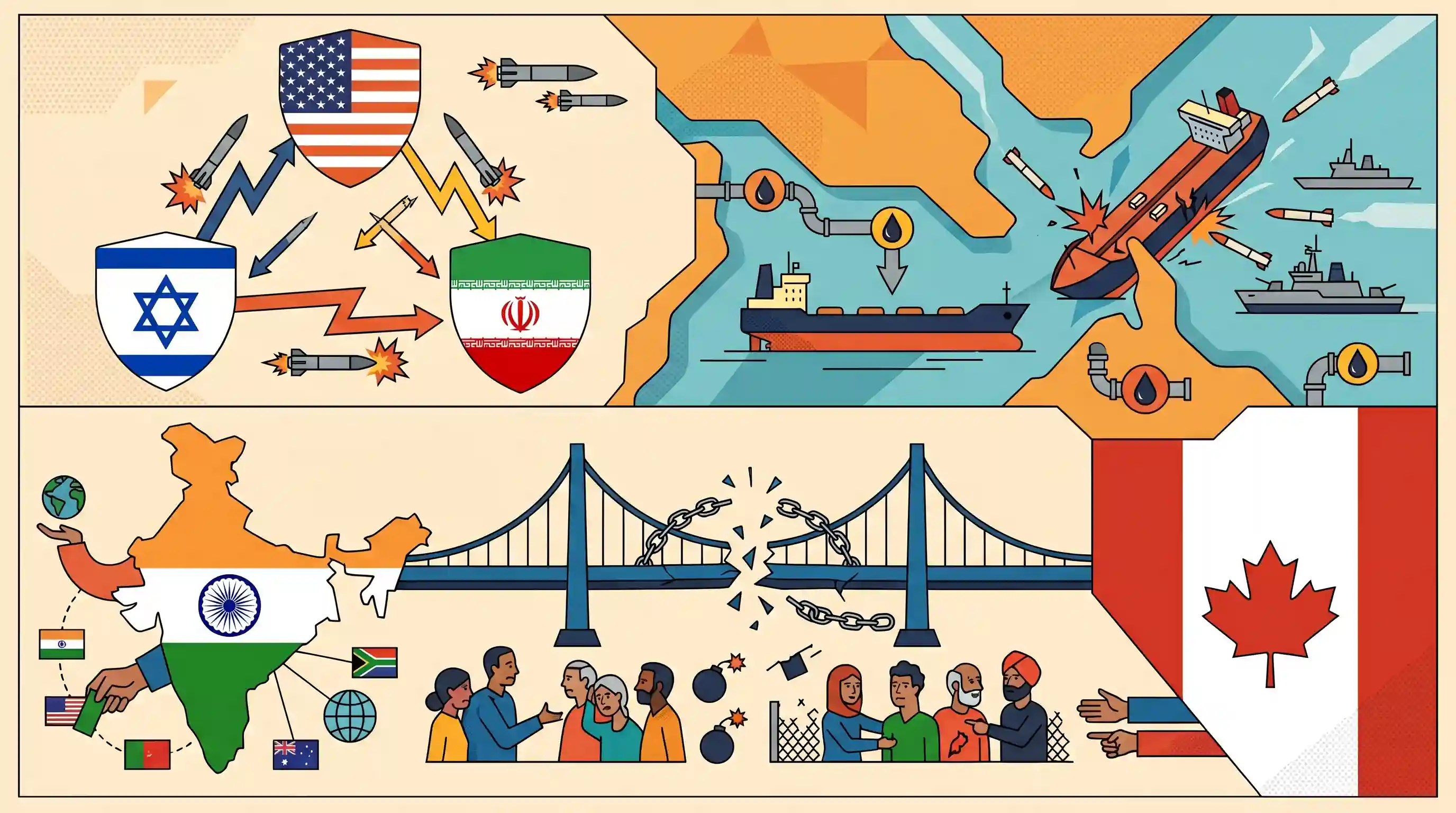
The article highlights major geopolitical developments relevant to the UPSC examination, primarily focusing on the escalating conflict between the US, Israel, and Iran. This conflict threatens regional stability in West Asia and global energy security, particularly concerning the Strait of Hormuz—a critical maritime chokepoint for global oil transit between the Persian Gulf and the Gulf of Oman. Additionally, the piece examines the strained diplomatic relations between India and Canada, underscoring the complexities of diaspora politics, extremism, and the broader foreign policy challenges India faces in balancing its strategic partnerships.
Key Points
- Ongoing tensions between the US, Israel, and Iran are destabilizing West Asia and raising concerns over global energy security and supply chains.
- The Strait of Hormuz remains a critical geographic and strategic chokepoint, facilitating the passage of a significant portion of the world's crude oil supply.
- The India-Canada diplomatic relationship has deteriorated sharply due to allegations of foreign interference and issues related to the Indian diaspora and extremism.
- India's foreign policy faces tests in balancing strategic partnerships in the Middle East while navigating complex diaspora-related diplomatic rows in Western nations.
Prelims Trap
The Strait of Hormuz connects the Red Sea to the Gulf of Aden and is bordered by Iran and the UAE.
It connects the Persian Gulf to the Gulf of Oman. Its southern border is Oman (Musandam Peninsula), not the UAE. Bab el-Mandeb borders the Red Sea.
Static Concepts Connected
What are the key maritime chokepoints in West Asia?
- Strait of Hormuz: Connects the Persian Gulf to the Gulf of Oman and Arabian Sea. Bordered by Iran (north) and Oman (south).
- Bab el-Mandeb: Connects the Red Sea to the Gulf of Aden and Arabian Sea. Bordered by Yemen, Djibouti, and Eritrea.
- Suez Canal: Connects the Mediterranean Sea to the Red Sea, eliminating the need to navigate around Africa. Controlled by Egypt.
What is India's 'De-hyphenation' policy in West Asia?
- Independent Ties: Maintaining mutually exclusive strategic relationships with regional rivals (e.g., Israel and Palestine, or Iran and Saudi Arabia) simultaneously.
- Merit-based Engagement: Evaluating each bilateral relationship on its own independent merits and economic logic, rather than viewing it through the lens of a third country.
Cross-Topic Patterns
Energy Security & Petroleum Reserves
Escalations in the Strait of Hormuz threaten global oil supply, linking West Asian conflicts directly to India's macroeconomic stability and the necessity of its Strategic Petroleum Reserves (SPR) policy.
Diaspora: Remittance Asset vs Security Threat
The Gulf diaspora yields vital remittances, whereas diaspora politics in Canada complicates bilateral relations and fuels Khalistani extremism, demonstrating the dual-edged nature of India's overseas populations.

2026 Prelims will likely feature a map-matching question pairing West Asian straits (Hormuz, Bab el-Mandeb) with bordering nations.
Linked PYQs · 4
Linked PYQs · 4
- 2022PrelimsGS1
The term "Levant" often heard in the news roughly corresponds to which of the following regions?
- 2020MainsGS2
Indian diaspora has a decisive role to play in the politics and economy of America and European Countries'. Comment with examples.
- 2012MainsGS2
Write a short analytical note on Indian Diaspora. How is the "New Diaspora" different from the "Old Diaspora"?
- 2024MainsGS2
Critically analyse India's evolving diplomatic, economic and strategic relations with the Central Asian Republics (CARs) highlighting their increasing significance in regional and global geopolitics.
