Bilateral Ties with Mauritius and Nepal and Vivekananda
Source:Indian Express ↗
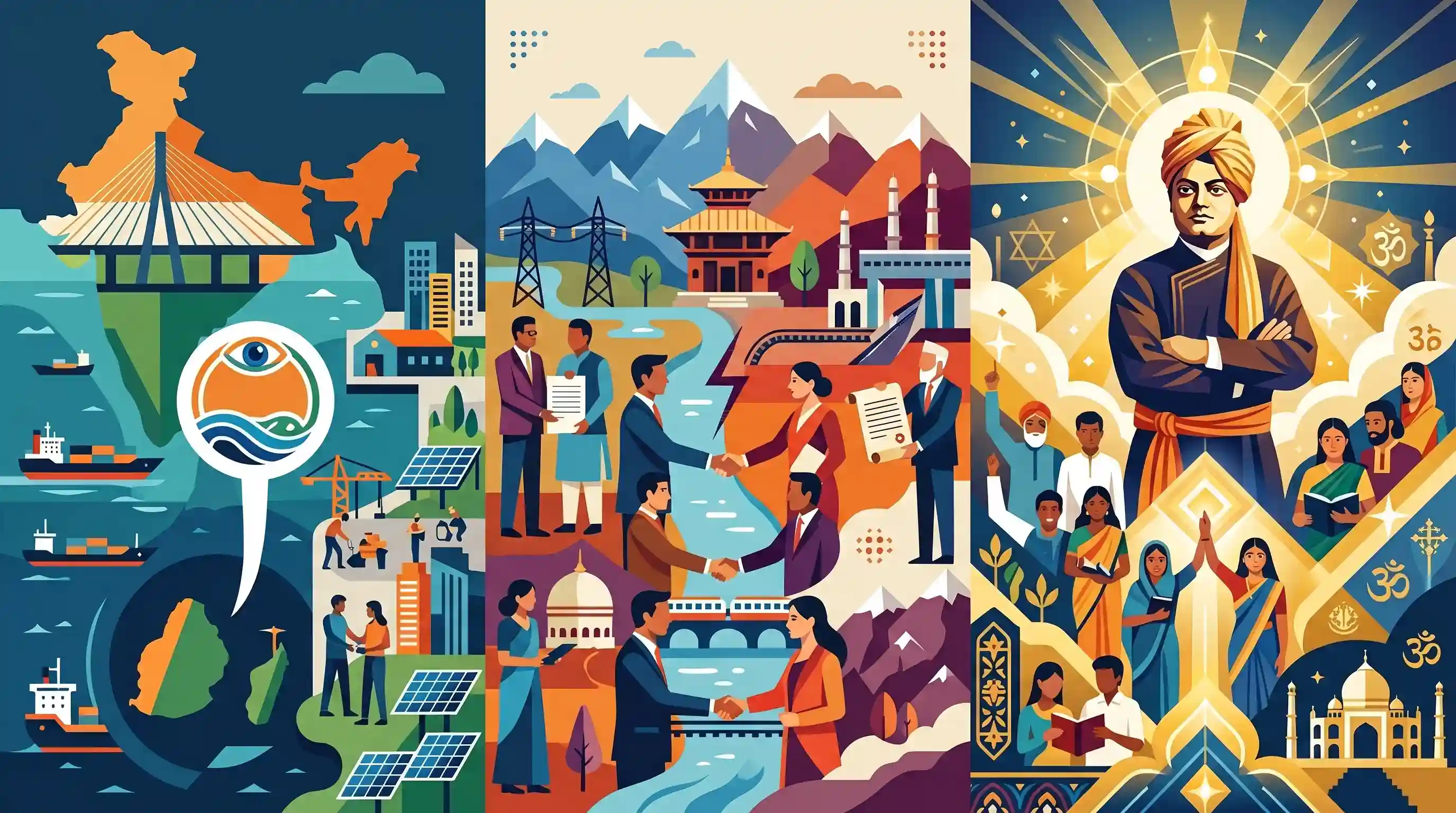
Why It Matters
International relations in India's immediate and extended neighborhood (Nepal, Mauritius) form the core of GS-2 Mains. Additionally, Swami Vivekananda's contributions to socio-religious reform are frequently tested in GS-1 History and Essay papers.
Summary
This article examines three diverse UPSC-relevant themes: the strategic and developmental partnerships between India and Mauritius under the SAGAR initiative, the multi-faceted but occasionally contentious India-Nepal bilateral relations governed by historical treaties, and the enduring legacy of Swami Vivekananda in shaping India's socio-religious renaissance and cultural nationalism.
Key Points
- India and Mauritius share deep bilateral ties rooted in the SAGAR vision, with India playing a pivotal role in Mauritius' infrastructure and maritime security, including developments like Agalega Island.
- India-Nepal relations are characterized by an open border and deep cultural ties anchored by the 1950 Treaty of Peace and Friendship, though border demarcations and hydro-power cooperation remain active topics of bilateral engagement.
- Swami Vivekananda is celebrated for introducing Vedanta and Yoga to the Western world, most notably through his 1893 Chicago address, and for promoting socio-religious reforms and youth empowerment via the Ramakrishna Mission.
Important Terms
Neighbourhood First Policy

A core Indian foreign policy prioritizing stable, friendly relations with immediate neighbors. It emphasizes non-reciprocity, enhanced regional connectivity, and development cooperation to ensure a peaceful, prosperous South Asian region.
UPSC context
GS Paper II (International Relations). Evaluates India’s regional diplomacy, border security management, and strategies to counter external influences in its vicinity.
SAGAR (Security and Growth for All in the Region)
India's maritime doctrine for the Indian Ocean Region, promoting collective security and sustainable economic growth. It underscores India's role as a net security provider and its commitment to cooperative maritime engagement.
UPSC context
GS Paper II (International Relations). Focuses on maritime diplomacy, Indo-Pacific strategy, and non-traditional security threats like piracy.
India-Nepal Treaty of Peace and Friendship (1950)
A foundational agreement institutionalizing a "special relationship" between India and Nepal. It enables open borders and grants citizens reciprocal rights in residence, property, and employment, forming the bedrock of bilateral ties.
UPSC context
GS Paper II (India-Neighborhood). Crucial for analyzing historical linkages, "Roti-Beti" relations, and contemporary calls for diplomatic revision.
Ramakrishna Mission
A philanthropic and spiritual organization founded by Swami Vivekananda in 1897. It emphasizes "Practical Vedanta," advocating for social service (Seva), education, and humanitarian relief as the highest forms of spiritual practice.
UPSC context
GS Paper I (Modern Indian History). Tests knowledge of 19th-century social reform movements and Vivekananda’s influence on cultural nationalism.
Prelims Trap
"Agalega Island, where India is developing strategic maritime infrastructure, is located in the Seychelles."
Agalega Island is in Mauritius, while Assumption Island is in Seychelles. UPSC frequently swaps these strategic Indian Ocean islands in mapping-based matching pairs.
Static Concepts Connected
What are the core components of India's SAGAR doctrine in the Indian Ocean?
- Capacity Building: Enhancing the economic and maritime security capacities of littoral states through infrastructure like coastal radars.
- Net Security Provider: Positioning India as a reliable first responder to natural disasters and non-traditional threats like piracy.
- Rule-Based Order: Ensuring a climate of trust and transparency while respecting international maritime law (UNCLOS).
What were the core ideological foundations of Swami Vivekananda's socio-religious philosophy?
- Neo-Vedanta: Reinterpreted ancient philosophy to emphasize practical spirituality, asserting that service to mankind (Jiva) is service to God (Shiva).
- Universal Tolerance: Advocated the fundamental truth and unity of all religions, famously articulated during his 1893 Chicago address.
- Youth Empowerment: Promoted physical strength, rationalism, and self-reliance to overcome colonial subjugation and drive India's cultural renaissance.
Cross-Topic Patterns
Cross-Border Energy & Climate Goals
India's commitment to buying 10,000 MW from Nepal bridges bilateral diplomacy with India's INDC climate targets and broader regional energy integration efforts (BBIN energy grid).
Spiritual Awakening to Political Extremism
Vivekananda's socio-religious reforms and emphasis on 'man-making' education laid the spiritual and ideological groundwork for the extremist phase of the Indian National Movement, inspiring figures like Aurobindo Ghosh.
Agalega and Indian Ocean Geopolitics
Infrastructure on Agalega maps directly onto India's strategy to counter China's expanding footprint (String of Pearls) and ensure maritime domain awareness in the critical Southwest Indian Ocean.

Expect a 2026 prelims mapping question matching strategic Indian Ocean islands (Agalega, Assumption, Diego Garcia) with their host nations.
Linked PYQs · 3
Linked PYQs · 3
- 2024MainsGS2
Discuss the geopolitical and geostrategic importance of Maldives for India with a focus on global trade and energy flows. Further also discuss how this relationship affects India's maritime security and regional stability amidst international competition ?
- 2021MainsGS1
Trace the rise and growth of socio-religious reform movements with special reference to Young Bengal and Brahmo Samaj.
- 2022MainsGS2
India is an age-old friend of Sri Lanka.’ Discuss India's role in the recent crisis in Sri Lanka in the light of the preceding statement.
