वैश्विक प्लास्टिक संधि IMEC कॉरिडोर और कृषि निर्यात
स्रोत:इंडियन एक्सप्रेस ↗
क्यों मायने रखता है
These topics are staples for UPSC Prelims and Mains. The Plastics Treaty tests understanding of environmental governance and microplastics. IMEC is crucial for GS2 International Relations and GS3 Infrastructure, reflecting India's strategic footprint. Farm exports tie directly to GS3 syllabus on agricultural marketing, supply chains, and economic growth.
सारांश
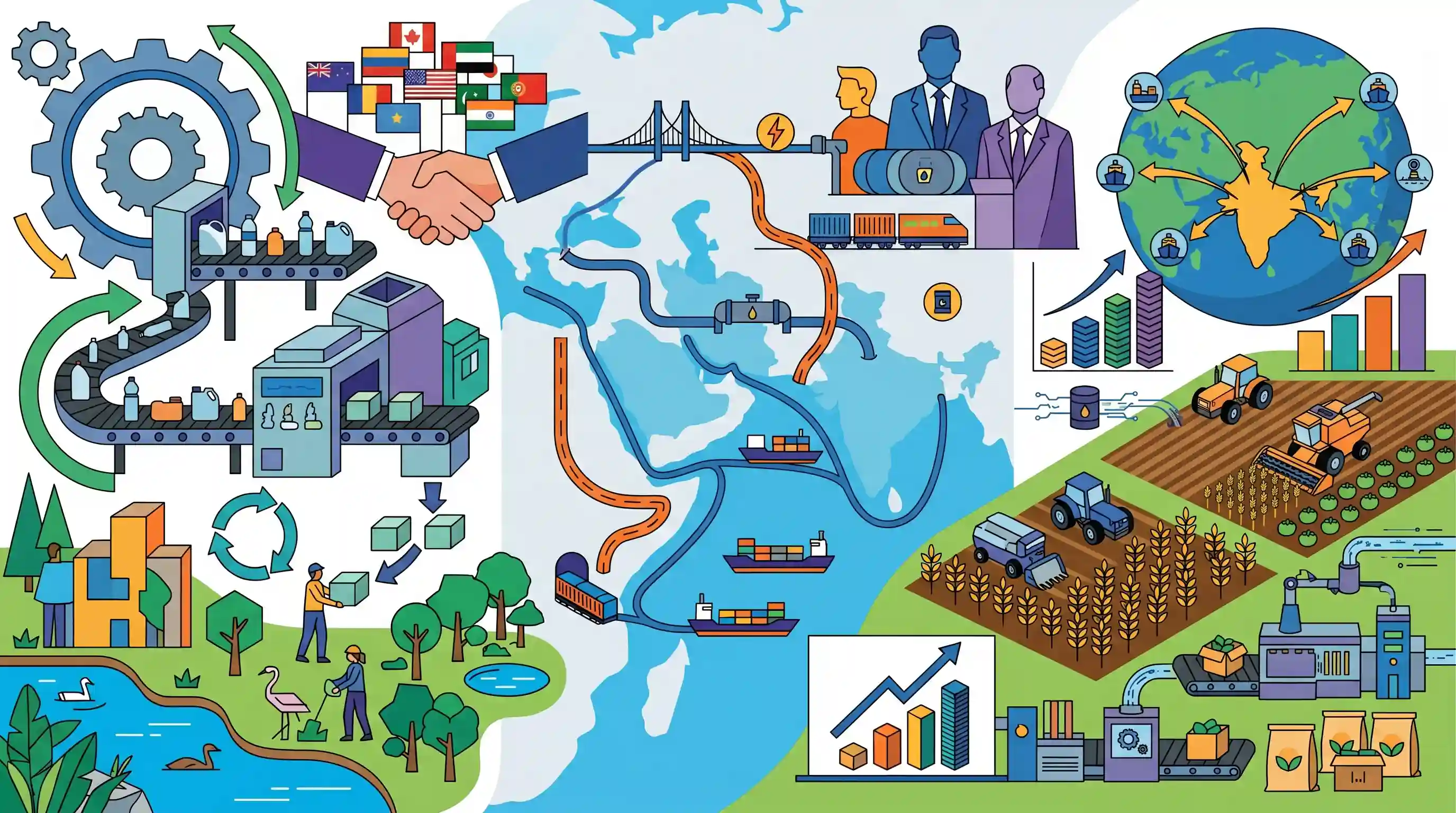
This multi-dimensional UPSC Key covers three critical developments across environment, international relations, and economy. The Global Plastics Treaty represents a landmark international effort to mandate lifecycle management of plastics to combat pervasive pollution, relevant to ecological conservation. Geopolitically, the India-Middle East-Europe Economic Corridor (IMEC) is analyzed as a transformative connectivity network bridging three regions to foster trade integration and energy security. On the economic front, India's rising farm exports reflect successful supply chain optimization and expanding global market footprints for agricultural commodities, demonstrating the intersection of trade policy and agricultural marketing.
मुख्य बिंदु
- The proposed Global Plastics Treaty seeks a legally binding mechanism to curb plastic pollution throughout its entire lifecycle, emphasizing a transition towards a circular economy and extended producer responsibility (EPR).
- इंडिया-मिडल ईस्ट-यूरोप इकोनॉमिक कॉरिडोर (IMEC) एक रणनीतिक मेगा-इन्फ्रास्ट्रक्चर पहल है जिसे अंतर-क्षेत्रीय व्यापार, ऊर्जा परिवहन और डिजिटल कनेक्टिविटी को बढ़ाने के लिए डिज़ाइन किया गया है, जो चीन की बेल्ट एंड रोड इनिशिएटिव के एक भू-आर्थिक विकल्प के रूप में कार्य करता है।
- India's agricultural exports are witnessing a notable upward trajectory, driven by improved supply chain management, enhanced market access strategies, and a focus on processed food exports to maximize value realization.
- कुल मिलाकर, ये घटनाक्रम वैश्विक पर्यावरणीय शासन में भारत की सक्रिय भागीदारी, सक्रिय क्षेत्रीय कूटनीति और विकसित होती कृषि व्यापार नीतियों को रेखांकित करते हैं।
महत्वपूर्ण शब्द
वैश्विक प्लास्टिक संधि

UNEA प्रस्ताव 5/14 द्वारा अधिदेशित एक प्रस्तावित कानूनी रूप से बाध्यकारी अंतर्राष्ट्रीय समझौता, जिसका उद्देश्य डिजाइन और उत्पादन से लेकर निपटान तक, प्लास्टिक के संपूर्ण जीवनचक्र को संबोधित करके प्लास्टिक प्रदूषण को समाप्त करना है।
UPSC context
GS पेपर III: पर्यावरण एवं पारिस्थितिकी। अंतर्राष्ट्रीय संधियों, प्रदूषण नियंत्रण उपायों और सतत विकास की समझ का परीक्षण करता है।
India-Middle East-Europe Economic Corridor (IMEC)
A multimodal connectivity network connecting India, the Arabian Gulf, and Europe via shipping and rail, aimed at fostering economic integration, energy security, and digital connectivity.
UPSC context
GS Paper II: International Relations. Tests knowledge of strategic infrastructure, regional geopolitics, and alternatives to China's BRI.
Partnership for Global Infrastructure and Investment (PGII)
A G7-led collaborative effort to mobilize $600 billion by 2027 to finance transparent, high-quality infrastructure in developing nations, serving as an alternative to China's Belt and Road Initiative.
UPSC context
GS Paper II: International Relations. Relevant for G7 initiatives, global financial governance, and geopolitical infrastructure competition.
UN Environment Programme (UNEP)
Established in 1972, this leading global environmental authority coordinates environmental activities within the UN system and promotes sustainable development through treaties and scientific assessments.
UPSC context
GS Paper II/III: International Organizations/Environment. Tests knowledge of global governance bodies and environmental advocacy.
अंतर-सरकारी वार्ता समिति (INC)
A body established by UNEA to draft a legally binding instrument on plastic pollution. It facilitates negotiations among 175 member states to finalize the treaty's framework.
UPSC context
जीएस पेपर III: पर्यावरण। अंतर्राष्ट्रीय वार्ता प्रक्रियाओं और वैश्विक पर्यावरणीय कानून-निर्माण के विशिष्ट चरणों के प्रति जागरूकता का परीक्षण करता है।
APEDA (Agricultural and Processed Food Products Export Development Authority)
वाणिज्य एवं उद्योग मंत्रालय के तहत एक सांविधिक निकाय, जिसकी स्थापना 1986 में अनुसूचित कृषि और प्रसंस्कृत खाद्य उत्पादों के निर्यात को बढ़ावा देने और विनियमित करने के लिए की गई थी।
UPSC context
GS Paper III: Economy/Agriculture. Critical for topics on agricultural marketing, export promotion, and statutory regulatory bodies.
प्रारंभिक ट्रैप
The Global Plastics Treaty restricts its mandate strictly to marine plastic pollution and end-of-life waste disposal.
The treaty uniquely targets the full lifecycle of plastics, covering upstream processes like raw material extraction and production, not just downstream waste management.
संबंधित अवधारणाएँ
What is Extended Producer Responsibility (EPR) under Indian rules?
- प्रदूषणकर्ता भुगतान करे: It legally and financially obligates producers, importers, and brand owners to manage post-consumer packaging waste.
- वैधानिक आधार: भारत में प्लास्टिक अपशिष्ट प्रबंधन नियमों के तहत लागू, जो पर्यावरण (संरक्षण) अधिनियम, 1986 से शक्ति प्राप्त करते हैं।
- Circular Economy: पैकेजिंग में पुनर्चक्रित प्लास्टिक सामग्री के प्रगतिशील एकीकरण को अनिवार्य करता है ताकि एक चक्रीय पारिस्थितिकी तंत्र (circular ecosystem) को बढ़ावा दिया जा सके।
What is the mandate and structure of APEDA?
- नोडल मंत्रालय: It is a statutory body established under the APEDA Act, 1985, functioning under the Ministry of Commerce and Industry (not Agriculture).
- मुख्य अधिदेश: Responsible for export promotion, financial assistance, and quality standard setting for scheduled agricultural and processed food products.
अंतर-विषय पैटर्न
IMEC + लाल सागर भू-राजनीति
IMEC की मल्टी-मॉडल प्रकृति भीड़भाड़ वाली Suez Canal के लिए एक रणनीतिक बाईपास प्रदान करती है, जो भारत की व्यापार सुरक्षा को मध्य पूर्वी समुद्री चोकपॉइंट्स (maritime chokepoints) के साथ गहराई से जोड़ती है।
प्लास्टिक संधि + चक्रीय अर्थव्यवस्था
प्लास्टिक जीवनचक्र प्रबंधन पर वैश्विक अधिदेश सीधे तौर पर भारत के LiFE (Lifestyle for Environment) के घरेलू प्रयासों और स्वदेशी EPR प्रवर्तन ढांचों से जुड़े हुए हैं।
निर्यात प्रतिस्पर्धात्मकता + WTO सब्सिडी
India's push for agricultural export value realization frequently clashes with WTO subsidy rules (AoA) over domestic MSP guarantees and public stockholding.

Expect a Prelims question combining IMEC's geographical port nodes (Eastern/Northern corridors) with its G7 PGII funding origins.
संबद्ध PYQ · 5
संबद्ध PYQ · 5
- 2024PrelimsGS1
Consider the following statements : Statement-I: Many chewing gums found in the market are considered a source of environmental pollution. Statement-II : Many chewing gums contain plastic as gum base. Which one of the following is correct in respect of the above statements?
- 2025PrelimsGS1
Consider the following: I. Cigarette butts II. Eyeglass lenses III. Car tyres How many of them contain plastic?
- 2025MainsGS2
"Energy security constitutes the dominant kingpin of India's foreign policy, and is linked with India's overarching influence in Middle Eastern countries.” How would you integrate energy security with India's foreign policy trajectories in the coming years?
- 2020MainsGS3
What are the main constraints in transport and marketing of agricultural produce in India?
- 2025MainsGS3
Elaborate the scope and significance of supply chain management of agricultural commodities in India.
