गगनयान की प्रगति और राजनीतिक फंडिंग में सुधार
स्रोत:इंडियन एक्सप्रेस ↗
क्यों मायने रखता है
Understanding human spaceflight milestones is vital for GS-3 (Science & Tech). The regulation of political funding impacts GS-2 (Polity) discussions on free and fair elections, while the Atomic Energy Act frames India's nuclear doctrine and energy security debates.
सारांश
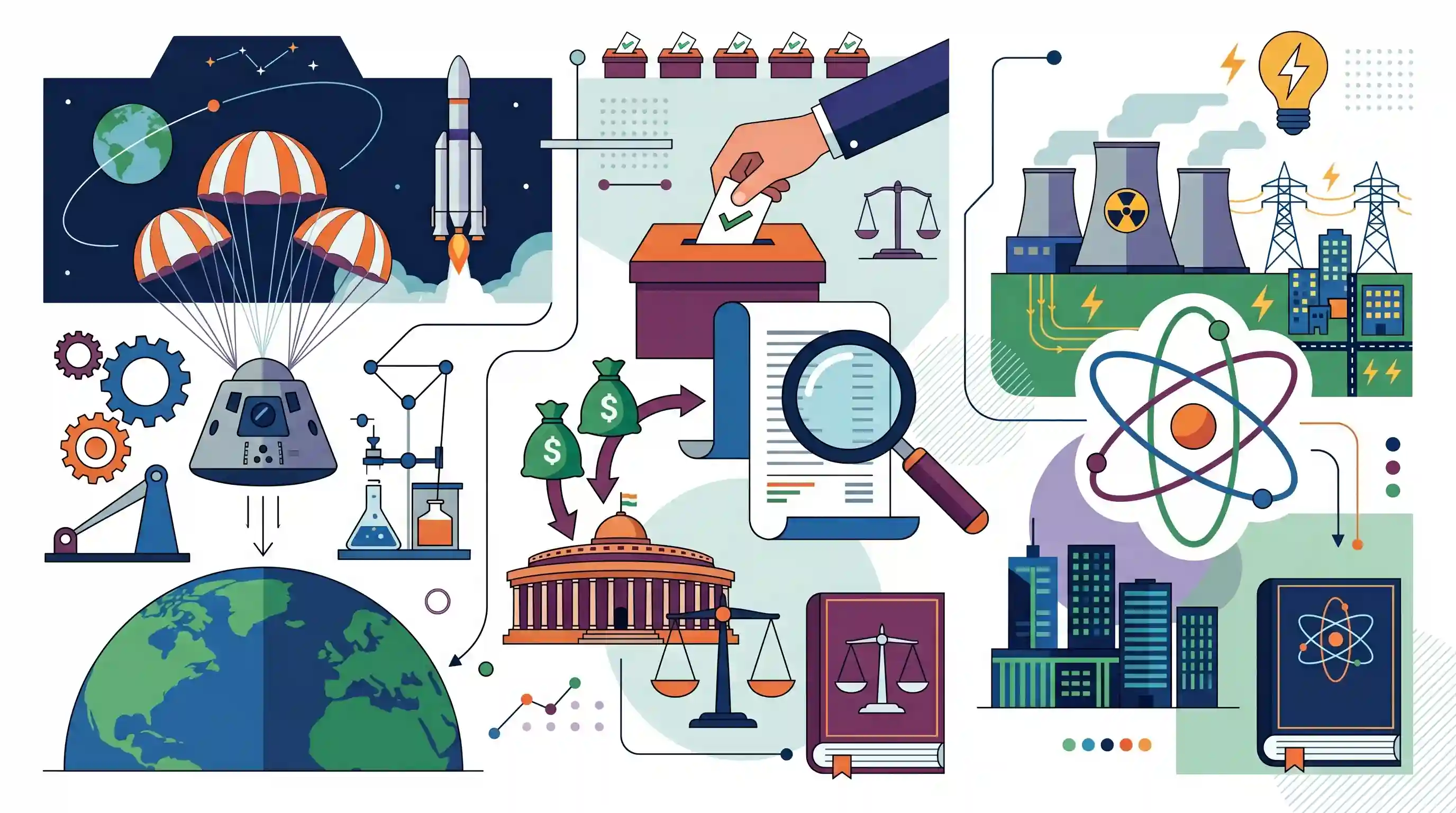
The article provides a roundup of critical UPSC topics spanning science, technology, and polity. It tracks the progress of ISRO's ambitious Gaganyaan human spaceflight mission, focusing on key safety and recovery tests like parachute deployment. In polity, it addresses the persistent debates surrounding the funding of political parties, electoral transparency, and associated legal frameworks like the Representation of the People Act. Finally, it delves into India's Atomic Energy Act, detailing the legislative backbone that governs India's dual-purpose nuclear energy program.
मुख्य बिंदु
- ISRO का गगनयान मिशन महत्वपूर्ण परीक्षणों के साथ निरंतर प्रगति कर रहा है, जिसमें क्रू मॉड्यूल की रिकवरी और अंतरिक्ष यात्रियों की सुरक्षा के लिए महत्वपूर्ण पैराशूट सिस्टम के परीक्षण शामिल हैं।
- Funding mechanisms for political parties remain a focal point of electoral reform, emphasizing transparency and accountability under the Representation of the People Act.
- परमाणु ऊर्जा अधिनियम भारत के परमाणु कार्यक्रम का वैधानिक आधार है, जो नागरिक और रणनीतिक दोनों उद्देश्यों के लिए परमाणु ऊर्जा के विकास, नियंत्रण और उपयोग को विनियमित करता है।
महत्वपूर्ण शब्द
गगनयान मिशन

ISRO's mission to demonstrate indigenous human spaceflight capability by sending a three-member crew to a 400 km Low Earth Orbit for three days and returning them safely to Earth.
UPSC context
सामान्य अध्ययन प्रश्न पत्र III (विज्ञान एवं प्रौद्योगिकी); स्वदेशीकरण, अंतरिक्ष अन्वेषण के मील के पत्थर और ISRO की तकनीकी प्रगति पर केंद्रित है।
Representation of the People Act, 1951
1951 का एक अधिनियम जो चुनाव संपन्न कराने के लिए कानूनी ढांचा प्रदान करता है, उम्मीदवारों की योग्यता/अयोग्यता (जैसे, धारा 8) को निर्दिष्ट करता है, और राजनीतिक दलों के पंजीकरण तथा चुनावी अपराधों को विनियमित करता है।
UPSC context
GS Paper II (Polity/Governance); essential for topics on electoral reforms, transparency in funding, and disqualification of legislators.
परमाणु ऊर्जा अधिनियम, 1962
भारत के परमाणु कार्यक्रम को विनियमित करने वाला प्रमुख कानून, जो सुरक्षा और गोपनीयता सुनिश्चित करने के साथ-साथ परमाणु खनिजों, ऊर्जा उत्पादन और अनुसंधान पर केंद्र सरकार को अनन्य नियंत्रण प्रदान करता है।
UPSC context
GS पेपर III (इन्फ्रास्ट्रक्चर/ऊर्जा) और GS पेपर II (सरकारी नीतियां); भारत के दोहरे उद्देश्य वाले परमाणु कार्यक्रम के विधायी ढांचे से संबंधित है।
परमाणु ऊर्जा नियामक बोर्ड (AERB)
A statutory body established in 1983 under the Atomic Energy Act to oversee and enforce safety and regulatory standards for all nuclear and radiation-related activities in India.
UPSC context
GS Paper II (Statutory Bodies/Governance); critical for understanding nuclear safety oversight and the functioning of the Department of Atomic Energy.
भारत निर्वाचन आयोग (ECI)
A permanent constitutional body (Article 324) responsible for the superintendence, direction, and control of elections to Parliament, State Legislatures, and the offices of President and Vice-President.
UPSC context
GS पेपर II (संवैधानिक निकाय); इसकी शक्तियों, चुनावी पारदर्शिता में भूमिका और आदर्श आचार संहिता (Model Code of Conduct) के प्रवर्तन पर अक्सर प्रश्न पूछे जाते हैं।
अंतरराष्ट्रीय परमाणु ऊर्जा एजेंसी (IAEA)
1957 में स्थापित एक स्वायत्त अंतरराष्ट्रीय संगठन जो परमाणु ऊर्जा के शांतिपूर्ण उपयोग को बढ़ावा देता है और सुरक्षा उपायों (safeguards) की एक प्रणाली के माध्यम से यह सुनिश्चित करता है कि इसका उपयोग सैन्य उद्देश्यों के लिए न किया जाए।
UPSC context
GS पेपर II (अंतर्राष्ट्रीय संबंध); भारत के नागरिक परमाणु समझौतों और सेफगार्डेड (नागरिक) एवं नॉन-सेफगार्डेड (सैन्य) रिएक्टरों के बीच अंतर के लिए प्रासंगिक।
प्रारंभिक ट्रैप
"Private sector entities are permitted to independently own and operate nuclear power plants in India."
The Atomic Energy Act of 1962 grants the Central Government a monopoly. Private companies can supply components or serve as contractors, but cannot independently own or operate nuclear plants in India.
संबंधित अवधारणाएँ
RPA 1951 के तहत राजनीतिक वित्तपोषण के मुख्य वैधानिक नियम क्या हैं?
- धारा 29B: पंजीकृत राजनीतिक दलों को स्वैच्छिक योगदान स्वीकार करने की अनुमति देता है, लेकिन सरकारी स्वामित्व वाली कंपनियों और विदेशी स्रोतों से धन प्राप्त करने पर स्पष्ट रूप से प्रतिबंध लगाता है।
- धारा 29C: Mandates parties to submit a report to the ECI declaring individual donations exceeding ₹20,000 to remain eligible for income tax exemptions.
गगनयान जैसे मानव अंतरिक्ष उड़ान मिशनों के लिए Low Earth Orbit (LEO) को क्यों चुना जाता है?
- पेलोड दक्षता: LEO (गगनयान के लिए 400 किमी) को उच्च कक्षाओं की तुलना में काफी कम लॉन्च ऊर्जा की आवश्यकता होती है, जिससे लॉन्च व्हीकल क्रू मॉड्यूल और लाइफ सपोर्ट सिस्टम जैसे भारी पेलोड ले जा सकते हैं।
- Radiation Shielding: Orbiting beneath the Van Allen radiation belts protects astronauts from severe cosmic and solar radiation, which is a critical necessity for human spaceflight safety.
अंतर-विषय पैटर्न
Political Funding & FCRA Amendments
RPA द्वारा विदेशी फंडिंग पर लगाए गए प्रतिबंध को FCRA के उन भूतलक्षी संशोधनों के साथ पढ़ा जाना चाहिए जिन्होंने "विदेशी स्रोतों" को पुनरपरिभाषित किया है, जिससे कॉर्पोरेट और विदेशी राजनीतिक चंदे की पारदर्शिता गहराई से प्रभावित हुई है।
Atomic Energy Act & Climate Targets
India's Panchamrit targets (500 GW non-fossil capacity) are driving policy debates to amend the 1962 Atomic Energy Act, potentially allowing private sector investment and ownership in Small Modular Reactors (SMRs).

RPA Section 29C, IT Act की छूटों और विदेशी राजनीतिक चंदे पर FCRA की सीमाओं को संयोजित करने वाले एक multi-statement प्रिलिम्स प्रश्न की अपेक्षा करें।
संबद्ध PYQ · 5
संबद्ध PYQ · 5
- 2025PrelimsGS1
Consider the following space missions : I. Axiom-4 II. SpaDeX III. Gaganyaan How many of the space missions given above encourage and support micro-gravity research?
- 2017MainsGS3
India has achieved remarkable successes in unmanned space missions including the Chandrayaan and Mars Orbitter Mission, but has not ventured into manned space missions. What are the main obstacles to launching a manned space mission, both in terms of technology and logistics? Examine critically.
- 2020PrelimsGS1
In India, why are some nuclear reactors kept under "IAEA Safeguards" while others are not?
- 2025MainsGS2
Discuss the 'corrupt practices' for the purpose of the Representation of the People Act, 1951. Analyze whether the increase in the assets of the legislators and/or their associates, disproportionate to their known sources of income, would constitute 'undue influence' and consequently a corrupt practice.
- 2020MainsGS2
There is a need for simplification of procedure for disqualification of persons found guilty of corrupt practices under the Representation of Peoples Act". Comment.
