Uttar Pradesh PPP Model for Medical Education in 16 Districts
Source:hindustantimes ↗
Why It Matters
This policy initiative addresses regional disparities in healthcare and medical education in Uttar Pradesh, serving as a significant governance and social sector development step under the PPP model.
Summary
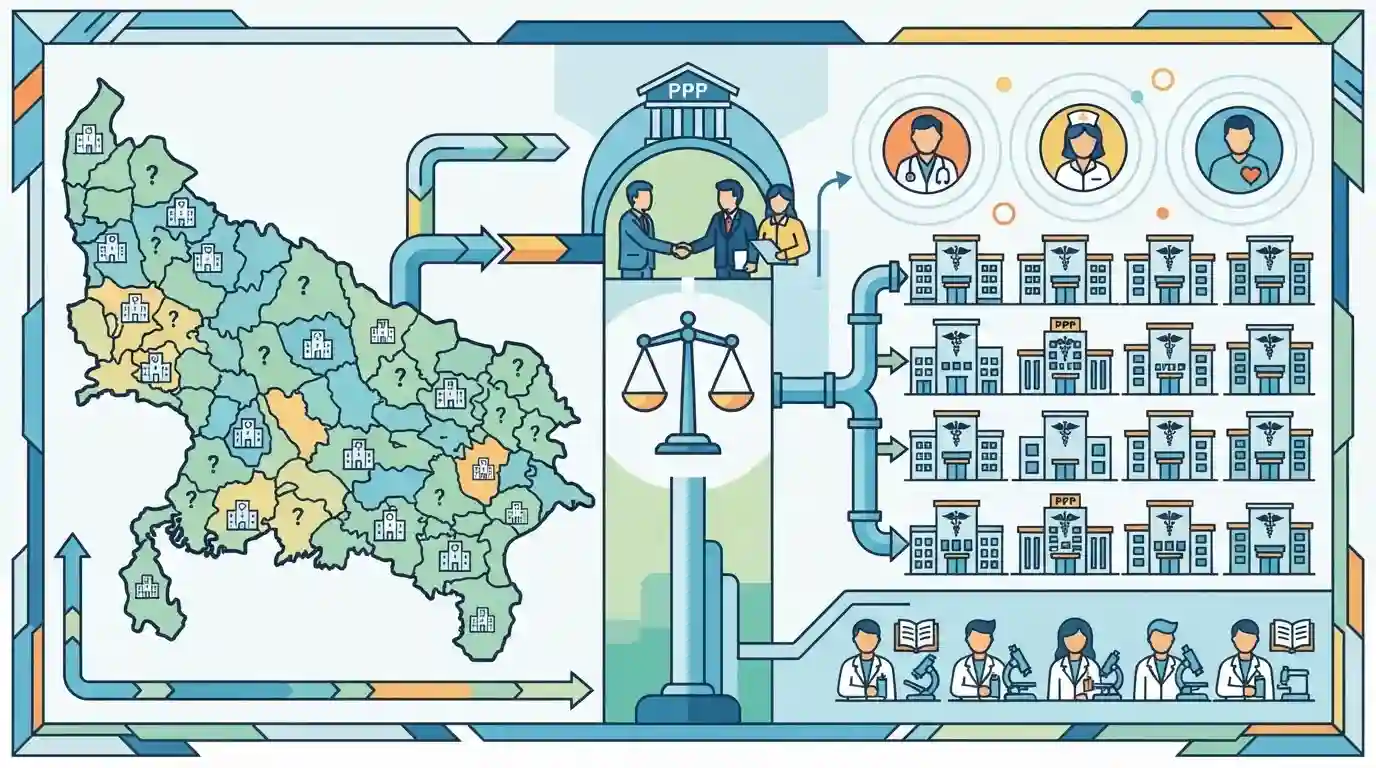
The Uttar Pradesh government has initiated plans to use the Public-Private Partnership (PPP) framework to address medical education gaps across 16 districts that currently lack medical colleges, aiming to boost healthcare accessibility and training infrastructure in the state.
Key Points
- Uttar Pradesh government is planning to adopt the Public-Private Partnership (PPP) route to establish medical colleges in 16 unserved districts to bridge medical education gaps.
- The initiative aims to improve healthcare infrastructure, expand medical seats, and enhance specialized medical services across backward or underserved regions in the state.
- This strategy seeks to leverage private sector investment and management efficiency to accelerate regional health infrastructure development.
Important Terms
Public-Private Partnership (PPP) model

A cooperative arrangement between government bodies and private sector companies to finance, build, and operate infrastructure projects such as medical colleges, leveraging private capital and expertise alongside public support.
UPSC context
Important for UPPSC GS Paper II (Governance and Welfare Schemes) and GS Paper III (Infrastructure and Economy), testing public sector resource mobilization.
Government of Uttar Pradesh
The apex state executive body responsible for policy formulation, administrative governance, and implementation of developmental schemes across districts in Uttar Pradesh.
UPSC context
Essential for UPPSC GS Paper V and VI, testing knowledge of state-level policy execution, administrative structures, and regional welfare initiatives.
Static Concepts Connected
What are the major models of Public-Private Partnerships (PPPs) in infrastructure development?
- BOT Model: Private partner designs, builds, finances, and operates the asset for a concession period before transferring it back to the government.
- O&M Model: Government owns and finances the facility, while a private entity operates and maintains it for a fixed fee.
- BOO Model: Private partner builds, owns, and operates the facility without transfer, subject to heavy regulatory oversight.
Cross-Topic Patterns
PPP in Health + Fiscal Federalism
PPP models in social infrastructure require balancing commercial viability with universal healthcare access, linking public health administration with state fiscal policy.

UPPSC frequently asks factual match-the-following or statement-based questions on districts lacking medical colleges and PPP policy models.
Linked PYQs · 1
Linked PYQs · 1
- 2025UPPSC_PRELIMSGS1
Which of the following Department prepares the National Indicator Framework Progress Report related to Sustainable Development Goals in Uttar Pradesh? 1. Department of Finance 2. Department of Education 3. Department of Planning Select the correct answer from the code given below:
