Mukhyamantri Shikshak Cashless Chikitsa Suvidha Yojana launched in UP
Source:thecsrjournal ↗
Why It Matters
UPPSC Prelims frequently tests candidates on recently launched state government schemes. Knowledge of the scheme's name, target beneficiaries (teachers, Shiksha Mitras, cooks), coverage amount (Rs 5 lakh), and premium details is highly relevant for factual objective questions.
Summary
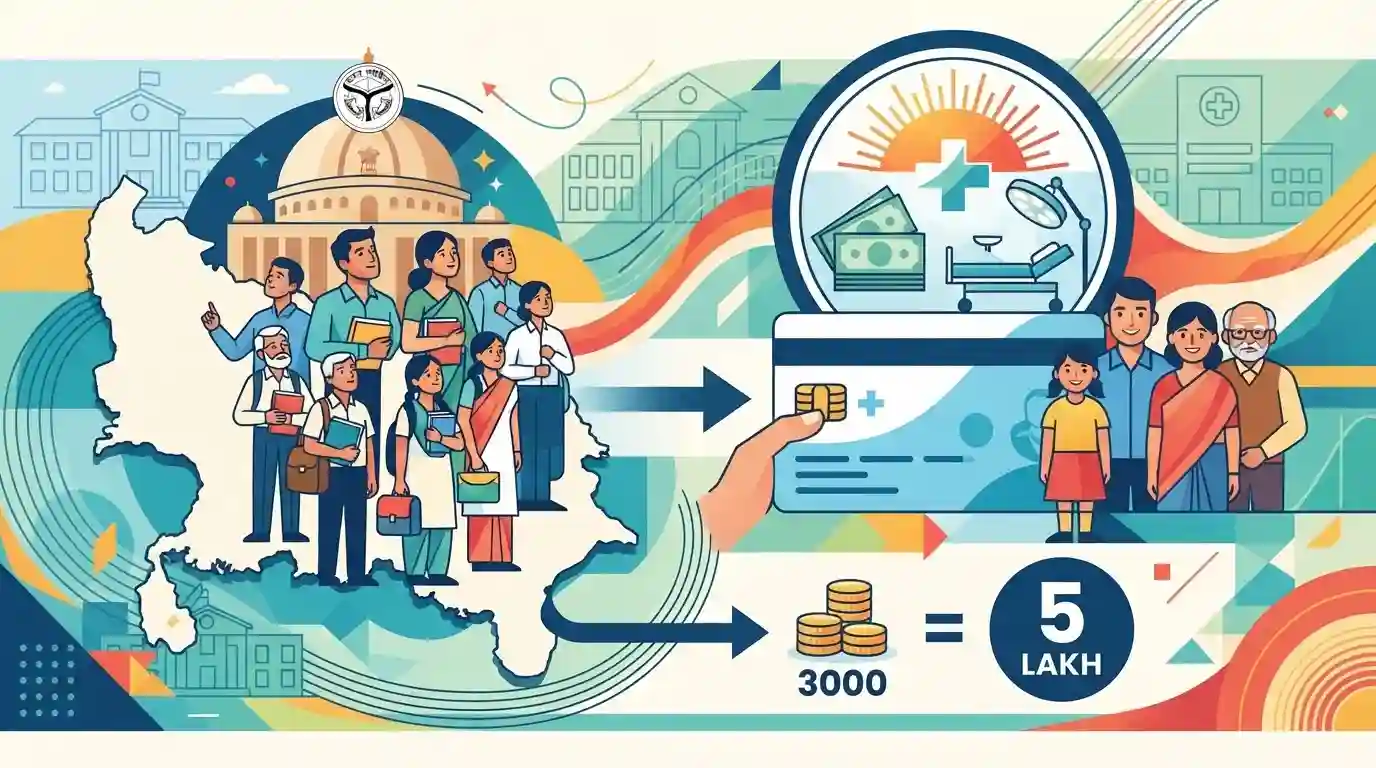
The Uttar Pradesh government has introduced the Mukhyamantri Shikshak Cashless Chikitsa Suvidha Yojana to provide health security to around 12 lakh teachers and education department staff. The scheme offers cashless medical coverage up to Rs 5 lakh per family, with the state covering the Rs 3,000 annual premium in full. Beneficiaries, including Shiksha Mitras and support staff, will receive a cashless card for various medical expenses such as hospitalization and surgeries, enhancing their financial and health security.
Key Points
- The Uttar Pradesh government has launched the 'Mukhyamantri Shikshak Cashless Chikitsa Suvidha Yojana', a cashless health scheme targeting approximately 12 lakh educators and support staff.
- The scheme provides a health coverage of up to Rs 5 lakh per family for teachers, Shiksha Mitras, instructors, and cooks within the state's education department.
- The state government will bear the entire cost of the annual premium, amounting to Rs 3,000 per beneficiary, ensuring no financial burden on the eligible employees.
- Beneficiaries will receive a Cashless Medical Card to access comprehensive medical services, including hospitalisation, surgeries, ICU treatment, and diagnostic tests.
Important Terms
Mukhyamantri Shikshak Cashless Chikitsa Suvidha Yojana

A health insurance scheme in Uttar Pradesh offering cashless medical treatment up to ₹5 lakh per family annually to around 12 lakh government teachers, Shiksha Mitras, and education department staff.
UPSC context
GS Paper II (Social Justice/Welfare Schemes); tests knowledge of state-level social security and healthcare initiatives for public servants.
Shiksha Mitra
Contractual para-teachers recruited in primary schools of Uttar Pradesh to combat teacher shortages, promoting universal elementary education under a localized, seasonal contract system.
UPSC context
GS Paper II (Education/Social Sector Issues); tests knowledge of elementary education reforms, contractual labor, and institutional teaching standards.
SACHIS (State Agency for Comprehensive Health and Integrated Services)
The nodal implementation agency under the Uttar Pradesh government tasked with executing health insurance policies, hospital empanelments, and cashless treatment verification systems across the state.
UPSC context
GS Paper II (Governance & Health); tests understanding of the institutional frameworks and administrative bodies responsible for delivering public healthcare schemes.
Prelims Trap
The Mukhyamantri Shikshak Cashless Chikitsa Suvidha Yojana provides health coverage exclusively to regular, permanent teaching staff of Uttar Pradesh government schools.
The scheme explicitly covers non-permanent, contractual, and support staff including Shiksha Mitras, instructors, and mid-day meal cooks, rather than restricting benefits to permanent government employees.
Static Concepts Connected
What is the constitutional basis of the Right to Health in India?
- Article 21: Article 21 is interpreted by the Supreme Court to encompass the right to health and timely medical treatment as an essential part of life.
- Article 47: Directs the State to raise nutrition levels, improve the standard of living, and actively enhance public health.
- Article 39(e): Obligates the State to secure the health and strength of workers, men, women, and children.
What is Out-of-Pocket Expenditure (OOPE) in Indian healthcare?
- Definition: Direct payments made by individuals to healthcare providers at the point of service, bypassing social security or insurance nets.
- Poverty impact: High OOPE (around 45-50% in India) acts as a major catalyst pushing vulnerable households back into poverty due to catastrophic health shocks.
- Policy mitigation: Mitigated by public cashless health schemes that transfer the financial risk from the individual to the state or insurer.
Cross-Topic Patterns
Contractual labor and social security
Extending state-backed healthcare to para-teachers (Shiksha Mitras) and cooks reflects a growing policy focus on providing social security nets to contractual and informal public sector workers.
State-level health insurance models
Analyses how state-level health insurance agencies (like SACHIS) implement state-specific cashless schemes parallel to or integrated with the central Ayushman Bharat PM-JAY framework.

Mains 2026 may analyze how expanding state-funded health insurance to contractual public staff resolves the informalization crisis in GS-2.
Linked PYQs · 2
Linked PYQs · 2
- 2023UPPSC_PRELIMSGS1
Which of the following scheme/s is/are related to Uttar Pradesh? (1) Anuthee Uphar Scheme (2) Matra Shakti Udyamita Scheme (3) Kaushalya Matritva Scheme (4) Stree Nidhi Scheme Select the 'correct' answer using the code given below -
- 2021UPPSC_PRELIMSGS1
Which of the following Schemes in Uttar Pradesh were introduced in Budget of 2021-22? I. Atmanirbhar Krishak Samanvit Vikas Yojna II. Mukhya Mantri Saksham Suposhan Yojna III. Mukhya Mantri Pravasi Shramik Udyamita Vikas Yojna IV. Yuva Udyamita Vikas Abhiyan Select the correct answer from the codes given below.
