Uttar Pradesh Implements Drone Surveys to Ensure Zero River Discharge
Source:The Hindu ↗
Why It Matters
This initiative highlights Uttar Pradesh's administrative and technological measures for environmental conservation and river rejuvenation, which is a frequent area of focus in UPPSC PCS Prelims regarding state governance, environmental management, and pollution control.
Summary
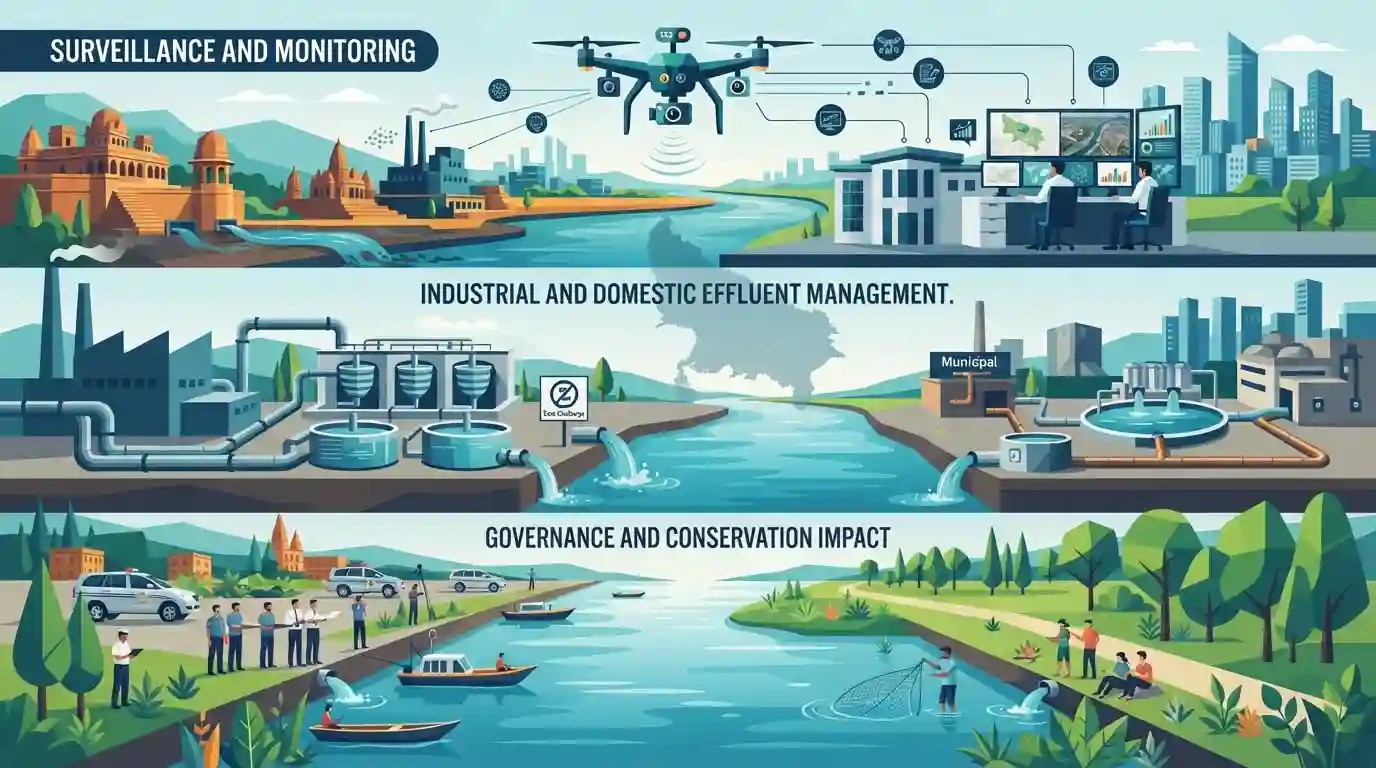
The Uttar Pradesh government has implemented a multi-layered approach featuring drone surveys and stringent pollution control measures to achieve zero discharge into rivers, aiming to curb industrial and domestic effluent pollution in water bodies across the state.
Key Points
- Uttar Pradesh has adopted a multi-layered approach to ensure zero discharge of untreated sewage and industrial effluents into its rivers.
- The initiative includes modern monitoring techniques such as drone surveys to detect illegal waste discharge points and drains.
- The strategy focuses on river rejuvenation, pollution abatement, and environmental protection across major river basins in the State.
Important Terms
Zero Liquid Discharge (ZLD)

A regulatory standard requiring industrial plants to recycle or evaporate all wastewater so that no liquid effluent is released into natural water bodies or the environment.
UPSC context
Important for UPPSC General Studies (Paper III - Environment, Pollution Control, and State Governance Initiatives). Tests knowledge of advanced industrial pollution management.
Drone-Led River Survey Model
High-resolution aerial monitoring utilizing drones and GIS mapping to identify illegal drain discharge points, track industrial effluents, and map river basins for restoration.
UPSC context
Relevant for UPPSC GS Paper III (Science & Technology applications in environmental conservation and governance in UP).
Uttar Pradesh Pollution Control Board (UPPCB)
State-level administrative body responsible for enforcing environmental protection laws, monitoring effluent discharge standards, and implementing pollution control policies across industries.
UPSC context
Crucial for UPPSC GS Paper V / VI (Uttar Pradesh Specific Governance, Statutory Bodies, and Environmental Regulation).
Static Concepts Connected
What are the key statutory bodies and acts governing water pollution control in India?
- Water Act 1974: Water Act: The Water (Prevention and Control of Pollution) Act, 1974 is the principal legislation for prevention and control of water pollution.
- CPCB & SPCBs: Regulatory Body: Central Pollution Control Board (CPCB) at the national level and State Pollution Control Boards (SPCBs) enforce effluent standards.
Cross-Topic Patterns
GIS Mapping & Urban River Governance
UP's integration of GIS dashboards for waste management mirrors national urban missions like AMRUT and Smart Cities, blending spatial technology with civic governance.

UP river rejuvenation models paired with drone GIS mapping are prime candidates for high-yield UPPSC statement-based questions.
Linked PYQs · 1
Linked PYQs · 1
- 2018UPPSC_PRELIMSGS1
Which of the following rivers of Uttar Pradesh has been declared a 'Biological Disaster' due to environmental pollution?
