UN Urges Global Governance and Regulation to Address AI Risks
Source:The Hindu ↗
Why It Matters
It highlights the growing global consensus on the need to regulate artificial intelligence, intersecting directly with technological governance, security concerns, and international multilateral diplomacy.
Summary
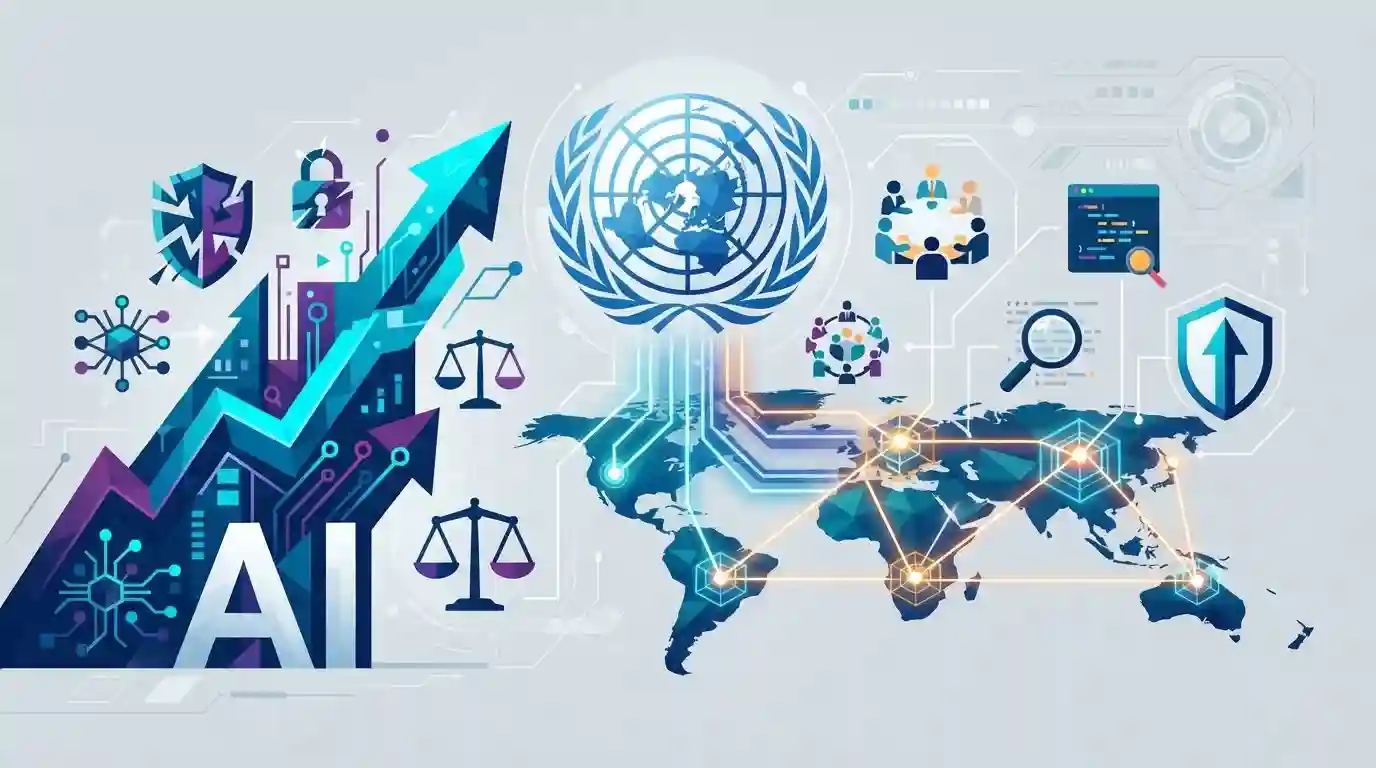
The United Nations has emphasized the critical need for immediate regulatory action to address the profound and unprecedented risks associated with rapid advancements in artificial intelligence, calling for stronger global governance and multilateral oversight to protect human rights and security.
Key Points
- The United Nations has called for urgent global action to regulate artificial intelligence (AI) citing unprecedented risks.
- Unchecked AI development poses significant threats to human rights, information integrity, and global security.
- Multilateral cooperation and frameworks are deemed essential to govern emerging technologies effectively.
Important Terms
United Nations

An international organization founded in 1945 to promote global peace, security, and cooperation, currently spearheading international efforts to regulate emerging technologies like artificial intelligence.
UPSC context
UPSC Prelims & Mains (GS Paper II - International Relations/Global Groupings): Tests knowledge of multilateral bodies, international law, and global governance.
Global Governance
The development of shared international rules, standards, and scientific consensus to manage the ethical, safety, and security risks posed by rapid technological advancements.
UPSC context
UPSC Prelims & Mains (GS Paper II/III - International Relations & Governance): Tests ability to analyze multilateral frameworks, policy coordination, and management of global commons.
Artificial Intelligence
The simulation of human intelligence processes by computer systems, presenting both transformative socioeconomic benefits and unprecedented existential, security, and ethical risks.
UPSC context
UPSC Prelims & Mains (GS Paper III - Science & Technology): Tests awareness of emerging tech, applications, ethical issues, and regulatory challenges.
Prelims Trap
UN resolutions and multilateral frameworks for AI establish legally binding compliance mandates across all member states.
Aspirants often assume UN resolutions on AI are legally binding treaties, whereas UN declarations and guidelines are typically soft law recommendations without direct enforcement mechanisms.
Static Concepts Connected
What are the primary institutional mechanisms and declarations through which global AI governance is currently pursued?
- UNESCO Ethics: UNESCO Recommendation on the Ethics of Artificial Intelligence (2021) represents the first global standard-setting instrument on AI ethics adopted by 193 member states.
- UN Advisory Body: UN Advisory Body on AI established to report on scientific consensus, risk mitigation, and international governance models for artificial intelligence.
- GPAI Initiative: GPAI (Global Partnership on AI) brings together nations to bridge the gap between theory and practice on AI through supporting cutting-edge research.
Cross-Topic Patterns
AI Governance and International Trade Law
AI regulatory frameworks intersect directly with the Budapest Convention on Cybercrime and WTO e-commerce moratorium debates on cross-border data flows.
AI Safety vs. Digital Sovereignty in Global South
Global South nations demand equitable access to compute infrastructure while balancing UN-mandated AI safety guardrails against indigenous tech growth.

UN AI governance frameworks combined with national compute capacity missions will likely feature in a multi-statement prelims question.
Linked PYQs · 2
Linked PYQs · 2
- 2023MainsGS3
Introduce the concept of Artificial Intelligence (AI). How does Al help clinical diagnosis? Do you perceive any threat to privacy of the individual in the use of Al in healthcare?
- 2024MainsGS2
e-governance is not just about the routine application of digital technology in service delivery process. It is as much about multifarious interactions for ensuring transparency and accountability. In this context evaluate the role of the 'Interactive Service Model' of e-governance.
