Pregabalin classified under Schedule H1 to curb misuse
Source:The Hindu ↗
Why It Matters
Highlights the regulatory mechanisms (like Schedule H1 under the Drugs Rules, 1945) used by the government to tackle the misuse of prescription drugs, which is a growing public health and internal security challenge in India.
Summary
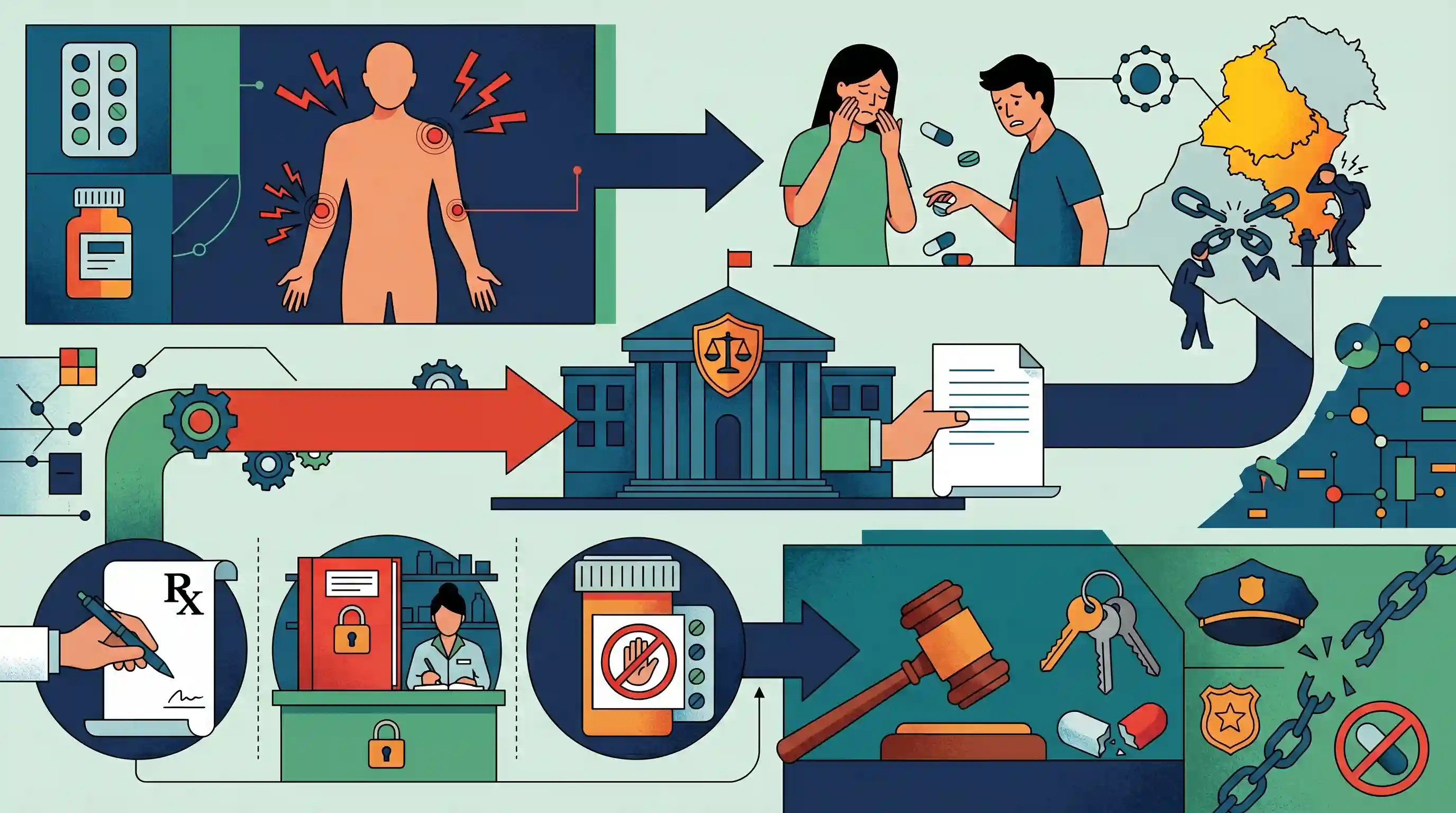
The Union Health Ministry has classified the drug Pregabalin under Schedule H1 of the Drugs Rules, 1945 due to escalating reports of its misuse and abuse, particularly among the youth and individuals with substance-use disorders. Pregabalin is a gabapentinoid primarily prescribed for chronic pain, neuropathies, and fibromyalgia. Its inclusion in Schedule H1 imposes stricter regulatory controls: it can only be sold with a prescription, retailers must maintain a separate sales register, and packaging must carry a mandatory warning label. The move targets the high dependency observed in regions like North India, especially Punjab and Haryana, ensuring penal action under the Drugs and Cosmetics Act, 1940 for violations.
Key Points
- The Union Health Ministry has moved the drug Pregabalin to Schedule H1 of the Drugs Rules, 1945 to prevent its widespread misuse for sedative and euphoric effects.
- Pregabalin is a gabapentinoid medication traditionally prescribed for chronic pain, neuropathies, fibromyalgia, and specific neurological conditions.
- Under Schedule H1, the drug can only be sold against a valid prescription, requires mandatory warning labels on packaging, and necessitates retailers to maintain a separate sales register.
- Violations of these new regulatory requirements will attract penal action under the Drugs and Cosmetics Act, 1940.
- Reports of rising dependency have been heavily concentrated in North Indian states such as Punjab and Haryana, alongside regions with pre-existing opioid addiction issues.
Important Terms
Schedule H1

A sub-classification under the Drugs Rules, 1945, for potent antibiotics and habit-forming drugs. It mandates separate sales registers (maintained for three years) and packaging with a red 'Rx' symbol.
UPSC context
GS Paper II/III: Health and Governance. Tests knowledge of regulatory mechanisms to curb drug addiction and antimicrobial resistance (AMR).
Drugs and Cosmetics Act, 1940
The primary central legislation regulating the import, manufacture, distribution, and sale of pharmaceuticals and cosmetics in India to ensure safety, quality, and efficacy standards.
UPSC context
GS Paper II: Statutory provisions. It is the foundational law for all health-related pharmaceutical regulations and governance in India.
Drugs Rules, 1945
Detailed regulations framed under the 1940 Act that establish the 'Schedule' system for classifying drugs and provide guidelines for storage, labeling, and prescription requirements.
UPSC context
GS Paper II: Governance. Essential for understanding the practical implementation of drug laws and the administrative framework of healthcare.
Pregabalin
A gabapentinoid medication prescribed for nerve pain, fibromyalgia, and seizures. It was moved to Schedule H1 in May 2026 to curb its misuse for sedative and euphoric effects.
UPSC context
Prelims/GS III: Science & Tech and Public Health. Tests awareness of specific drugs causing public health crises and their regulatory status.
Schedule H
A category of prescription-only drugs under the Drugs Rules that can only be sold upon a valid prescription from a Registered Medical Practitioner (RMP).
UPSC context
Prelims: Science/Health. Important for distinguishing between over-the-counter (OTC) medicines and drugs requiring medical supervision.
Drugs Technical Advisory Board (DTAB)
The highest technical body in India that advises the Central and State governments on technical matters arising out of the Drugs and Cosmetics Act.
UPSC context
GS Paper II: Statutory/Regulatory Bodies. Tests knowledge of the decision-making hierarchy in pharmaceutical regulation and public health policy.
Prelims Trap
Because of its widespread abuse, Pregabalin is now classified and regulated under the Narcotic Drugs and Psychotropic Substances (NDPS) Act.
Pregabalin is regulated under the Drugs and Cosmetics Act, 1940 (Schedule H1). It is not classified as a narcotic substance under the NDPS Act.
Static Concepts Connected
What are the key drug schedules under the Drugs and Cosmetics Rules, 1945?
- Schedule H: Drugs that can be sold only on the prescription of a registered medical practitioner. No mandatory separate sales register is required.
- Schedule H1: Requires a valid prescription, a red 'Rx' warning label, and a separate sales register maintained by the chemist for three years.
- Schedule X: Strictest category for habit-forming/psychotropic drugs under this Act; requires duplicate prescriptions and special storage and licensing rules.
Who enforces the Drugs and Cosmetics Act, 1940 in India?
- Central Authority: The Central Drugs Standard Control Organisation (CDSCO) handles drug approvals, clinical trials, and sets national drug standards.
- State Authorities: State Drug Control Organizations are responsible for regulating the actual manufacture, sale, and distribution, including inspecting retail pharmacies for Schedule H1 compliance.
Cross-Topic Patterns
Golden Crescent & synthetic drug shift
Border states like Punjab traditionally face heroin smuggling from the Golden Crescent. The rise in prescription drug abuse shows a domestic shift towards easily accessible pharmaceutical alternatives, complicating internal security.
Schedule H1: From AMR to substance abuse
Schedule H1 was introduced in 2013 primarily to restrict over-the-counter sales of antibiotics to fight Antimicrobial Resistance (AMR). Its application has now expanded to curbing pharmaceutical substance abuse.

Expect a Prelims 2026 multi-statement question differentiating Schedule H1 (Drugs & Cosmetics Act) from psychotropic schedules (NDPS Act).
Linked PYQs · 3
Linked PYQs · 3
- 2024PrelimsGS1
In which of the following are hydrogels used? 1. Controlled drug delivery in patients 2. Mobile air-conditioning systems 3. Preparation of industrial lubricants Select the correct answer using the code given below:
- 2018MainsGS3
India's proximity to two of the world's biggest illicit opium-growing states has enhanced her internal security concerns. Explain the linkages between drug trafficking and other illicit activities such as gunrunning, money laundering and human trafficking. What counter-measures should be taken to prevent the same?
- 2012MainsGS2
Despite strict prohibitory regulations, "doping" has become increasingly common amongst athletes. Name five commonly used performance-enhancing drugs. What are the risks associated with their use?
