Biopharma SHAKTI Strategy and Vaccine Manufacturing Investment
Source:The Hindu ↗
Why It Matters
This marks a critical shift in India's pharmaceutical policy from generic chemical drugs towards advanced biotechnology and biopharmaceuticals. It is essential for Mains GS3 (Biotechnology, Science & Tech) and GS2 (Public Health, Regulatory Bodies) as it addresses infrastructure deficits (clinical trial sites, NIPERs) and regulatory reforms (CDSCO) necessitated by the rising burden of non-communicable diseases.
Summary
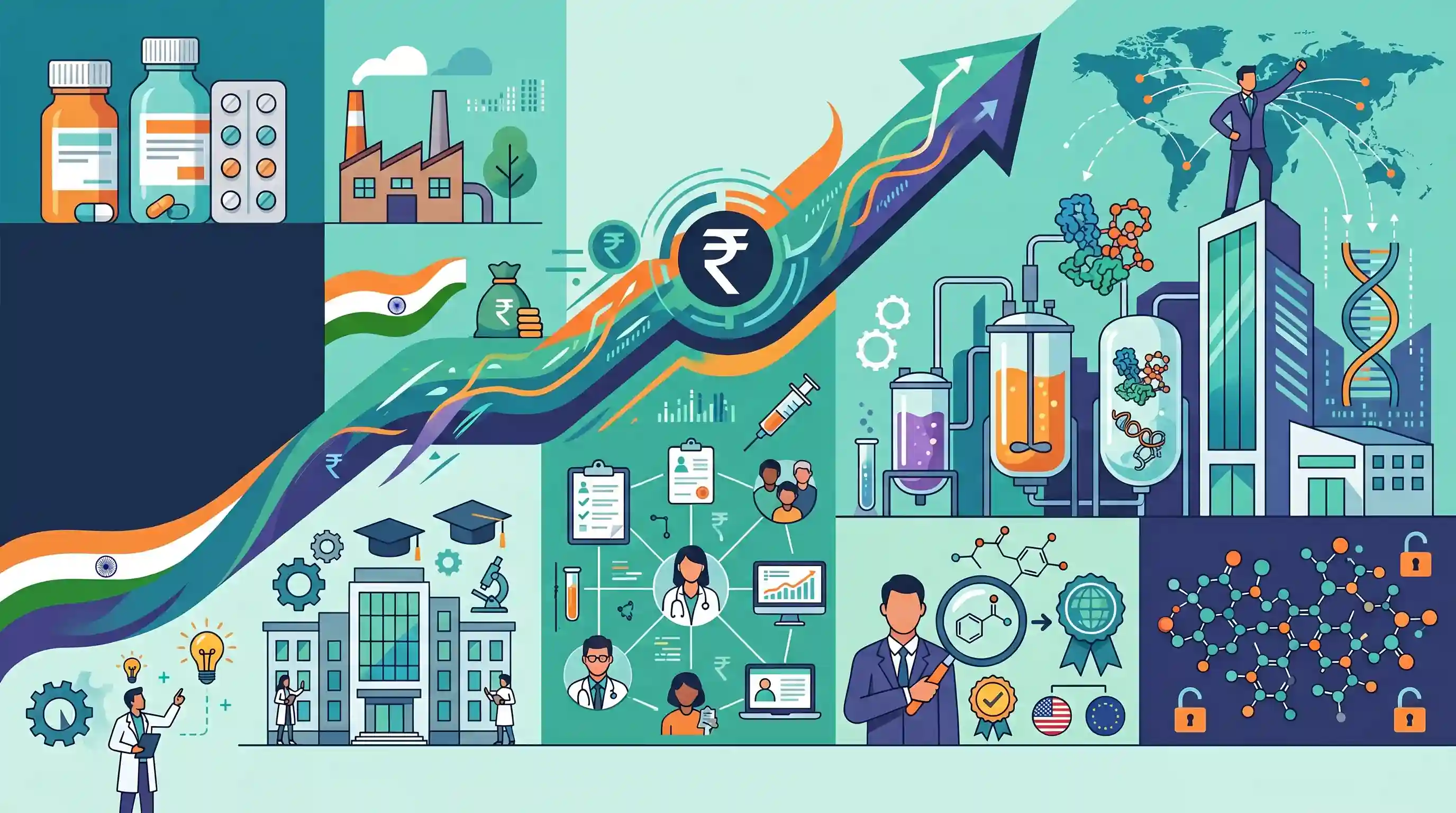
The Union Budget 2026-27 has unveiled the 'Biopharma SHAKTI' strategy, allocating ₹10,000 crore over five years to transform India into a global hub for biopharmaceutical manufacturing. Addressing a shift in the domestic disease burden towards non-communicable diseases, the strategy emphasizes complex products like biologics and biosimilars over traditional generics. It outlines a comprehensive ecosystem upgrade, including the creation of three new National Institutes of Pharmaceutical Education and Research (NIPER), the establishment of a 1,000-site accredited clinical trial network, and the modernization of the Central Drugs Standard Control Organisation (CDSCO) to meet global regulatory benchmarks.
Key Points
- The Union Budget 2026-27 introduced the 'Biopharma SHAKTI' strategy with an outlay of ₹10,000 crore over five years.
- The initiative aims to position India as a global manufacturing hub for complex biopharmaceuticals like biologics and biosimilars.
- The strategic pivot is driven by India's changing disease burden, with non-communicable diseases (diabetes, cancer, autoimmune disorders) overtaking communicable diseases.
- Key infrastructural targets include setting up 3 new NIPERs, upgrading 7 existing ones, and establishing a network of 1,000 accredited clinical trial sites in India.
- The strategy also entails strengthening the Central Drugs Standard Control Organisation (CDSCO) to match global regulatory standards.
Important Terms
Biopharma SHAKTI strategy

A flagship mission from the 2026-27 Budget allocating ₹10,000 crore to transform India into a global hub for manufacturing biologics and biosimilars through R&D and infrastructure upgrades.
UPSC context
GS-III (Science & Technology/Economy); tests knowledge of industrial policy and biotechnology's role in India's future economic growth.
Central Drugs Standard Control Organisation (CDSCO)
India's central regulatory authority under the Ministry of Health, responsible for drug approvals, oversight of clinical trials, and setting safety and quality standards for pharmaceuticals and medical devices.
UPSC context
GS-II (Statutory/Regulatory Bodies); critical for understanding public health governance and regulatory oversight in the pharmaceutical sector.
Biosimilars
Highly similar, affordable versions of approved biological medicines with no clinically meaningful differences, serving as cost-effective alternatives for treating complex conditions like cancer and diabetes.
UPSC context
GS-III (Science & Technology); significant for discussions on healthcare affordability (GS-II) and intellectual property rights (IPR).
National Institutes of Pharmaceutical Education and Research (NIPER)
A group of autonomous national-level institutes under the Ministry of Chemicals and Fertilizers, designated as 'Institutes of National Importance' for advanced pharmaceutical education, research, and industry collaboration.
UPSC context
GS-II (Social Sector/Education); relevant for policies promoting human capital and R&D capacity in the pharmaceutical industry.
Biologics
Complex medicines manufactured from or containing components of living organisms (e.g., vaccines, antibodies), targeting specific disease pathways more effectively than traditional chemical-based generic drugs.
UPSC context
GS-III (Science & Technology); tests awareness of biotechnological advancements and India's transition towards high-value innovation in medicine.
Prelims Trap
"NIPERs function under the administrative control of the Ministry of Health and Family Welfare."
NIPERs are autonomous bodies operating under the Department of Pharmaceuticals, which falls under the Ministry of Chemicals and Fertilizers, not the Health Ministry.
Static Concepts Connected
What is the key difference between chemical generics and biosimilars?
- Chemical generics: Synthesized chemical drugs that are exact structural copies of the original brand-name drug.
- Biosimilars: Large, complex molecules produced from living cells; they are highly similar but not perfectly identical to their reference biologic.
- Approval complexity: Because living systems introduce minor variations, biosimilars require more extensive clinical trial data than generics before approval.
What is the regulatory mandate of the CDSCO?
- Statutory basis: It derives its core regulatory authority from the Drugs and Cosmetics Act, 1940.
- Nodal ministry: It operates under the Ministry of Health and Family Welfare as India's National Regulatory Authority.
- Key functions: Grants approvals for new drugs, regulates clinical trials, and lays down standards for pharmaceuticals.
Cross-Topic Patterns
Epidemiological shift and drug policy
India’s focus on biologics maps directly to its epidemiological transition, where non-communicable diseases (diabetes, cancer) have now overtaken communicable diseases as the primary mortality drivers.
Biosimilars and WTO TRIPS exclusivity
The manufacturing of biosimilars frequently sparks IPR debates at the WTO, contrasting developed nations' demands for extended 'data exclusivity' on biologics with India's push for affordable drug pathways.

Expect a 2026 Prelims question contrasting biosimilars with chemical generics, combined with the regulatory mandate of CDSCO.
Linked PYQs · 4
Linked PYQs · 4
- 2021MainsGS3
What are the research and developmental achievements in applied biotechnology? How will these achievements help to uplift the poorer sections of the society?
- 2015MainsGS2
Public health system has limitations in providing universal health coverage. Do you think that the private sector could help in bridging the gap? What other viable alternatives would you suggest?
- 2021MainsGS2
“Besides being a moral imperative of a Welfare State, primary health structure is a necessary precondition for sustainable development.” Analyze.
- 2023PrelimsGS1
'Microsatellite DNA' is used in the case of which one of the following?
