Union Budget 2026 announces biopharma investment scheme for research
Source:The Hindu ↗
Why It Matters
This marks a crucial shift in India's industrial strategy, moving the 'pharmacy of the world' from volume-driven generic drug production to value-driven biopharmaceutical innovation, essential for public health and economic growth.
Summary
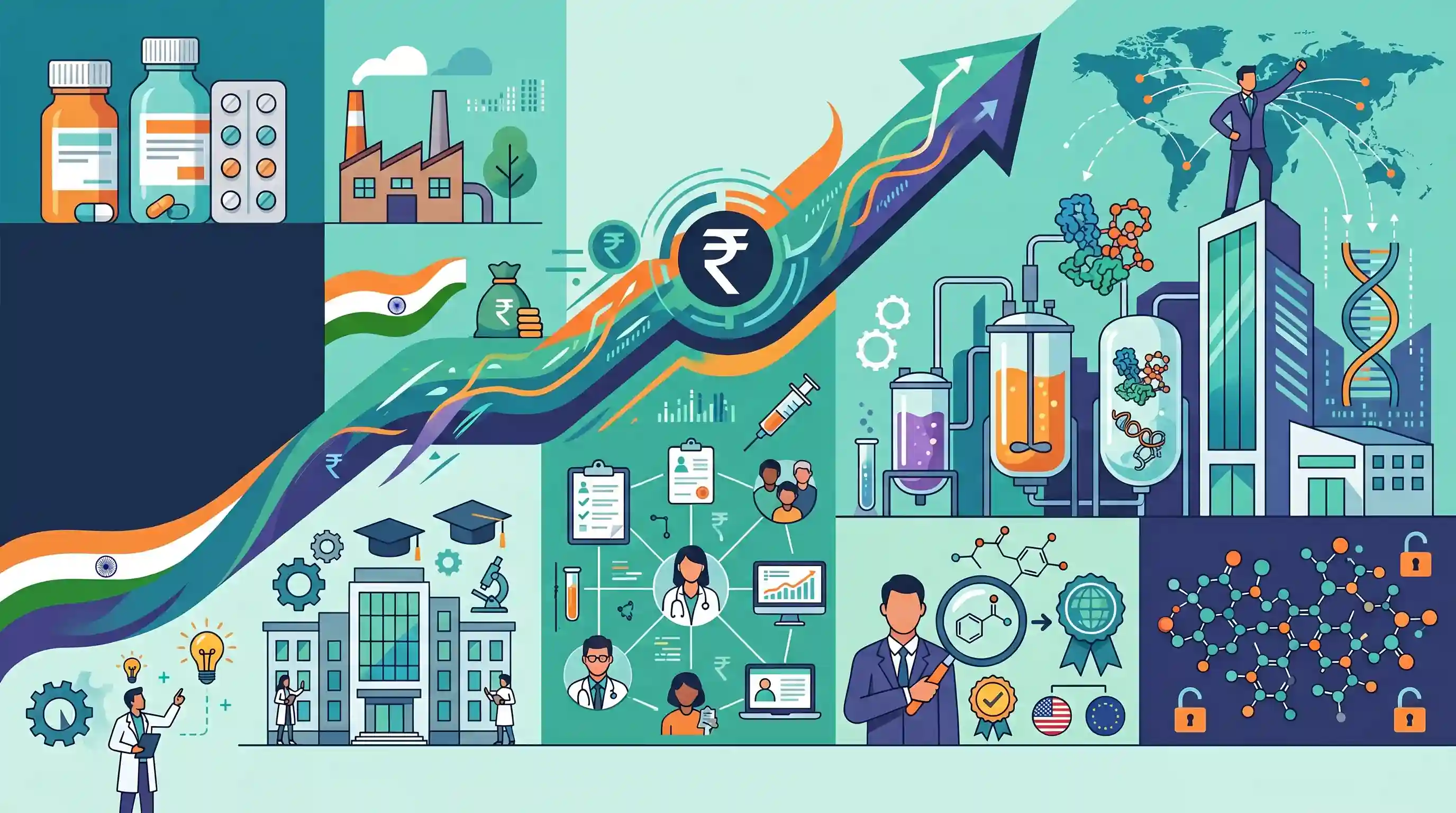
The Union Budget 2026-27 has unveiled the ₹10,000-crore 'Biopharma SHAKTI' scheme, aimed at transforming the Indian pharmaceutical industry from a supplier of low-cost generics into a global leader in high-value biologics and biosimilars over the next five years. Addressing the rising burden of non-communicable diseases (NCDs) in India, the scheme focuses on institutional capacity building by creating a vast clinical trial network, setting up new National Institutes of Pharmaceutical Education and Research (NIPERs), and upgrading the Central Drugs Standard Control Organisation (CDSCO) to match international regulatory bodies like the U.S. FDA and EMA. Industry experts believe this will help India capture massive opportunities arising from the impending patent expiry of blockbuster biologic drugs.
Key Points
- The Union Budget 2026-27 introduced the 'Biopharma SHAKTI' scheme with an outlay of ₹10,000 crore over five years to transform India into a global hub for biologics and biosimilars manufacturing.
- The scheme responds to a domestic shift in disease burden toward non-communicable diseases (NCDs) like cancer and diabetes, requiring advanced biologic treatments.
- It aims to upgrade the CDSCO with a dedicated scientific review cadre to match global regulatory standards like the U.S. FDA.
- The initiative includes setting up three new NIPERs, upgrading seven existing ones, and establishing a network of over 1,000 accredited clinical trial sites.
- This strategic shift is seen as a way for India's pharmaceutical sector to transition from low-margin volume leadership (generics) to high-value innovation, capturing opportunities from upcoming patent cliffs.
Important Terms
Biopharma SHAKTI

A ₹10,000-crore Union Budget scheme (2026-2031) to transition India from generic drugs to high-value biologics and biosimilars manufacturing, focusing on non-communicable diseases.
UPSC context
GS Paper III (Economy/Science & Tech); essential for topics on pharmaceutical self-reliance and the shift toward innovation-led manufacturing.
Central Drugs Standard Control Organisation (CDSCO)
India’s national regulatory body under the Ministry of Health, responsible for drug approvals, clinical trials, and quality standards under the Drugs and Cosmetics Act, 1940.
UPSC context
GS Paper II (Governance/Health); critical for understanding regulatory reforms and international standard alignment (e.g., US FDA).
National Institutes of Pharmaceutical Education and Research (NIPER)
Autonomous ‘Institutes of National Importance’ under the Ministry of Chemicals and Fertilizers, dedicated to advanced pharmaceutical education, research, and human resource development.
UPSC context
GS Paper II (Education/Health); relevant for institutional capacity building in the science and technology sector.
U.S. Food and Drug Administration (U.S. FDA)
The primary U.S. federal agency regulating food, drugs, and medical devices; it serves as a global benchmark for India’s proposed regulatory upgrades.
UPSC context
GS Paper III (Economy/Science); represents the international compliance standards Indian exporters must meet to capture global markets.
European Medicines Agency (EMA)
The European Union’s agency responsible for the scientific evaluation and monitoring of medicines, used as a reference for India's biopharma regulatory benchmarking.
UPSC context
GS Paper II (International Relations/Health); relevant for comparing global regulatory frameworks and trade standards in pharmaceuticals.
Union Budget 2026-27
The annual financial statement for the 2026-27 fiscal year, introducing key health initiatives like Biopharma SHAKTI and customs duty exemptions on critical drugs.
UPSC context
GS Paper III (Economy); the primary source for current government fiscal policy, sectoral allocations, and economic priorities.
Prelims Trap
"Biosimilars are exact chemical replicas of original biologic drugs."
Generics are exact chemical copies. Biosimilars are highly similar, but never strictly identical to the reference biologic, owing to their complex structure derived from living organisms.
Static Concepts Connected
What is the difference between Generics, Biologics, and Biosimilars?
- Generics: Exact chemical copies of small-molecule drugs that are easy to replicate identically.
- Biologics: Large, complex molecules produced in living organisms (e.g., vaccines, monoclonal antibodies).
- Biosimilars: Highly similar, clinically equivalent versions of biologics, but not exact replicas due to natural variability in living cells.
What is the regulatory mandate of the CDSCO?
- Apex Body: National regulatory authority under the Ministry of Health and Family Welfare.
- Mandate: Regulates clinical trials, approves new drugs, and lays down standards under the Drugs and Cosmetics Act, 1940.
- Division of Power: While CDSCO approves new drugs and clinical trials, state drug authorities are responsible for issuing manufacturing and sales licenses.
Cross-Topic Patterns
IPR regimes & the "Patent Cliff"
The impending expiry of global biologic patents offers a massive market for Indian biosimilars, echoing the historic boom driven by India's post-1970 process-patent regime for generic drugs.
API dependency vs. Biologics push
Shifting to high-value biologics reduces India's vulnerability to API supply chain shocks from China, aligning the Biopharma SHAKTI scheme with broader Atmanirbhar Bharat and PLI strategic goals.

Expect a 2026 prelims statement mixing 'Generics vs Biosimilars' with CDSCO’s clinical trial mandate and state-level licensing rules.
Linked PYQs · 3
Linked PYQs · 3
- 2021MainsGS3
What are the research and developmental achievements in applied biotechnology? How will these achievements help to uplift the poorer sections of the society?
- 2024MainsGS2
In a crucial domain like the public healthcare system the Indian State should play a vital role to contain the adverse impact of marketisation of the system. Suggest some measures through which the State can enhance the reach of public healthcare at the grassroots level.
- 2024MainsGS3
What is the present world scenario of intellectual property rights with respect to life materials? Although, India is second in the world to file patents, still only a few have been commercialized. Explain the reasons behind this less commercialization.
