US Sets June Deadline for Russia Ukraine Peace Negotiations
Source:The Hindu ↗
Why It Matters
The resolution of the Russia-Ukraine war is pivotal for global stability, energy security, and international supply chains. A U.S.-mandated peace timeline highlights the decisive role of major powers in shaping European security and broader East-West geopolitical relations, themes highly relevant to UPSC GS2 International Relations.
Summary
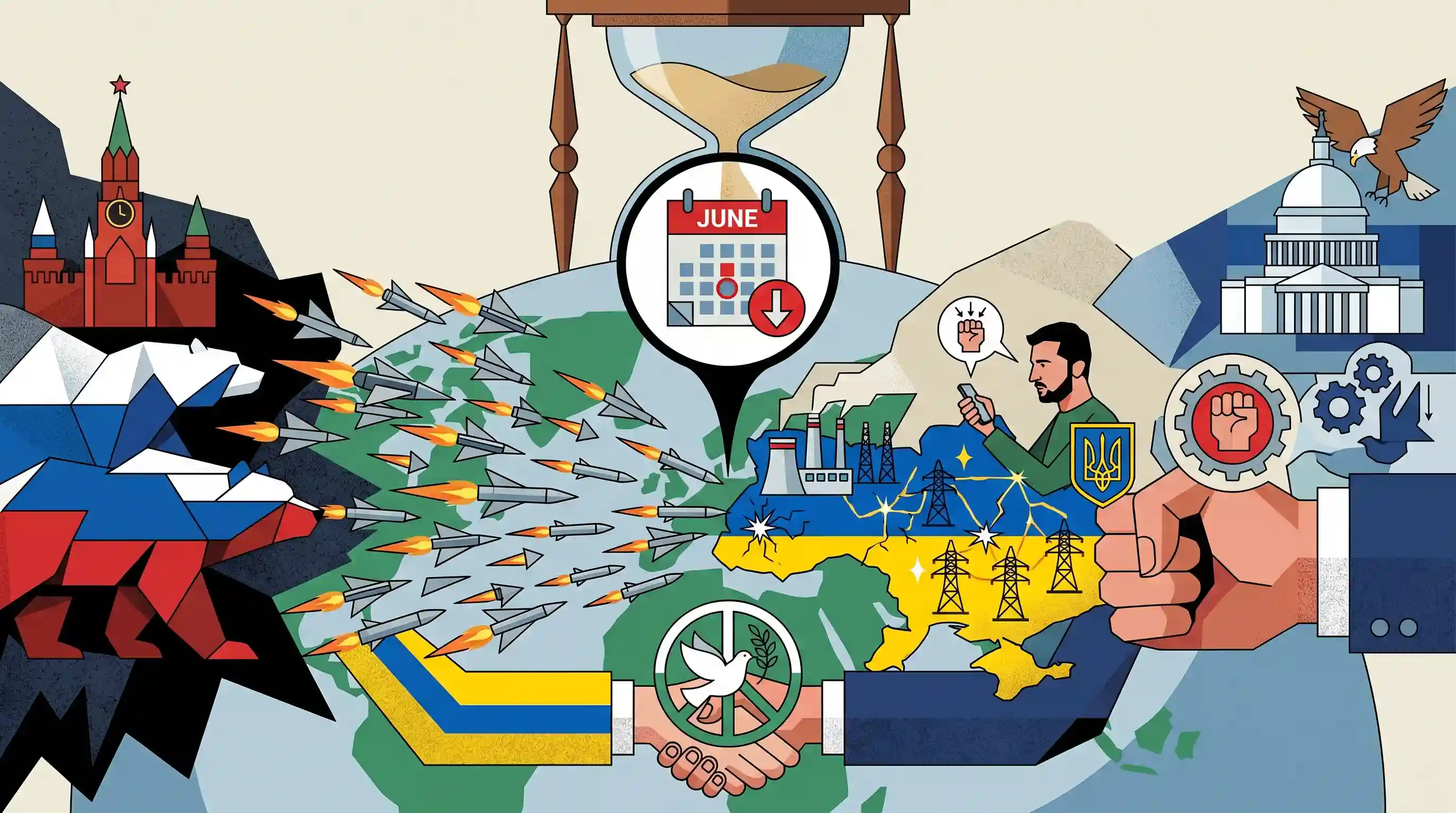
The United States, under the Trump administration, has established a June deadline for Ukraine and Russia to reach an agreement to end their ongoing conflict. According to Ukrainian President Volodymyr Zelenskyy, the U.S. is prepared to exert pressure on both nations to ensure compliance with this early summer timeline. This diplomatic intervention occurs against the backdrop of escalating hostilities, as Russia recently launched a massive assault targeting Ukraine's energy systems using hundreds of drones and missiles.
Key Points
- The U.S. Trump administration has set a June deadline for Ukraine and Russia to negotiate an end to their war.
- Ukrainian President Volodymyr Zelenskyy confirmed that the U.S. is expected to apply significant pressure on both sides if the early summer deadline is not met.
- Amidst these diplomatic efforts, Russia has intensified its military offensive, launching a massive attack on Ukraine's energy infrastructure involving over 400 drones and 40 missiles.
- The proposed timeline marks a major U.S.-led diplomatic push to resolve the protracted European conflict, signaling a shift in geopolitical conflict resolution strategies.
Prelims Trap
The June peace deadline is a binding UN Security Council-mandated resolution to halt the Russia-Ukraine conflict.
The deadline is a unilateral US initiative by the Trump administration. It explicitly highlights the bypassing of the UNSC, which remains paralyzed by Russia's veto.
Static Concepts Connected
How does International Humanitarian Law protect civilian infrastructure during conflicts?
- Geneva Conventions: The 1977 Additional Protocols strictly prohibit attacks on objects indispensable to the survival of the civilian population, such as civilian power grids and water supplies.
- Proportionality Principle: Even if an energy grid serves some military purpose, strikes are illegal under international law if the anticipated civilian harm is disproportionately high.
Why is the UN Security Council structurally paralyzed in the Russia-Ukraine conflict?
- Veto Power: Article 27 of the UN Charter gives P5 nations like Russia an absolute veto over substantive enforcement resolutions under Chapter VII.
- General Assembly Limits: While the UN General Assembly can condemn actions using 'Uniting for Peace' resolutions (Resolution 377A), these lack binding enforcement capabilities against non-compliant member states.
Cross-Topic Patterns
Transactional Diplomacy & Strategic Autonomy
A US-forced peace deal requires India to urgently balance its deepening technological and defense ties with Washington against its enduring reliance on Russian military hardware and discounted energy.
Hybrid Warfare & Critical Infrastructure
Russia’s drone assault on Ukraine's energy systems links directly to GS-3 Internal Security, highlighting the urgent need to harden civilian critical infrastructure against hybrid warfare tactics.

Expect a GS-2 Mains question on how the shift from multilateral UN consensus to unilateral US transactional diplomacy impacts India.
Linked PYQs · 2
Linked PYQs · 2
- 2025MainsGS2
"The reform process in the United Nations remains unresolved, because of the delicate imbalance of East and West and entanglement of the USA vs. Russo-Chinese alliance.” Examine and critically evaluate the East-West policy confrontations in this regard.
- 2025MainsGS2
"With the waning of globalization, post-Cold War world is becoming a site of sovereign nationalism.” Elucidate.
