Globalisation Shift and Trade Tariff Challenges for UK Economy
Source:Indian Express ↗
Why It Matters
The article provides a stark real-world example of the structural shift from global multilateralism to protectionism and economic nationalism. This is highly relevant for GS2 (Changing global order, bilateral relations) and GS3 (Impact of deglobalization, trade barriers, and the need for robust domestic industrial strategies).
Summary
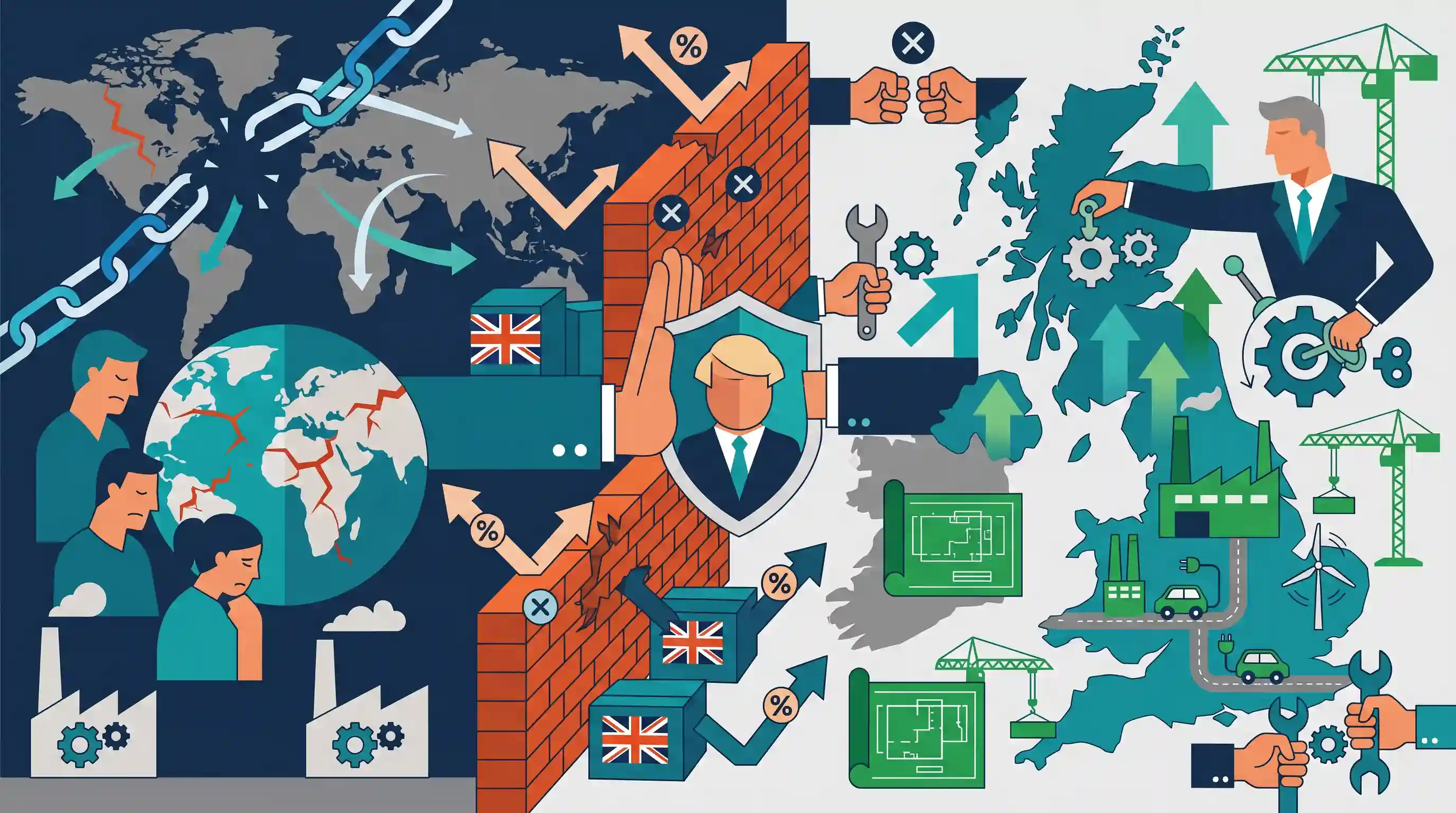
UK Prime Minister Keir Starmer has declared that the era of globalization is over, acknowledging that it has failed millions of voters who feel left behind by free trade and migration. This strategic pivot comes in the wake of US President Donald Trump's new reciprocal tariffs, including a 10% levy on UK exports. Rather than engaging in retaliatory trade wars, Starmer emphasized understanding the roots of this rising economic nationalism. He signaled a shift toward a more interventionist state, prioritizing sweeping domestic supply-side reforms and an active industrial strategy—such as easing regulations for electric vehicle makers—to stimulate localized economic growth in a newly protectionist world order.
Key Points
- UK PM Keir Starmer stated that the era of globalization has ended, acknowledging that free trade and unchecked migration failed to deliver benefits to millions of voters.
- The declaration comes in response to US President Donald Trump's global trade war and the imposition of a 10% reciprocal tariff on UK exports to the US.
- While disagreeing with tariffs as a solution, Starmer validated the underlying economic nationalism driving voter sentiments in the current global climate.
- In response to the shifting global order, the UK government is prioritizing domestic structural supply reforms and a proactive industrial strategy over laissez-faire economics.
- Upcoming UK initiatives include relaxing regulations for electric vehicle manufacturers as part of a broader shift toward state-led economic growth.
Important Terms
Deglobalization

The process of reducing global interdependence and integration, characterized by rising trade barriers, reshoring supply chains, and a shift toward national self-sufficiency over global cooperation.
UPSC context
GS Paper II (International Relations) and GS Paper III (Economy); tests understanding of shifting global trade paradigms and their impact on India.
Protectionism
Economic policy of shielding domestic industries from foreign competition through methods like tariffs, import quotas, and restrictive regulations to promote local production.
UPSC context
GS Paper III (Economy); relevant for topics on liberalization, trade wars, and the challenges faced by the WTO.
Economic Nationalism
An ideology prioritizing domestic control of the economy, labor, and capital formation, often through protectionist measures and the rejection of liberal global trade norms.
UPSC context
GS Paper II (Global Politics); tests ability to analyze the rise of populist economic agendas in developed nations.
Reciprocal Tariffs
A trade policy where a country imposes import duties on another nation at levels identical to the tariffs that nation levies on its own goods.
UPSC context
GS Paper III (Trade Policy); specific mechanism in modern trade wars affecting international market access.
Industrial Strategy
A government's strategic roadmap to boost economic growth and competitiveness by targeting specific sectors (e.g., electric vehicles) through investment, regulation, and subsidies.
UPSC context
GS Paper III (Industrial Growth); crucial for analyzing the shift toward interventionist state policies in a post-liberalized world.
Supply-side Reforms
Economic measures aimed at increasing a country's productive capacity by improving efficiency, such as through deregulation, tax cuts, and infrastructure investment to stimulate long-term growth.
UPSC context
GS Paper III (Indian Economy); tests knowledge of domestic policy responses to global economic shocks.
Prelims Trap
"Unilateral reciprocal tariffs imposed by nations are compliant with WTO's Most-Favoured-Nation (MFN) principle."
Unilateral reciprocal tariffs directly violate the WTO's MFN principle, which requires equal tariff treatment for all members unless authorized under FTAs or trade remedies.
Static Concepts Connected
What are the key trade remedial measures allowed under the WTO?
- Anti-dumping duty: Imposed on imports priced below their normal home-market value, aimed at protecting domestic industries from unfair pricing.
- Countervailing duty: Levied to neutralize the negative effects of subsidies provided by the exporting country's government to its producers.
- Safeguard duty: A temporary restriction applied when a sudden, unforeseen surge in imports threatens to cause serious injury to domestic industries.
How does the current global "interventionist state" trend compare to India's industrial policy evolution?
- 1991 LPG Reforms: India moved away from heavy state intervention and import substitution toward a liberalized, free-market approach.
- Atmanirbhar Bharat: India's recent strategies (like PLI schemes) mirror the new global trend, utilizing state-backed incentives to build domestic manufacturing resilience.
- Global Reversal: Developed nations (US, UK) are now abandoning laissez-faire economics for proactive, state-led industrial policies to secure localized supply chains.
Cross-Topic Patterns
Economic Nationalism vs Indian Diaspora mobility
The Western pivot against unchecked migration and free trade threatens Indian professional mobility, directly impacting India's remittance economy and stalling bilateral agreements like the UK-India FTA.
Green Protectionism in Climate Tech
State-led industrial strategies, like the UK easing domestic EV regulations while facing US tariffs, highlight how climate transitions are becoming arenas for "green protectionism" and domestic localized growth.

Expect a GS3 mains question analyzing how Western 'green protectionism' and state-led industrial policies affect India's export growth.
Linked PYQs · 5
Linked PYQs · 5
- 2025MainsGS3
What are the challenges before the Indian economy when the world is moving away from free trade and multilateralism to protectionism and bilateralism? How can these challenges be met?
- 2025MainsGS2
"With the waning of globalization, post-Cold War world is becoming a site of sovereign nationalism.” Elucidate.
- 2018MainsGS3
How would the recent phenomena of protectionism and currency manipulations in world trade affect macroeconomic stability of India?
- 2016MainsGS2
The broader aims and objectives of WTO are to manage and promote international trade in the era of globalization. But the Doha round of negotiations seem doomed due to differences between the developed and the developing countries." Discuss in the Indian perspective.
- 2025MainsGS1
Do you think that globalization results in only an aggressive consumer culture? Justify your answer.
