UGC Anti Discrimination Rules for Higher Education Campuses
Source:Indian Express ↗
આ શા માટે મહત્વનું છે
It addresses systemic social discrimination in higher educational institutions, touching upon regulatory compliance, equity, and the protection of constitutional rights for marginalized communities.
સારાંશ
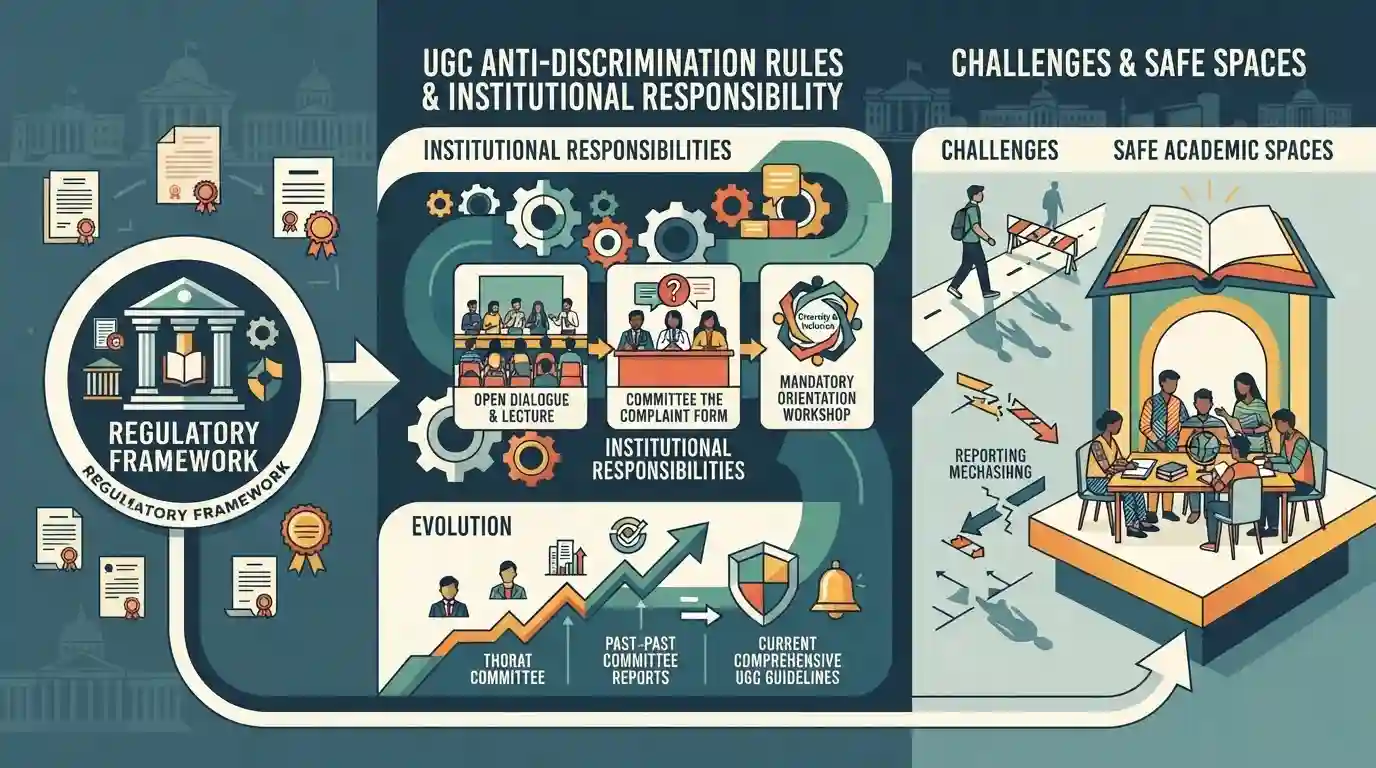
The article explores the regulatory framework surrounding UGC anti-discrimination rules designed to tackle caste-based bias and exclusion in higher education institutions in India. It highlights the evolution of these guidelines, institutional responsibilities, and challenges in ensuring safe, inclusive academic spaces for marginalized students.
મુખ્ય મુદ્દા
- The University Grants Commission (UGC) has been formulating guidelines and regulations to curb caste-based discrimination on higher education campuses across India.
- These regulations stem from previous judicial interventions and institutional reviews following incidents of caste-based bias and institutional exclusions in universities.
- Key aspects include setting up equity cells, anti-discrimination officers, and robust grievance redressal mechanisms to protect students belonging to Scheduled Castes (SC), Scheduled Tribes (ST), and Other Backward Classes (OBC).
- Implementation challenges often involve underreporting, reluctance of institutions to acknowledge discrimination, and the operational efficacy of grievance cells.
મહત્વપૂર્ણ શબ્દો
University Grants Commission (UGC)

Statutory body established by an Act of Parliament in 1956 responsible for coordination, determination, and maintenance of standards of university education in India.
UPSC context
UPSC Prelims/Mains (Governance & Education): Tests knowledge of statutory bodies governing higher education and regulatory frameworks.
UGC (Promotion of Equity in Higher Educational Institutions) Regulations
Regulatory framework notified by the UGC to eliminate discrimination, ensure equal opportunity, and tackle caste-based bias and exclusion in higher educational institutions.
UPSC context
UPSC Mains GS Paper II (Social Justice, Vulnerable Sections): Important for evaluating measures against discrimination and inclusive growth.
Supreme Court of India
The apex judicial body of India with power of judicial review, responsible for interpreting the Constitution and adjudicating disputes involving fundamental rights and institutional regulations.
UPSC context
UPSC Prelims/Mains (Indian Polity): Tests understanding of constitutional jurisdiction, judicial review, and enforcement of fundamental rights.
પ્રિલિમ્સ ટ્રેપ
UGC anti-discrimination regulations apply uniformly across all educational institutions in India without exception.
Aspirants often assume UGC equity regulations automatically apply to all educational institutions, missing exclusions or specific statutory distinctions for minority or private institutions.
સંલગ્ન સ્થિર ખ્યાલો
What constitutional provisions and statutory bodies govern educational equity and caste-based discrimination in India?
- Article 15(4) & (5): Enables the state to make special provisions for the advancement of any socially and educationally backward classes or for SC and ST in educational institutions.
- UGC Act 1956: Statutory body established under an Act of Parliament in 1956 for the coordination, determination, and maintenance of standards in university education.
- Article 29(2): Prohibits any educational institution from denying admission to any citizen on grounds only of religion, race, caste, language, or any of them.
આંતર-વિષય પેટર્ન
Campus Equity vs. Fundamental Rights Enforcement
Caste discrimination regulations on campus intersect with Article 15 and 29, testing institutional accountability and the state's positive obligations in higher education.

UGC equity regulations and institutional accountability mechanisms are prime candidates for Mains GS-2 governance and social justice questions.
સંલગ્ન PYQ · 2
સંલગ્ન PYQ · 2
- 2018MainsGS2
Whether National Commission for Scheduled Castes (NCSC) can enforce the implementation of constitutional reservation for the Scheduled Castes in the religious minority institutions? Examine.
- 2022MainsGS2
Discuss the role of the National Commission for Backward Classes in the wake of its transformation from a statutory body to a constitutional body.
