Uganda Maintains Social Media Ban Following General Elections
Source:The Hindu ↗
Why It Matters
Provides a critical international case study on the tension between state control over digital information (to prevent unrest and misinformation) and the protection of fundamental democratic rights, such as freedom of expression, during electoral processes.
Summary
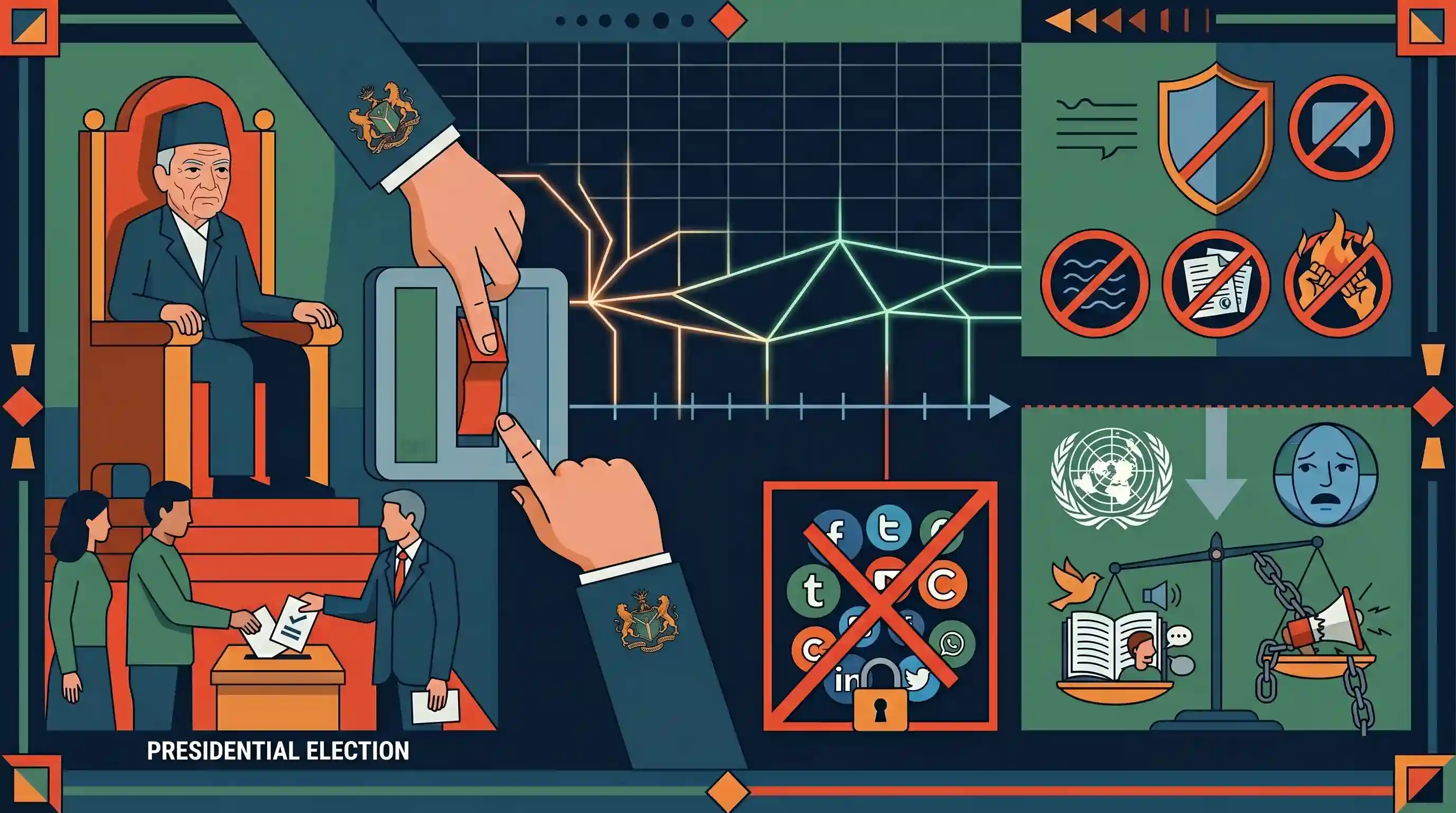
Uganda has partially restored internet access following a nationwide blackout initiated during its recent presidential election, which saw long-time ruler Yoweri Museveni return to power. However, the government has decided to maintain its ban on social media platforms. Ugandan authorities, particularly the Uganda Communications Commission (UCC), defended the restrictions as crucial temporary measures to prevent the spread of misinformation, curb potential electoral fraud, and stop incitement to violence. The move has drawn sharp international criticism, with the United Nations calling it deeply worrying due to its impact on fundamental rights and freedom of expression.
Key Points
- Uganda lifted a nationwide internet block following the re-election of President Yoweri Museveni but maintained a strict ban on social media platforms.
- The Uganda Communications Commission (UCC) justified the social media restrictions as necessary to curb misinformation, disinformation, and potential incitement to violence during the election period.
- The United Nations criticized the internet shutdown as 'deeply worrying', highlighting concerns over the suppression of freedom of expression and democratic transparency.
- The event illustrates a growing trend among some governments to utilize internet and social media blackouts to control information flow and maintain public order during politically sensitive times, raising significant human rights concerns.
Important Terms
Internet Shutdowns

The deliberate disruption of internet or electronic communications, rendering them inaccessible for a specific population or location, often used by governments to control information flow.
UPSC context
GS Paper 2: Fundamental Rights (Article 19). Tests knowledge of judicial safeguards (Anuradha Bhasin case) and the balance between security and liberty.
Uganda Communications Commission (UCC)
The national regulatory authority overseeing Uganda's communications sector, including telecommunications and broadcasting; it is responsible for implementing government-ordered digital restrictions.
UPSC context
GS Paper 2: International Relations. Illustrates how state institutions in various regimes manage digital sovereignty and electoral integrity.
Freedom of Speech and Expression
A fundamental human right to hold opinions without interference and to seek, receive, and impart information and ideas through any media.
UPSC context
GS Paper 2: Indian Constitution. Core topic regarding Article 19(1)(a) and 'reasonable restrictions' under Article 19(2).
Digital Authoritarianism
The use of digital technology by governments to surveil, repress, and manipulate their citizens, often involving internet shutdowns or social media censorship to stifle dissent.
UPSC context
GS Paper 2: Governance and Democracy. Relevant for discussing global trends in democratic erosion and technology's role in political control.
Misinformation
False or inaccurate information that is spread, regardless of intent to deceive; in elections, it is often cited as a justification for state-imposed communication curbs.
UPSC context
GS Paper 2: Electoral Reforms. Tests understanding of challenges to free and fair elections in the digital age.
UN Human Rights Office (OHCHR)
The principal UN entity mandated to promote and protect human rights, which criticized the Ugandan shutdown as a violation of international democratic standards.
UPSC context
GS Paper 2: Important International Institutions. Relevant for their role in monitoring global human rights and democratic norms.
Prelims Trap
The Supreme Court declared the right to access the internet as a distinct Fundamental Right under Article 21.
The SC in Anuradha Bhasin ruled internet access is protected under Article 19(1)(a) and 19(1)(g), not Article 21, and is subject to reasonable restrictions.
Static Concepts Connected
How are internet shutdowns legally regulated in India?
- Telecommunications Act, 2023: Empowers the government to temporarily restrict telecom networks for public emergency or safety, replacing old Telegraph Act rules.
- Anuradha Bhasin Case (2020): SC held internet access is protected under Article 19. Indefinite shutdowns are unconstitutional and must pass the proportionality test.
- Reasonable Restrictions: Suspensions must strictly align with constitutional parameters like sovereignty, security of the state, and public order.
What are the 'Kampala Principles' in India's foreign policy?
- Origin: Announced by PM Modi in 2018 at the Ugandan Parliament as 10 guiding principles for India's strategic engagement with the African continent.
- Core Focus: Prioritizes local capacity building, digital inclusion, agriculture, and open markets, contrasting with other extractive development models.
- Global Architecture: Advocates for joint India-Africa cooperation to reform the United Nations and build a more equitable, democratic global order.
Cross-Topic Patterns
Internet Bans vs. Safe Harbour Rules
While some nations use outright blackouts during elections, India increasingly targets misinformation via intermediary liability (IT Rules 2021) and Safe Harbour (Sec 79) conditionality.
Kampala Principles and Digital Diplomacy
This news structurally contrasts with India's 'Kampala Principles' for Africa, which emphasize exporting India's digital public infrastructure and enhancing digital inclusion over restrictive digital regimes.

Expect a GS-2 question contrasting India's targeted intermediary regulations (IT Act) with global trends of internet blackouts.
Linked PYQs · 3
Linked PYQs · 3
- 2024MainsGS3
Social media and encrypting messaging services pose a serious security challenge. What measures have been adopted at various levels to address the security implications of social media? Also suggest any other remedies to address the problem.
- 2016MainsGS3
Use of Internet and social media by non-state actors for subversive activities is a major security concern. How have these been misused in the recent past? Suggest effective guidelines to curb the above threat.
- 2017MainsGS2
Examine the scope of Fundamental Rights in the light of the latest judgement of the Supreme Court on Right to Privacy.
