Electric vehicle weight accelerates toxic microplastic tyre pollution
Source:Indian Express ↗
Why It Matters
The shift to EVs is a core part of India's climate commitments (Panchamrit, net-zero by 2070). UPSC candidates must understand the holistic environmental impact of green technologies. Knowing that EVs eliminate tailpipe emissions but increase non-exhaust particulate and microplastic pollution due to vehicle weight provides a critical, balanced perspective needed for Mains GS3 and Essay writing.
Summary
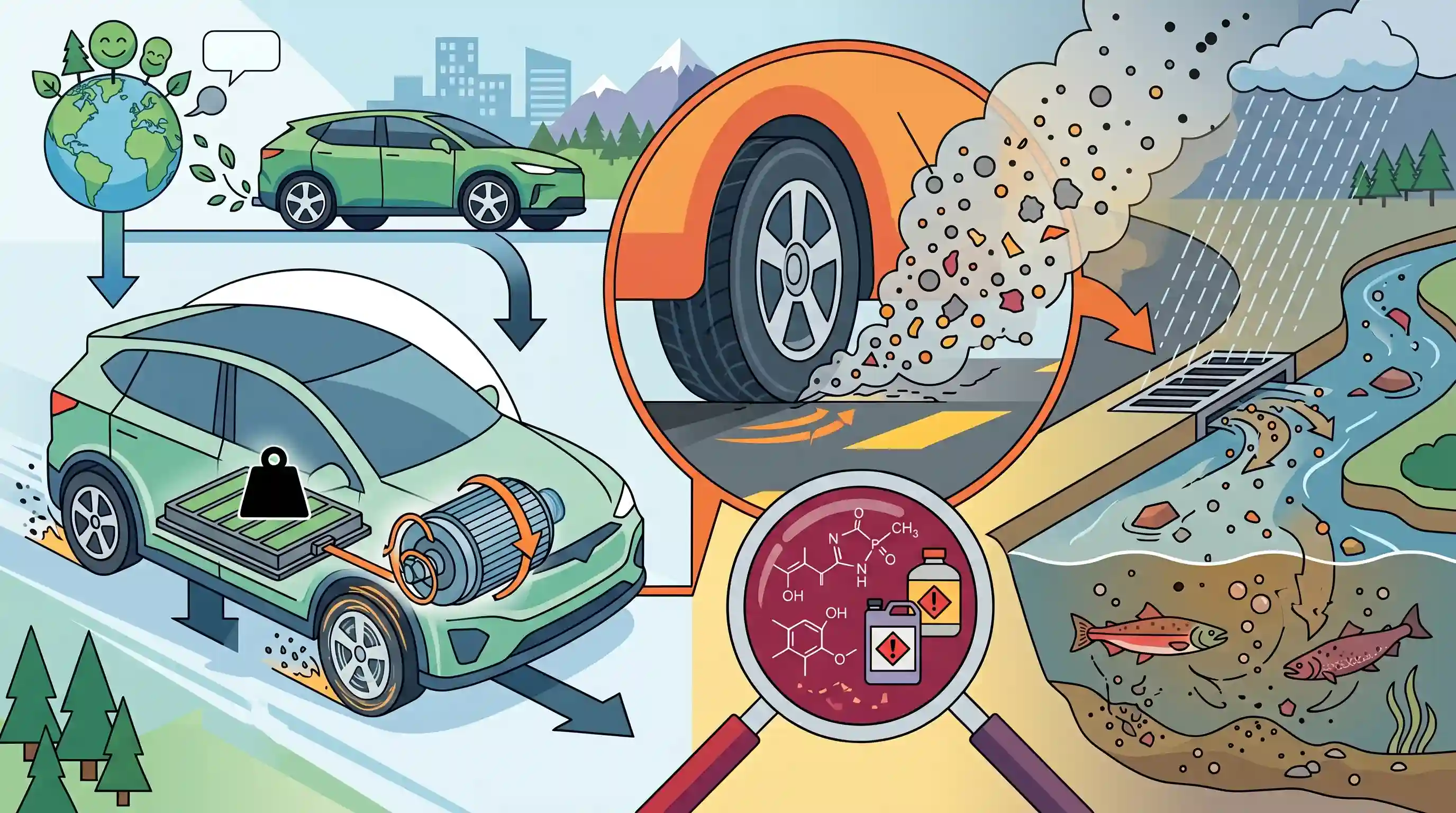
Electric vehicles (EVs) are widely promoted as a climate solution because they produce zero tailpipe emissions, helping reduce carbon footprints. However, they come with a hidden pollution problem: tyre wear. Because EVs are significantly heavier than internal combustion engine vehicles (due to their massive battery packs) and deliver higher instant torque, they cause tyres to degrade much faster. This accelerated wear releases massive amounts of microplastics and particulate matter into the environment. These tyre particles contain synthetic polymers and toxic chemical additives like 6PPD, which wash into waterways and severely harm aquatic life. Thus, while EVs mitigate global warming, they concurrently exacerbate non-exhaust particulate and microplastic pollution.
Key Points
- Electric Vehicles (EVs) eliminate tailpipe emissions (greenhouse gases and traditional pollutants), making them central to global climate mitigation strategies.
- However, EVs contribute heavily to non-exhaust emissions, primarily through accelerated tyre wear caused by their heavier weight (due to large lithium-ion battery packs) and higher instant torque.
- Tyres are largely made from synthetic rubber derived from fossil fuels; their friction with the road releases microplastics and particulate matter (PM2.5 and PM10) into the air and waterways.
- Tyre particles contain toxic chemicals, notably 6PPD, which breaks down into 6PPD-quinone—a compound highly lethal to aquatic life (such as coho salmon) when washed into streams via stormwater runoff.
- The phenomenon highlights an environmental trade-off: while EV adoption tackles carbon emissions, it exacerbates microplastic pollution and airborne particulate matter unless tyre composition and vehicle weight are optimized.
Prelims Trap
Electric vehicles generate absolutely zero particulate matter (PM2.5/PM10) emissions because they run entirely on electricity.
Aspirants confuse zero "tailpipe" emissions with zero overall emissions. EVs generate significant PM2.5/PM10 through non-exhaust sources like tyre and brake wear due to their higher weight.
Static Concepts Connected
What are non-exhaust vehicle emissions (NEE)?
- Definition: Particles released from brake wear, tyre wear, road surface wear, and resuspension of road dust, entirely independent of tailpipe fuel combustion.
- Pollutant types: They are a major and growing source of urban PM10, PM2.5, secondary microplastics, and heavy metals in both ICE vehicles and EVs.
What are secondary microplastics?
- Origin: Particles formed from the physical/chemical breakdown of larger synthetic items (like synthetic rubber tyres or textiles) due to friction, weathering, or UV exposure.
- Transport & Toxicity: They are easily washed into stormwater runoff, introducing toxic chemical additives like 6PPD into aquatic ecosystems, severely disrupting local marine life.
Cross-Topic Patterns
The EV "Green Paradox"
Tyre pollution joins lithium mining habitat loss and battery e-waste as hidden environmental costs of EVs. UPSC often tests these ecological trade-offs inherent in clean-energy transitions.
Air-to-Water Pollution Link
Airborne tyre dust washing into watersheds links urban vehicular air pollution directly to aquatic toxicity and the marine microplastic syllabus areas.

Expect a Prelims statement testing the paradox: EVs have zero exhaust emissions but higher non-exhaust PM emissions due to battery weight.
Linked PYQs · 3
Linked PYQs · 3
- 2023MainsGS3
The adoption of electric vehicles is rapidly growing worldwide. How do electric vehicles contribute to reducing carbon emissions and what are the key benefits they offer compared to traditional combustion engine vehicles?
- 2024PrelimsGS1
Consider the following statements : Statement-I: Many chewing gums found in the market are considered a source of environmental pollution. Statement-II : Many chewing gums contain plastic as gum base. Which one of the following is correct in respect of the above statements?
- 2025PrelimsGS1
Consider the following types of vehicles : I. Full battery electric vehicles II. Hydrogen fuel cell vehicles III. Fuel cell-electric hybrid vehicles How many of the above are considered as alternative powertrain vehicles?
