Project Cheetah Expansion and New Habitat in Madhya Pradesh
Source:The Hindu ↗
কেন এটি গুরুত্বপূর্ণ
This article covers the expansion of Project Cheetah with a new habitat in Madhya Pradesh, directly relevant to UPSC syllabus topics concerning biodiversity conservation, wildlife management, and the ecological implications of species reintroduction in India.
সারসংক্ষেপ
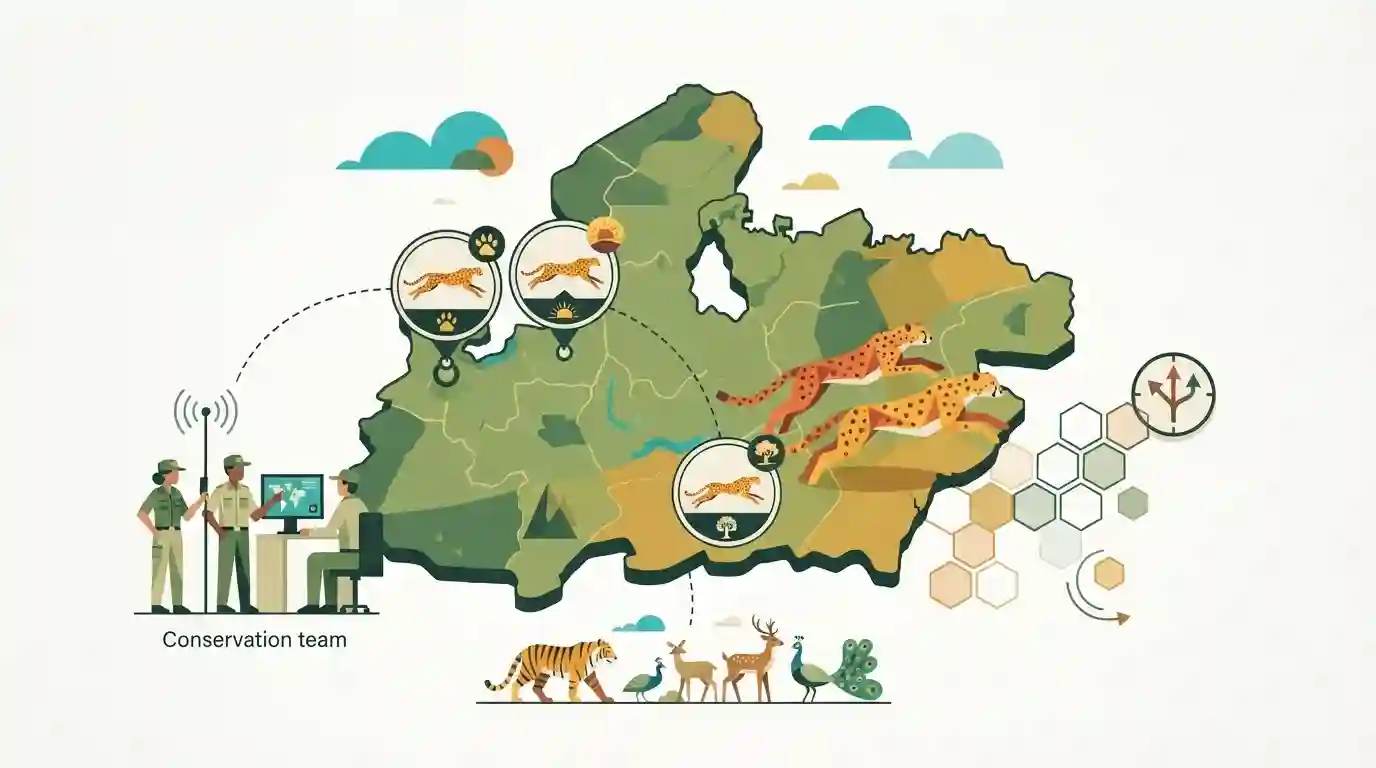
Madhya Pradesh Chief Minister Mohan Yadav released two cheetahs, Vyom and Neera, into the Veerangana Durgavati Tiger Reserve, establishing it as the third cheetah habitat in the state alongside Kuno National Park and Gandhi Sagar Wildlife Sanctuary. This milestone under Project Cheetah highlights India's ongoing efforts in species reintroduction, ecosystem restoration, and wildlife tourism development.
মূল বিষয়
- Two cheetahs named Vyom and Neera were released into the Veerangana Durgavati Tiger Reserve (VDTR) in Madhya Pradesh, marking their third habitat in the state after Kuno National Park and Gandhi Sagar Wildlife Sanctuary.
- VDTR, formerly known as Nauradehi Tiger Reserve, spans Sagar, Damoh, and Narsinghpur districts and is Madhya Pradesh's largest tiger habitat.
- The cheetah population in India has expanded from the initial 8 introduced under Project Cheetah to over 60, reflecting the progress of species revival and ecosystem restoration.
- Madhya Pradesh also reported significant achievements in wildlife conservation, including housing the highest number of tigers, vultures, and executing successful releases of endangered turtles, gharials, and crocodiles.
গুরুত্বপূর্ণ শব্দ
Project Cheetah

India's landmark species reintroduction initiative launched in 2022 to translocate African cheetahs into secure wild habitats following their extinction in the country in 1952.
UPSC context
UPSC Prelims/Mains (GS Paper III - Environment & Ecology): Species reintroduction, protected areas, and biodiversity conservation strategies.
Veerangana Durgavati Tiger Reserve
Madhya Pradesh's newest designated cheetah habitat, created inside a major protected forest to support the translocation of cheetahs and study their coexistence with tigers and leopards.
UPSC context
UPSC Prelims (Environment & Ecology): Important national parks and tiger reserves in Madhya Pradesh, conservation geography.
Kuno National Park
A prime protected area in Madhya Pradesh chosen as the initial primary site for the historic intercontinental translocation of African cheetahs under Project Cheetah.
UPSC context
UPSC Prelims (Environment & Ecology): Location-based questions on wildlife sanctuaries, national parks, and ecological restoration.
Gandhi Sagar Wildlife Sanctuary
A wildlife sanctuary situated in Madhya Pradesh that serves as an essential upcoming habitat and managed sanctuary for expanding India's reintroduced cheetah population.
UPSC context
UPSC Prelims (Geography/Environment): Protected areas, river basins (Chambal), and biodiversity corridors in central India.
সংযুক্ত স্থির ধারণা
What are the key provisions and legal status of Project Cheetah in India?
- Historical First:: First transcontinental translocation of large wild carnivores, bringing African cheetahs to Kuno National Park in 2022.
- Legal Status:: Classified under Schedule I of the Wildlife Protection Act, 1972, affording the highest degree of legal protection.
- Implementation:: Supervised by a dedicated Cheetah Steering Committee and implemented by NTCA alongside MP Forest Department.
আন্তঃবিষয় প্যাটার্ন
Project Cheetah & Wildlife Protection Act, 1972
Project Cheetah operates under the Wildlife Protection Act, 1972, where imported African cheetahs are classified under Schedule I equivalent protection status to ensure strict legal penalties for poaching.
Transcontinental Wildlife Translocation & CITES Framework
Transcontinental wild animal translocation involves complex CITES compliance and quarantine protocols, bridging international environmental law with domestic wildlife management.

Expect a match-the-following or statement-based question pairing MP protected areas (Kuno, VDTR, Gandhi Sagar) with their specific fauna.
সংযুক্ত PYQ · 1
সংযুক্ত PYQ · 1
- 2020PrelimsGS1
Which one of the following protected areas is well-known for the conservation of a sub-species of the Indian swamp deer (Barasingha) that thrives well on hard ground and is exclusively graminivorous?
