Cheetah Reintroduction and New Habitat in Madhya Pradesh
Source:The Hindu ↗
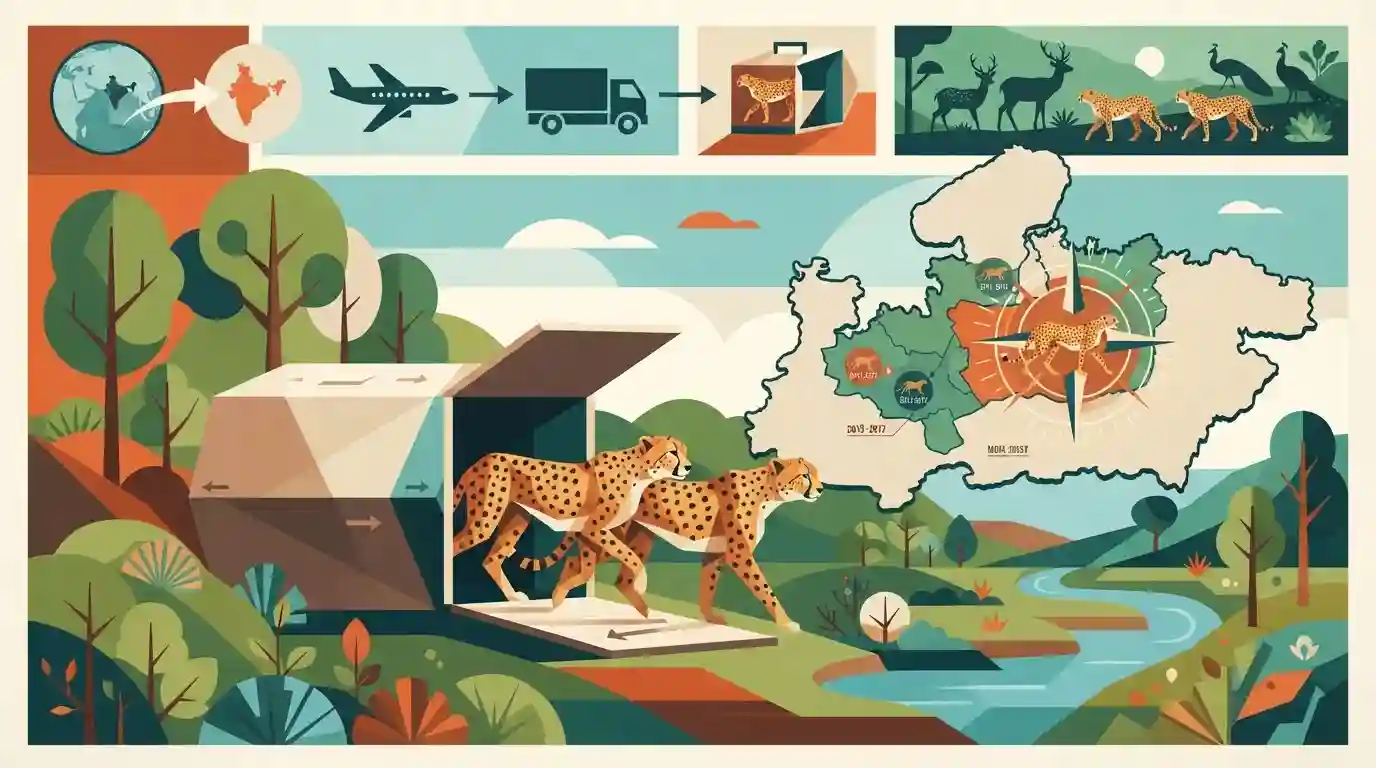
Why It Matters
It tracks the progress of India's ambitious transcontinental wildlife reintroduction project (Project Cheetah) and spatial distribution of endangered species across multiple habitats.
Summary
Two cheetahs have been released into a tiger reserve in Madhya Pradesh, marking their third habitat in the state under the Project Cheetah wildlife reintroduction program.
Key Points
- Two cheetahs have been released into a tiger reserve in Madhya Pradesh, marking their third habitat in the State.
- This move is part of the ongoing Project Cheetah initiative aimed at establishing a meta-population of cheetahs in India following their extinction.
- Madhya Pradesh continues to play a central role in wildlife reintroduction and conservation management.
Important Terms
Project Cheetah

An ambitious intercontinental wildlife reintroduction program initiated by India to restore free-ranging cheetah populations, following their local extinction in 1952, starting with translocations into Madhya Pradesh's Kuno National Park and expanding to other reserves.
UPSC context
UPSC Prelims/Mains - Environment and Ecology: Biodiversity conservation, species reintroduction, and wildlife management policies.
National Tiger Conservation Authority
A statutory body established under the Wildlife (Protection) Act, 1972, responsible for implementing tiger conservation projects, overseeing tiger reserves, and managing tiger populations across India.
UPSC context
UPSC Prelims - Environment: Statutory bodies, wildlife protection acts, and conservation governance.
Madhya Pradesh Forest Department
The state-level governmental agency responsible for managing forest resources, wildlife protection, protected areas, and implementing wildlife conservation projects like Project Cheetah and Project Tiger in Madhya Pradesh.
UPSC context
UPSC Mains - GS Paper III: Conservation, environmental pollution and degradation, environmental impact assessment.
Prelims Trap
Kuno National Park is the only designated release site for cheetahs under Project Cheetah in India.
Aspirants often assume Kuno is the sole cheetah site or that cheetahs are native to Indian tiger reserves without coexisting predators; VDTR is now a co-habitation site.
Static Concepts Connected
What are the key legal provisions and statutory bodies governing wildlife reintroduction and tiger reserves in India?
- NTCA Role: Statutory body chaired by the Union Environment Minister, responsible for approving tiger conservation plans and overseeing Project Tiger and related reintroductions.
- WPA 1972 Status: Cheetahs are protected under Schedule I of the Wildlife Protection Act, 1972, granting them the highest level of legal protection in India.
- IUCN Guidelines: The IUCN Guidelines for Reintroductions dictate feasibility studies, genetic health checks, and stakeholder consultations for intercontinental translocations like Project Cheetah.
Cross-Topic Patterns
Project Cheetah + IUCN Reintroduction Guidelines
Project Cheetah's African translocation tests IUCN reintroduction guidelines, mirroring India's historical lion and tiger translocations under Wildlife Protection Act 1972 frameworks.
Apex Predator Sympatry + Carrying Capacity Models
Introducing African cheetahs into tiger reserves forces a rethink of apex predator sympatry, testing carrying capacity models in Madhya Pradesh's dense forest tracts.

Project Cheetah habitats + Wildlife Protection Act schedules likely to feature in a statement-based prelims question.
Linked PYQs · 2
Linked PYQs · 2
- 2026PrelimsGS1
With reference to Madhav National Park, which of the following statements is/are correct ? 1. It was declared a Tiger Reserve in India in 2025. 2. Sakhya Sagar, which is designated as a Ramsar Site, is situated within this National Park. 3. Its area is shared between Madhya Pradesh and Rajasthan. Select the answer using the code given below :
- 2023MainsGS3
Comment on the National Wetland Conservation Programme initiated by the Government of India and name a few India's wetlands of international importance included in the Ramsar Sites.
