Recombinant Antivenoms for Snakebite Envenoming Treatment
Source:The Hindu ↗
Why It Matters
Snakebite envenoming is a major public health crisis in rural India. The shift toward monoclonal antibodies and recombinant technology provides a perfect case study for UPSC aspirants on how applied biotechnology can solve real-world problems and uplift poorer sections of society.
Summary
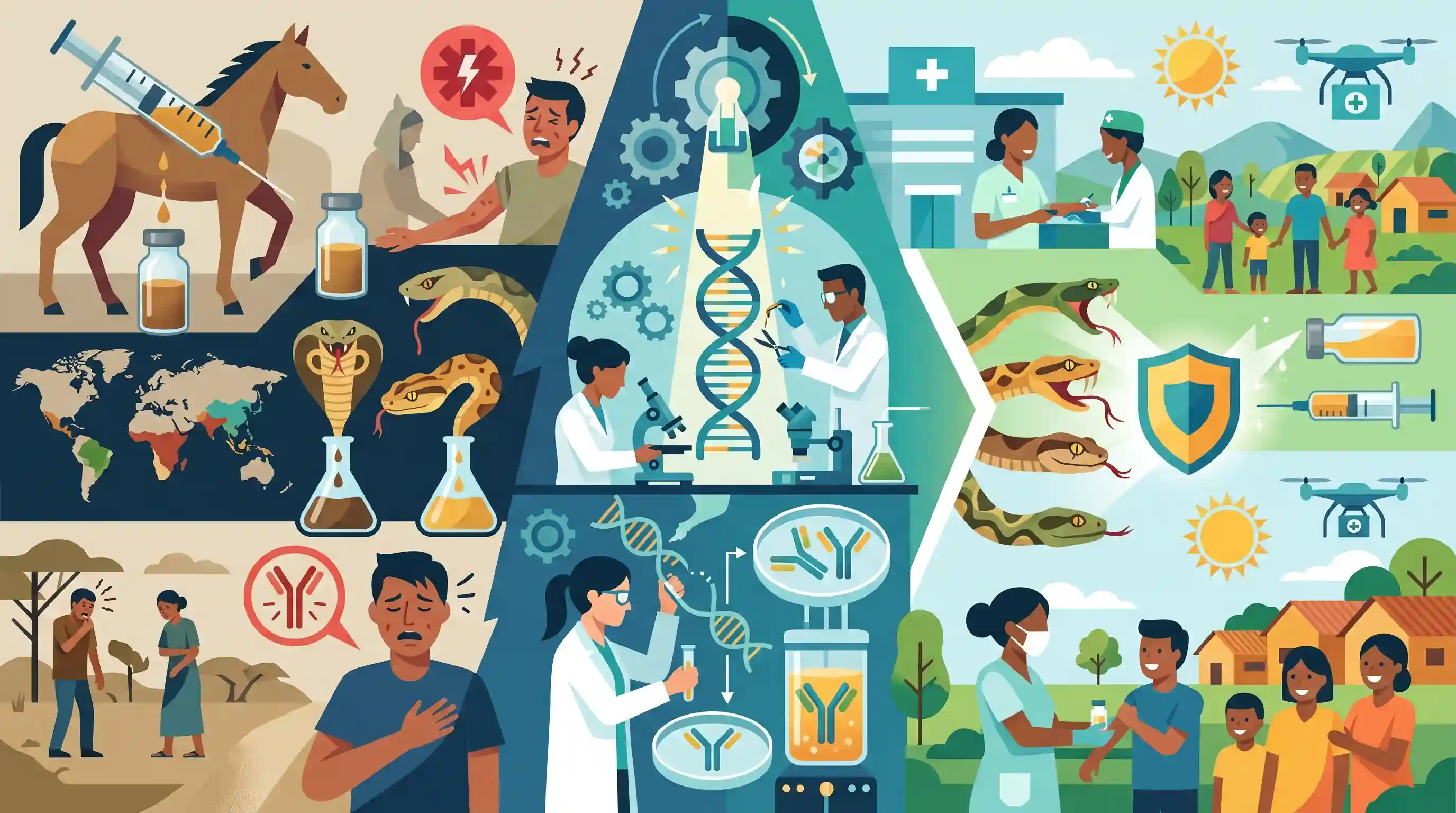
The article highlights the urgent need to transition from 19th-century snakebite treatments to modern, 21st-century scientific solutions. Traditional antivenoms, produced by immunizing horses, suffer from limited efficacy due to venom variability across regions and pose significant risks of severe allergic reactions in human patients. To combat this Neglected Tropical Disease—which claims tens of thousands of lives annually in India alone—scientists are leveraging applied biotechnology. The development of recombinant DNA-based antivenoms and lab-engineered monoclonal antibodies (mAbs) promises safer, broad-spectrum treatments that could eventually bypass the need for cold-chain logistics, bringing life-saving and accessible healthcare to the poorest and most vulnerable rural communities.
Key Points
- Snakebite envenoming is classified as a Neglected Tropical Disease (NTD), disproportionately impacting rural and agricultural communities, especially in India.
- Traditional snake antivenom production still relies on 19th-century methods involving the hyperimmunization of horses, which produces polyclonal antibodies that can trigger severe allergic reactions in humans, such as serum sickness and anaphylaxis.
- Geographical variability in snake venom means that traditional, region-specific antivenoms often lack cross-neutralization capabilities for different snake species.
- 21st-century biotechnology solutions focus on developing recombinant antivenoms and monoclonal antibodies (mAbs) using synthetic biology.
- Lab-engineered monoclonal antibodies offer higher safety, specificity, and the potential for broad-spectrum therapies that could eliminate the need for cold-chain storage, revolutionizing access in remote areas.
Important Terms
Neglected Tropical Diseases (NTDs)

A diverse group of conditions (e.g., snakebite, leprosy, kala-azar) prevalent in tropical areas, disproportionately affecting impoverished populations with limited access to healthcare.
UPSC context
GS Paper 2: Social Justice/Health. Tests knowledge of public health challenges and global health governance.
Antivenom
A therapeutic product, traditionally made by immunizing animals like horses, used to neutralize the toxins in snake venom.
UPSC context
GS Paper 3: Science & Technology. Relevant for health innovations and indigenization of technology.
Monoclonal Antibodies (mAbs)
Laboratory-engineered proteins that mimic the immune system's ability to fight specific targets; used in snakebite treatment to neutralize toxins without animal-derived side effects.
UPSC context
GS Paper 3: Science & Technology. Tests understanding of biotechnology applications in medicine.
Recombinant DNA Technology
The process of joining DNA molecules from different species and inserting them into a host organism to produce new genetic combinations, such as synthetic antivenoms.
UPSC context
GS Paper 3: Biotechnology. A core concept in genetics and advanced medical research.
Cold-chain Logistics
A temperature-controlled supply chain involving refrigerated production, storage, and distribution to maintain the efficacy of vaccines and biopharmaceuticals.
UPSC context
GS Paper 3: Infrastructure and Health. Tests logistical challenges in delivering healthcare to rural India.
World Health Organization (WHO)
A specialized UN agency responsible for international public health; it declared snakebite a high-priority NTD and aims to halve fatalities by 2030.
UPSC context
GS Paper 2: International Relations. Tests knowledge of global institutions and their roles in public health.
Prelims Trap
Neglected Tropical Diseases only encompass infectious diseases caused by pathogens like viruses, bacteria, and parasites.
Snakebite envenoming is a toxidrome, yet it was added to the WHO's high-priority NTD list in 2017, proving NTDs aren't exclusively infectious.
Static Concepts Connected
What distinguishes monoclonal antibodies (mAbs) from traditional polyclonal antibodies?
- Monoclonal (mAbs): Lab-engineered clones from a single immune cell parent, designed to bind to one specific target (epitope) with high precision.
- Polyclonal: Secreted by different B cell lineages, targeting multiple epitopes. Traditionally extracted from the serum of hyperimmunized animals (like horses).
- Safety profile: mAbs bypass severe allergic reactions (like serum sickness) associated with introducing non-human animal proteins into human patients.
What are the core criteria for a disease to be classified as an NTD?
- Demographic impact: They primarily affect impoverished populations living in tropical and subtropical climates with inadequate sanitation and healthcare access.
- Research neglect: These diseases historically receive disproportionately less global funding for research, development, and treatment compared to diseases like HIV/AIDS or tuberculosis.
- Diverse etiology: The list includes viral, parasitic, bacterial, fungal, and non-infectious toxidromes (like snakebite envenoming).
Cross-Topic Patterns
Biotech resolving cold-chain health deficits
The shift towards heat-stable recombinant mAbs connects advanced biotechnology directly with India's rural health infrastructure deficits, simultaneously addressing cold-chain logistics failures and NTD management.
Human-wildlife conflict meeting public health
High snakebite mortality in agricultural belts bridges human-wildlife conflict with public health, underscoring why ecological and rural development frameworks must align for NTD elimination.

A Prelims question linking monoclonal antibodies to non-infectious NTDs (snakebites) and cold-chain resilience is highly likely by 2026.
Linked PYQs · 3
Linked PYQs · 3
- 2024PrelimsGS1
With reference to monoclonal antibodies, often mentioned in news, consider the following statements : I. They are man-made proteins. II. They stimulate immunological function due to their ability to bind to specific antigens. III. They are used in treating viral infections like that of Nipah virus. Which of the statements given above are correct?
- 2021MainsGS3
What are the research and developmental achievements in applied biotechnology? How will these achievements help to uplift the poorer sections of the society?
- 2025PrelimsGS1
With reference to monoclonal antibodies, often mentioned in news, consider the following statements : I. They are man-made proteins. II. They stimulate immunological function due to their ability to bind to specific antigens. III. They are used in treating viral infections like that of Nipah virus. Which of the statements given above are correct?
