Chabahar Port Sanctions Lapse and Indian Strategic Autonomy Challenges
Source:The Hindu ↗
Why It Matters
This article highlights the vulnerability of India's strategic autonomy and 'independent foreign policy' to external pressures, particularly US sanctions. The Chabahar port is a critical geopolitical asset for India, linking it to Central Asia, and the current challenges reflect broader themes of balancing relationships between major global powers (US, Iran, Russia).
Summary
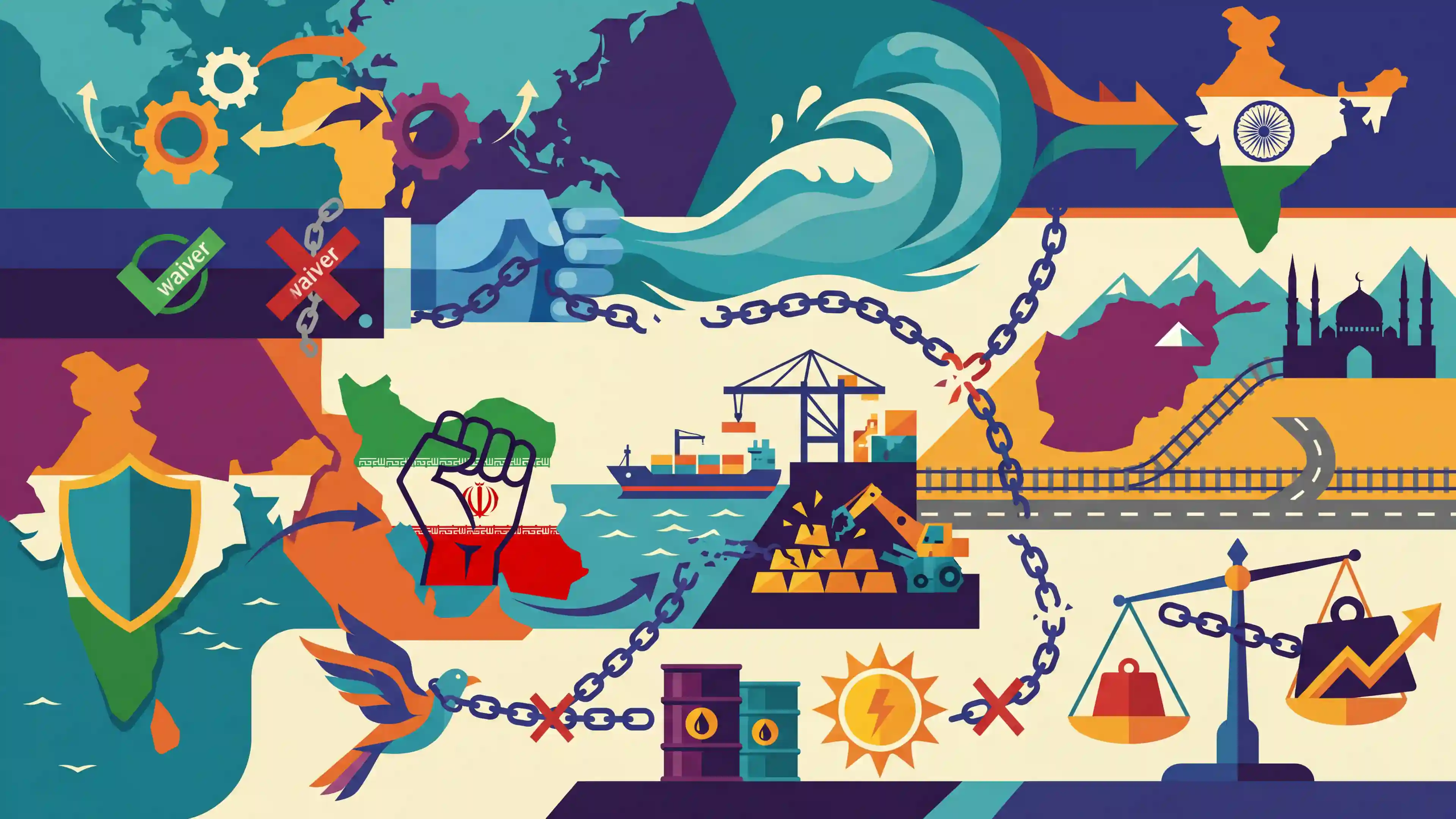
The lapse of the US sanctions waiver on Iran's Chabahar port threatens India's significant investments and its strategic connectivity route to Afghanistan and Central Asia. Originally envisioned as a bypass to Pakistan, the Chabahar project has faced persistent hurdles due to shifting US policies, particularly the withdrawal from the JCPOA and the reinstatement of sanctions under the 'maximum pressure' campaign. The situation poses a critical test for India's 'independent foreign policy' and strategic autonomy. It highlights the constraints placed on India's strategic investments and energy security, as the threat of secondary sanctions limits India's ability to operate freely and pursue its national interests with sanctioned countries like Iran, Venezuela, and Russia.
Key Points
- The US has allowed its sanctions waiver on Iran's Chabahar port to lapse, posing a significant challenge to India's strategic $620 million investment in the project.
- The Chabahar port has been central to India's strategy to secure an alternative trade route to Afghanistan and Central Asia, bypassing Pakistan, with investments dating back to 2003.
- Despite the 2016 trilateral agreement to bolster connectivity, India's progress on Chabahar has faced ongoing obstacles linked to shifting US policies, such as the Trump administration's 'maximum pressure' campaign and withdrawal from the JCPOA.
- The lapse of the waiver severely tests India's 'independent foreign policy' and strategic autonomy, as US sanctions limit India's ability to operate the port and dictate its energy trade with sanctioned countries like Iran, Venezuela, and Russia.
Important Terms
Joint Comprehensive Plan of Action (JCPOA)

A 2015 nuclear agreement between Iran and world powers (P5+1) limiting Iran's nuclear capabilities in exchange for lifting economic sanctions.
UPSC context
GS Paper II: Global agreements affecting India; tests understanding of West Asian geopolitics and energy security.
Strategic Autonomy
A foreign policy doctrine where a nation makes independent sovereign decisions based on national interest without being constrained by external pressures or permanent alliances.
UPSC context
GS Paper II: India’s Foreign Policy; central to debates on multi-alignment and sovereign decision-making.
Chabahar Port
Iran's only oceanic port, located in Sistan-Baluchistan; serves as India's strategic gateway to Afghanistan and Central Asia, bypassing Pakistan.
UPSC context
GS Paper II: Neighborhood relations; strategic counter to China’s Gwadar port and key to regional connectivity.
Secondary Sanctions
Sanctions imposed by a country on third-party entities or nations that continue to do business with a primary sanctioned target.
UPSC context
GS Paper II: Effect of policies of developed countries; tests knowledge of diplomatic constraints on India’s trade.
International North-South Transport Corridor (INSTC)
A 7,200-km multi-modal transit network connecting India to Russia and Europe via Iran, intended to reduce freight time and costs.
UPSC context
GS Paper II: Regional agreements; tests knowledge of India's Eurasian connectivity and trade diversification strategy.
Trilateral Agreement (India, Iran, Afghanistan)
A 2016 pact establishing a transit corridor via Chabahar Port to facilitate trade between India, Iran, and Afghanistan, bypassing land routes through Pakistan.
UPSC context
GS Paper II: Neighborhood relations; examines India's role in stabilizing Afghanistan and regional economic integration.
Prelims Trap
"Chabahar Port is located in the Persian Gulf and was developed under the original INSTC founding agreement."
Chabahar is located on the Gulf of Oman, not the Persian Gulf. Additionally, it was integrated later; the original 2000 INSTC agreement was signed only by India, Iran, and Russia.
Static Concepts Connected
What is the International North-South Transport Corridor (INSTC)?
- Founding Members: A multi-modal transportation agreement formalized in 2000 in St. Petersburg by Iran, Russia, and India to promote transport cooperation.
- Route Details: A 7,200-km network of ship, rail, and road routes connecting India to Russia and Europe via Iran and Central Asia.
- Strategic Objective: Designed to bypass the Suez Canal, it aims to reduce freight costs by 30% and cut transit time by 40%.
How do US 'Secondary Sanctions' function globally?
- Target Mechanism: Penalties targeting third-party entities (like Indian firms or ports) that engage in business with sanctioned countries, such as Iran or Russia.
- Economic Coercion: They effectively deny penalized entities access to the US financial system, dollar-denominated transactions, and US markets, enforcing extra-territorial compliance.
- CAATSA Link: The Countering America’s Adversaries Through Sanctions Act (CAATSA) is the primary US domestic law used to mandate these secondary sanctions.
Cross-Topic Patterns
Strategic Autonomy and Rupee Internationalization
US secondary sanctions heavily restrict dollar-based trade, forcing India to explore alternative payment mechanisms. This directly links geopolitical strategic autonomy with the RBI's ongoing push for the internationalization of the Rupee.
Continental connectivity and Energy Security
India's access to Central Asian energy relies on bypassing Pakistan. Hurdles in Chabahar parallel the stalled TAPI pipeline, leaving India's overland connectivity and energy security highly vulnerable to geopolitical shocks.

Expect a multi-statement Prelims question comparing the geographical locations and strategic roles of Gwadar, Chabahar, and Duqm ports.
Linked PYQs · 4
Linked PYQs · 4
- 2012MainsGS2
How have the US sanctions against Iran affected India's bilateral relations with Iran?
- 2018MainsGS2
In what ways would the ongoing US-Iran Nuclear Pact Controversy affect the national interest of India? How should India respond to this situation?
- 2024MainsGS2
Critically analyse India's evolving diplomatic, economic and strategic relations with the Central Asian Republics (CARs) highlighting their increasing significance in regional and global geopolitics.
- 2025MainsGS2
"Energy security constitutes the dominant kingpin of India's foreign policy, and is linked with India's overarching influence in Middle Eastern countries.” How would you integrate energy security with India's foreign policy trajectories in the coming years?
