Historical grievances undermine pragmatic bilateral engagements
Source:Indian Express ↗
Why It Matters
This event serves as a classic case study for UPSC aspirants on the intersection of diplomacy, historical narratives, and realism. It is directly relevant for GS Paper 2 (International Relations) regarding the conduct of bilateral ties and GS Paper 4 (Ethics) concerning the balance between moral/emotional stances and pragmatic national interest in international affairs.
Summary
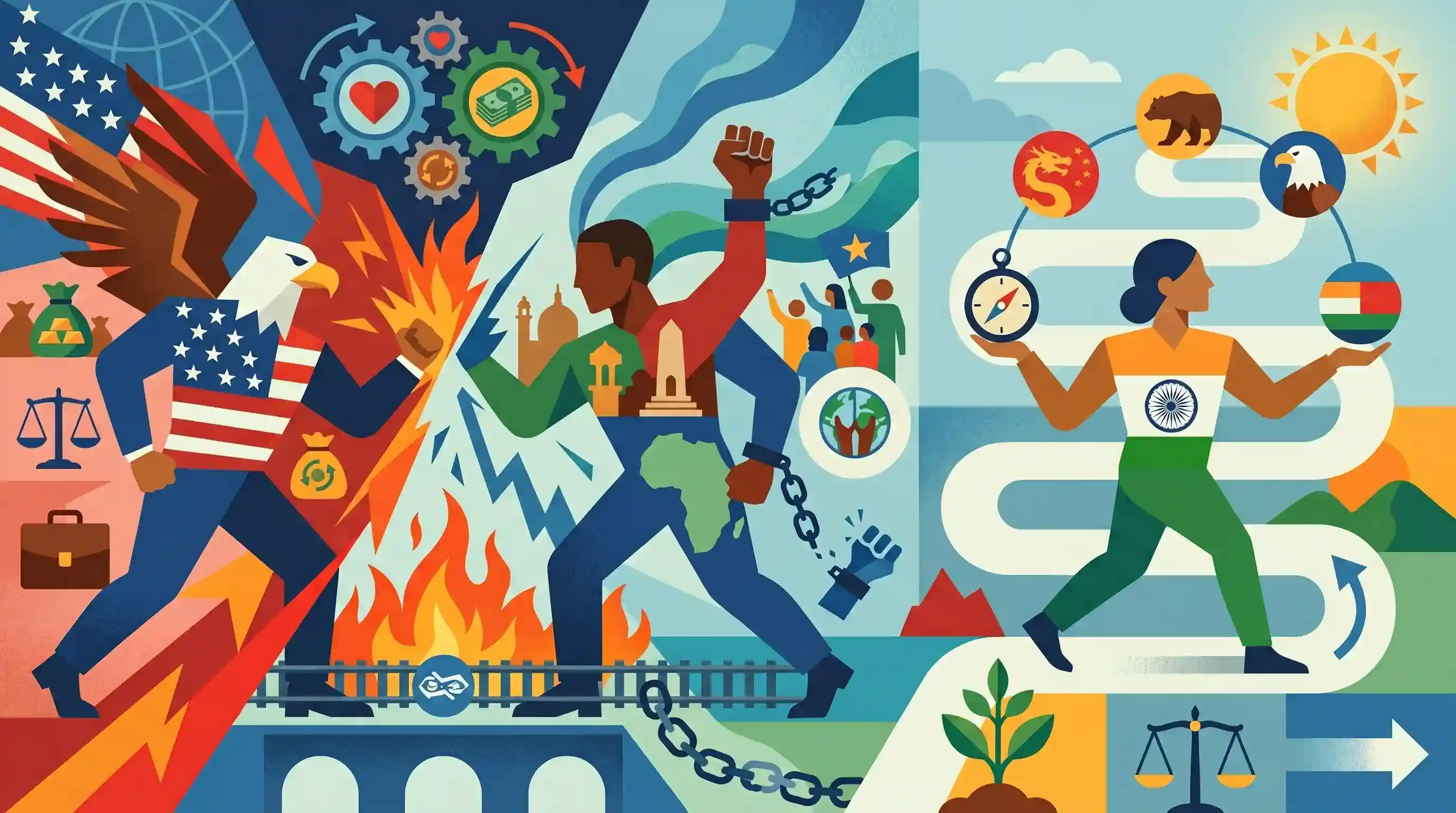
A recent tense meeting between US President Donald Trump and South African President Cyril Ramaphosa highlights how emotive and historically-driven narratives can derail pragmatic diplomacy. South Africa's tendency to adopt moralistic stances, rooted in historical grievances and Global South solidarity, clashed with the US administration's transactional approach to foreign policy. The friction demonstrates that over-reliance on emotional rhetoric can undermine mutually beneficial bilateral engagement and stall cooperation. This diplomatic tension offers a valuable lesson in international relations, contrasting with India's successful model of strategic autonomy, which prioritizes pragmatic national interests over ideological or emotive posturing.
Key Points
- The tense meeting between US President Donald Trump and South African President Cyril Ramaphosa underscores the challenges of managing bilateral relations when historical or emotive narratives overshadow practical diplomacy.
- South Africa frequently leans on moralistic and historically-driven rhetoric (especially regarding anti-Western or Global South solidarity), which clashes with the highly transactional and pragmatic foreign policy style of the US administration.
- Allowing emotive narratives to dominate international engagements can undermine core national interests, leading to diplomatic friction and stalled cooperation on crucial economic and security fronts.
- For countries like India, this incident reinforces the value of 'strategic autonomy' and pragmatic multi-alignment, ensuring that foreign policy is driven by realistic national interests rather than ideological or emotional posturing.
Important Terms
Strategic Autonomy

A nation's ability to make sovereign foreign and defense policy decisions independently, without being constrained by formal alliances or external pressures from major powers.
UPSC context
GS Paper II (International Relations). Tests knowledge of India's foreign policy evolution from non-alignment to multi-alignment.
Global South
A geopolitical grouping of developing or less-developed nations in Asia, Africa, and Latin America, characterized by shared histories of colonialism and common economic challenges.
UPSC context
GS Paper II (International Groupings). Critical for questions on North-South divide, global governance reform, and India's leadership role.
BRICS
An intergovernmental organization comprising Brazil, Russia, India, China, South Africa, and expanded members, aiming to promote economic cooperation and a multipolar world order.
UPSC context
GS Paper II (Bilateral and Global Groupings). Relevant for analyzing shifts in global economic power and alternative governance structures.
Transactional Diplomacy
A foreign policy approach focusing on short-term gains, specific deals, and reciprocal interests rather than long-term ideological commitments or moral alliances.
UPSC context
GS Paper II (Policies of Developed Countries). Tests understanding of how changing diplomatic styles of major powers affect global stability.
Multi-alignment
A diplomatic strategy where a state engages with multiple, often competing, powers on an issue-by-issue basis rather than adhering to a single rigid alliance.
UPSC context
GS Paper II (India’s Foreign Policy). Reflects India’s contemporary pragmatic approach to balancing relations with the US, Russia, and China.
Moralistic Diplomacy
An approach to international relations driven by ethical values, historical justice, or human rights narratives rather than purely pragmatic national interests.
UPSC context
GS Paper IV (Ethics in IR). Tests the ability to analyze the tension between ethics and realpolitik in foreign policy.
Prelims Trap
"India's 'strategic autonomy' mandates strict equidistance and non-alignment with major global powers."
Modern strategic autonomy involves proactive 'multi-alignment' (partnering with competing blocs for specific interests) rather than the passive equidistance of the Cold War era.
Static Concepts Connected
How does 'Realism' contrast with 'Moral Idealism' in foreign policy?
- Realism: Prioritizes national security, state survival, and transactional power dynamics over ethical considerations or historical grievances.
- Moral Idealism: Suggests foreign policy should be primarily guided by ethical values, historical justice, and human rights.
- Principled Pragmatism: India's contemporary approach, balancing hard national security interests with a broad commitment to global rules, equity, and the Global South.
What characterizes India's shift from traditional 'Non-Alignment' to 'Multi-alignment'?
- Non-Alignment: A Cold War strategy focused on maintaining passive equidistance from rival power blocs and avoiding bloc-entrapment.
- Multi-alignment: A proactive, contemporary strategy of simultaneously engaging with competing power centers (e.g., Quad and BRICS) to maximize issue-based national interests.
Cross-Topic Patterns
AGOA privileges vs. BRICS moral posturing
South Africa's emotive, anti-Western stance in BRICS and the ICJ often threatens its preferential trade access under the US African Growth and Opportunity Act (AGOA), illustrating the cost of moralistic diplomacy.
Ethics in IR: Ideology vs National Interest
This dynamic directly feeds into GS-4 applied ethics, examining whether a state's primary moral duty is to historical global justice or the immediate economic and security welfare of its citizens.

Expect a GS-2 Mains question contrasting India’s 'principled pragmatism' with traditional Global South ideological posturing.
Linked PYQs · 3
Linked PYQs · 3
- 2015MainsGS4
At the international level, the bilateral relations between most nations are governed on the policy of promoting one's own national interest without any regard for the interest of other nations. This leads to conflicts and tensions between the nations. How can ethical consideration help resolve such tensions? Discuss with specific examples.
- 2020MainsGS4
‘The will to power exists, but it can be tamed and be guided by rationality and principles of moral duty.’ Examine this statement in the context of international relations.
- 2021MainsGS2
If the last few decades were of Asia's growth story, the next few are expected to be of Africa's.” In the light of this statement, examine India's influence in Africa in recent years.
