Hate Speech and Historical Prejudices in Public Discourse
Source:Indian Express ↗
Why It Matters
The controversy brings into focus the fine line between freedom of speech and hate speech, as well as the ethical responsibilities of public figures to avoid language that normalizes historical prejudices. These themes are central to UPSC GS2 (Polity and Governance) and GS4 (Ethics, Integrity, and Aptitude).
Summary
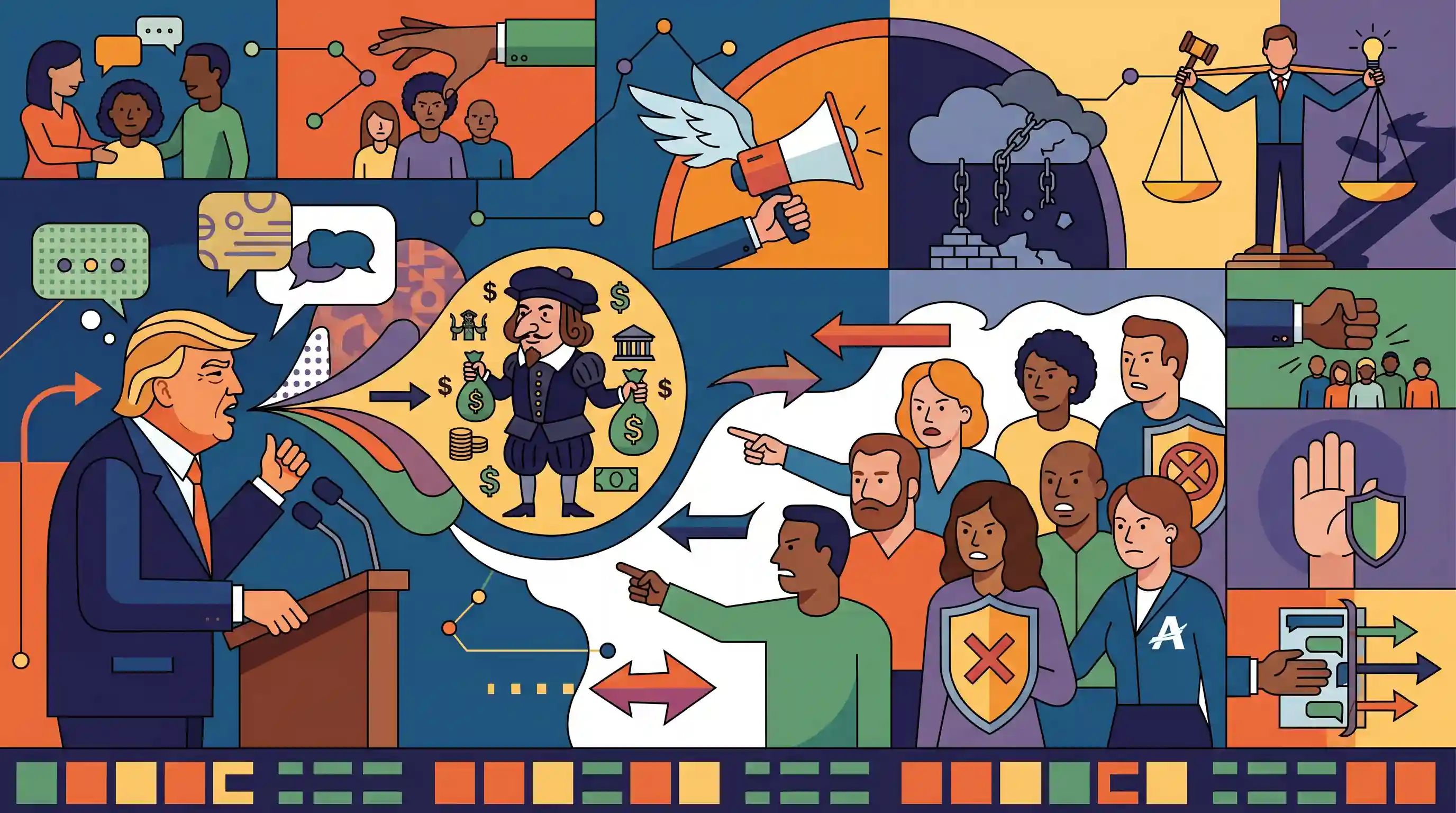
A controversy erupted after Donald Trump used the term 'shylock' in a speech, prompting accusations of antisemitism. While Trump claimed ignorance of the word's offensive origins—derived from Shakespeare's Jewish moneylender in The Merchant of Venice—organizations like the Anti-Defamation League condemned its usage for perpetuating harmful stereotypes. The incident highlights the ongoing debate surrounding hate speech, historical prejudice, and the ethical responsibility of public figures in their communication.
Key Points
- Former US President Donald Trump faced criticism for using the term 'shylock' during a speech, linking it to 'bad people' who lend money.
- Originating from Shakespeare's The Merchant of Venice, the term is widely recognized as an antisemitic slur denoting a greedy Jewish moneylender.
- Trump claimed ignorance of the word's antisemitic roots, stating he understood it simply as a term for someone who charges exorbitant interest rates.
- The Anti-Defamation League condemned the use of the word, emphasizing its role in perpetuating dangerous historical stereotypes about Jewish people.
- The incident underscores the ethical responsibility of public figures to avoid loaded language that reinforces societal prejudices and discrimination.
Important Terms
Anti-Defamation League (ADL)

A New York-based international advocacy organization founded in 1913 to combat antisemitism and bigotry. It monitors hate speech, provides anti-bias training, and advocates for civil rights globally.
UPSC context
GS Paper 2 (International Organizations/Civil Society). Tests knowledge of influential non-state actors in human rights.
Antisemitism
Prejudice, hostility, or discrimination specifically directed against Jewish people based on religious or ethnic identity. It manifests through harmful stereotypes, dehumanizing rhetoric, and historical systemic persecution.
UPSC context
GS Paper 1 (World History/Social Issues). Relevant for understanding historical prejudices and contemporary global social challenges.
Hate Speech
Communication intended to incite hatred, discrimination, or violence against groups based on identity. In India, it is restricted under Article 19(2) and penal laws like the BNS.
UPSC context
GS Paper 2 (Polity) and GS Paper 4 (Ethics). Tests the balance between free speech and social harmony.
Freedom of Expression
A fundamental right under Article 19(1)(a) of the Indian Constitution allowing citizens to voice opinions, subject to reasonable restrictions like public order, decency, and morality under Article 19(2).
UPSC context
GS Paper 2 (Indian Constitution). A core topic examining the extent and limitations of individual liberties in a democracy.
Ethics in Public Life
Moral principles—including integrity, accountability, and impartiality—guiding the conduct of public officials. It emphasizes that leaders are responsible for the societal impact of their communication and actions.
UPSC context
GS Paper 4 (Ethics and Integrity). Tests ability to resolve dilemmas between personal views and public responsibility.
Prelims Trap
Hate speech is explicitly defined under Article 19(2) of the Constitution.
The Constitution does not explicitly define 'hate speech'. Article 19(2) only lists broad grounds for reasonable restrictions, such as public order, decency, or morality.
Static Concepts Connected
How is 'Hate Speech' legally regulated in India?
- Constitutional basis: It is not defined in the Constitution, but restricted under Article 19(2) on grounds of public order, decency, and morality.
- Statutory laws: Punishable under BNS/IPC sections dealing with promoting enmity between different groups on grounds of religion, race, place of birth, or language.
Why is 'ignorance' an invalid ethical defense for public leaders?
- Principle of Accountability: Public figures hold immense influence; negligence in their speech violates the fundamental duty of care towards vulnerable and marginalized communities.
- Emotional Intelligence: Effective leadership requires high social awareness (EI) to navigate historical contexts and actively prevent the normalization of societal prejudices.
Cross-Topic Patterns
Hate Speech & Electoral Disqualification
Under Section 123 of the RPA 1951, using religious/racial slurs or promoting enmity constitutes a 'corrupt practice', which can lead to the disqualification of a candidate.
Ethics: Cultural Violence & Stereotyping
In GS4, the perpetuation of historical stereotypes is often analyzed through Johan Galtung's concept of 'cultural violence', which legitimizes and deepens structural discrimination against minority communities.

Expect a GS4 case study testing accountability and emotional intelligence when a public official unintentionally uses a derogatory slur.
Linked PYQs · 2
Linked PYQs · 2
- 2014MainsGS2
What do you understand by the concept "freedom of speech and expression"? Does it cover hate speech also ? Why do the films in India stand on a slightly different plane from other forms of expression ? Discuss.
- 2015MainsGS4
Differentiate between the following: Discrimination and Preferential treatment
