Protectionist US Economic Policies and Global Trade Impact
Source:The Hindu ↗
Why It Matters
Understanding Trumponomics is essential for aspirants as it highlights the ongoing structural shift from globalization to protectionism. It directly addresses GS3 themes of macroeconomic stability and global trade, as well as GS2 themes regarding US-India bilateral relations and the weakening of multilateral institutions like the WTO.
Summary
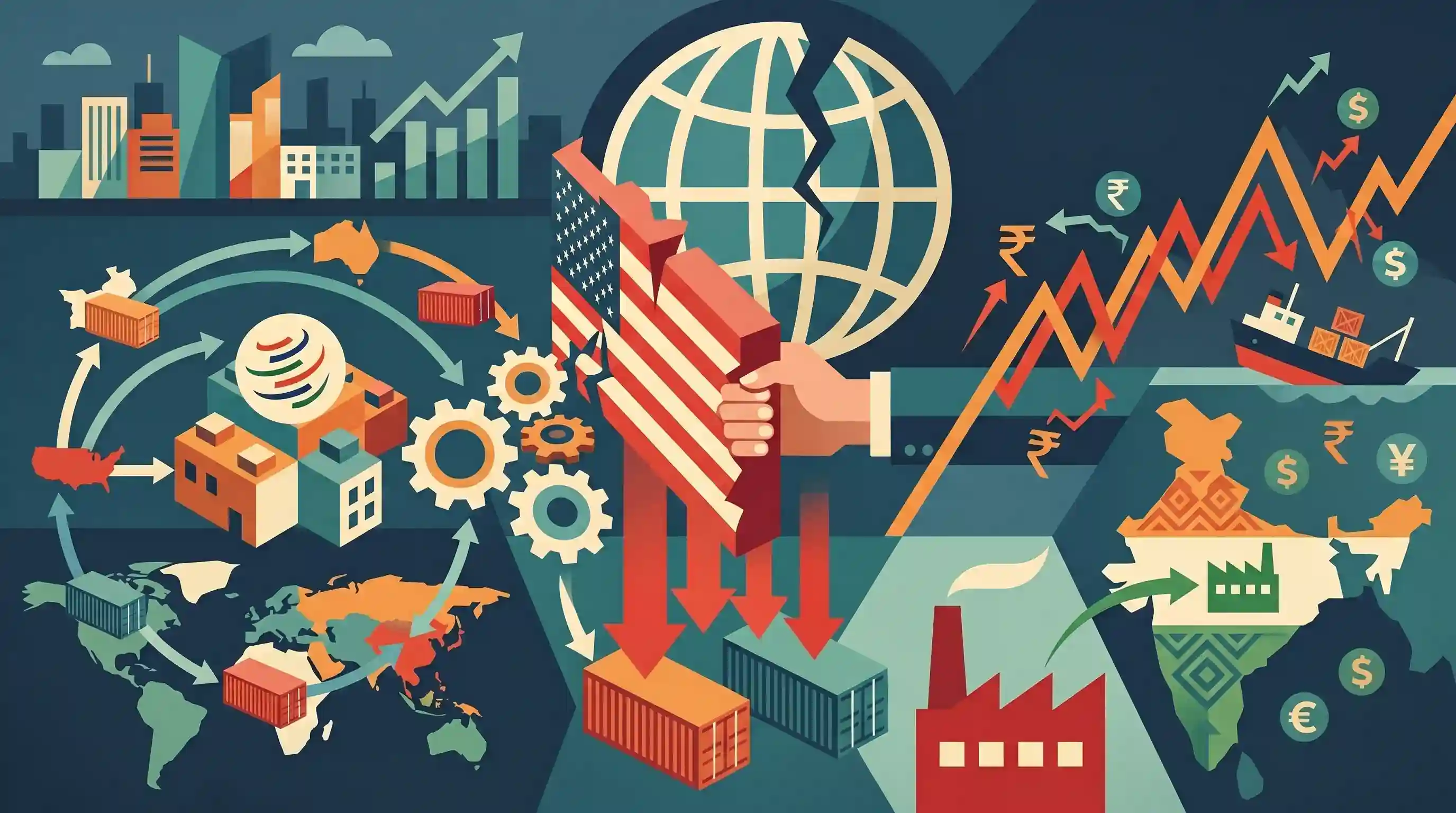
The article argues that 'Trumponomics'—the economic policies associated with Donald Trump—must be taken seriously due to its profound impact on the global economic order. Characterized by aggressive protectionism, deregulation, and tax cuts, Trumponomics prioritizes an 'America First' agenda that seeks to re-shore supply chains through high tariffs. This approach fundamentally disrupts the multilateral, rules-based trading system established under the WTO, favoring transactional bilateralism. For emerging economies like India, this dual-edged sword presents challenges such as potential tariffs on Indian exports and macroeconomic instability due to currency fluctuations, while also offering limited opportunities through the 'China Plus One' realignment.
Key Points
- Trumponomics revolves around three core pillars: aggressive protectionism (high tariffs), domestic deregulation, and substantial corporate tax cuts aimed at re-shoring manufacturing.
- The policy explicitly shifts the US away from a rules-based multilateral trading system (like the WTO framework) toward transactional, aggressive bilateralism.
- Universal baseline tariffs and targeted high tariffs on countries like China aim to reduce the US trade deficit but risk sparking retaliatory global trade wars.
- For India, while the 'China Plus One' strategy offers opportunities, indiscriminate US tariffs could severely impact Indian exports, especially in IT services and pharmaceuticals.
- The resulting currency manipulations, inflation, and shifting interest rates in the US could destabilize macroeconomic conditions and capital flows in emerging markets like India.
Important Terms
Trumponomics

The economic agenda of Donald Trump focusing on four pillars: aggressive tariffs, deregulation, significant tax cuts (e.g., Tax Cuts and Jobs Act), and energy expansion to prioritize domestic production.
UPSC context
GS-III: Effects of liberalization on the economy; GS-II: Effect of policies of developed countries on India’s interests. Tests global economic shifts.
America First
A nationalist policy framework prioritizing U.S. sovereignty and economic self-sufficiency over multilateralism, favoring bilateral trade deals and the reshoring of manufacturing supply chains to the United States.
UPSC context
GS-II: Important International institutions, agencies and fora—their structure, mandate. Tests understanding of nationalist vs. globalist foreign policy.
Protectionism
An economic policy that restricts international trade through tariffs, quotas, and subsidies to shield domestic industries from foreign competition, often disrupting global rules-based trading systems.
UPSC context
GS-III: Changes in industrial policy and their effects on industrial growth. Tests knowledge of trade barriers and anti-globalization trends.
China Plus One
A global business strategy where companies diversify their manufacturing and supply chains by establishing operations in alternative hubs like India or Vietnam to reduce over-reliance on China.
UPSC context
GS-III: Indian Economy and issues relating to planning, mobilization of resources, and growth. Tests India’s potential as a global manufacturing hub.
Federal Reserve (The Fed)
The central banking system of the United States. Its monetary decisions, such as interest rate hikes (hawkish) or cuts (dovish), significantly influence India's capital flows, rupee value, and inflation.
UPSC context
GS-III: Macroeconomic stability and capital markets. Tests the ripple effects of global monetary policy on emerging market economies.
WTO (World Trade Organization)
An international organization that regulates and facilitates rules-based global trade. It is currently challenged by unilateral tariffs and the paralysis of its Dispute Settlement Body (Appellate Body).
UPSC context
GS-II/III: Bilateral, regional and global groupings. Tests understanding of multilateralism and dispute resolution in international trade.
Prelims Trap
The US uses the WTO dispute settlement mechanism to legally enforce its reciprocal tariffs against China.
Trumponomics relies heavily on unilateral tariffs (like Section 301) and bilateral leverage, actively bypassing and crippling the WTO's multilateral framework.
Static Concepts Connected
How does US protectionism trigger macroeconomic instability in emerging markets?
- Capital Flight: Tariff-induced US inflation forces the Federal Reserve to keep interest rates high, pulling Foreign Portfolio Investments (FPIs) out of emerging economies.
- Currency Depreciation: FPI outflows and trade disruptions weaken the Rupee against the Dollar, forcing the RBI to intervene and deplete forex reserves.
- Imported Inflation: A weaker domestic currency makes inelastic, critical imports like crude oil and edible oils significantly more expensive, widening the Current Account Deficit.
What are the core components of the 'China Plus One' opportunity for India?
- Supply Chain De-risking: Global MNCs actively diversify their manufacturing bases to mitigate geopolitical risks and reduce over-reliance on Chinese factories.
- FDI Realignment: India attracts redirected foreign direct investment, particularly in pharmaceuticals (APIs), specialty chemicals, textiles, and electronics assembly.
- Policy Synergy: India’s Production-Linked Incentive (PLI) schemes strategically complement this global shift by offering subsidies to boost domestic manufacturing competitiveness.
Cross-Topic Patterns
Protectionism & Capital Flight
US tariff-induced inflation forces the Federal Reserve to maintain high interest rates, directly triggering FPI outflows, imported inflation, and rupee depreciation in India.
Bilateralism vs. Multilateralism
The US shift toward aggressive transactional bilateralism undermines the WTO's Appellate Body, echoing the collapse of consensus-based global governance also seen in stalled climate finance negotiations.

Expect a 2026 GS3 question linking US protectionism, tariff-induced imported inflation, and the RBI's currency defense mechanisms.
Linked PYQs · 4
Linked PYQs · 4
- 2025MainsGS3
What are the challenges before the Indian economy when the world is moving away from free trade and multilateralism to protectionism and bilateralism? How can these challenges be met?
- 2018MainsGS3
How would the recent phenomena of protectionism and currency manipulations in world trade affect macroeconomic stability of India?
- 2012MainsGS2
Discuss the likely negative impact of the protectionist measures proposed by the US on India's software industry.
- 2019MainsGS2
‘What introduces friction into the ties between India and the United States is that Washington is still unable to find for India a position in its global strategy, which would satisfy India's national self-esteem and ambitions.’ Explain with suitable examples.
