Strategic maritime chokepoint security and global energy supplies
Source:The Hindu ↗
Why It Matters
The Strait of Hormuz is a vital global chokepoint for oil trade. Conflict or military intervention in this region can drastically disrupt global energy supply chains and spike oil prices, which directly impacts the energy security and macroeconomic stability of import-dependent countries like India.
Summary
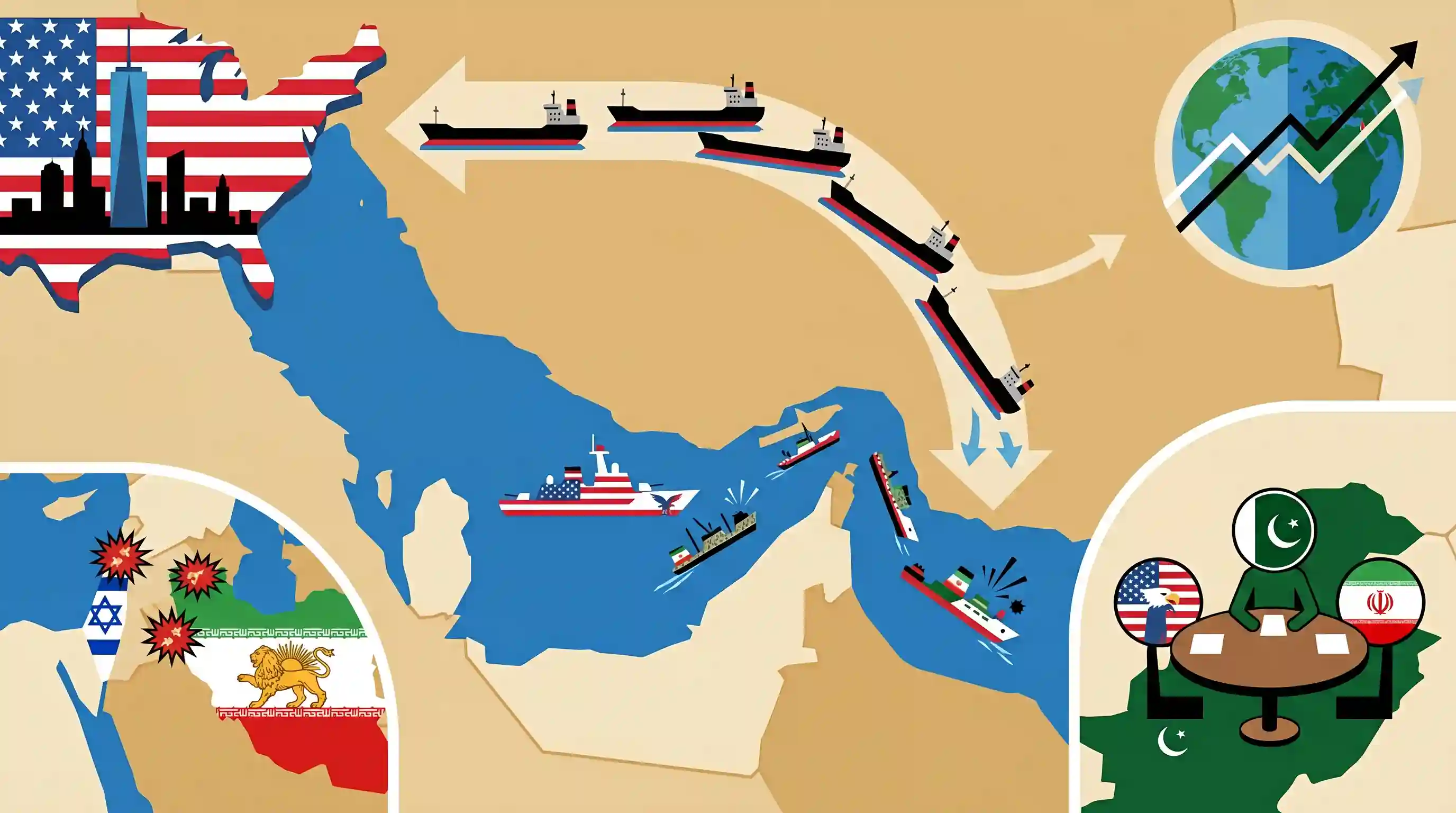
U.S. President Donald Trump announced that American forces are 'clearing' the Strait of Hormuz and have allegedly sunk all Iranian mine-laying ships to secure the crucial waterway. Amidst a six-week-old Israel-Iran conflict, Trump stated that empty tankers are heading to the U.S. to load up on oil and gas, a move intended to stabilize global energy markets. Simultaneously, diplomatic backchannel talks between the U.S. and Iran are reportedly being facilitated by Pakistani intermediaries in Islamabad.
Key Points
- U.S. President Donald Trump announced that American forces are actively clearing the Strait of Hormuz to secure the strategic maritime route.
- Trump claimed that U.S. forces have sunk all of Iran's mine-laying ships in the region.
- The U.S. is positioning empty tankers to load American oil and gas, aiming to stabilize global energy supplies amid the ongoing Middle East conflict.
- The developments come against the backdrop of a six-week-old war between Israel and Iran.
- Backchannel talks are reportedly underway in Islamabad between U.S. and Iranian officials, mediated by Pakistan.
Prelims Trap
"The Strait of Hormuz connects the Persian Gulf directly to the Red Sea."
The Strait of Hormuz connects the Persian Gulf to the Gulf of Oman. Bab-el-Mandeb connects the Red Sea to the Gulf of Aden. UPSC frequently swaps these.
Static Concepts Connected
What is the geographical layout of the Strait of Hormuz?
- Water Bodies: It connects the Persian Gulf to the Gulf of Oman and the Arabian Sea.
- Bordering Nations: It is bounded by Iran to the north and the Musandam Peninsula (shared by Oman and the UAE) to the south.
- Strategic Value: It is the world's most critical energy chokepoint, handling ~20% of global petroleum liquids and LNG trade.
What is Operation Sankalp?
- Core Objective: An Indian Navy initiative launched to ensure the safe passage of Indian-flagged merchant vessels through conflict-prone maritime zones.
- Deployment Area: It maintains a continuous frontline naval presence in the Gulf of Oman and the Persian Gulf.
- Vulnerability Context: It is vital for India's energy security, protecting routes that carry 50% of India's crude and 60% of its LNG imports.
Cross-Topic Patterns
Chokepoint bypass infrastructure
Prolonged military friction in Hormuz elevates the strategic relevance of overland bypass networks like the Saudi East-West Pipeline and the UAE's Fujairah Pipeline for global energy security.
Imported inflation & CAD vulnerability
Energy supply shocks in West Asia directly spike India's crude import bill, widening the Current Account Deficit (CAD) and forcing the RBI to tackle imported inflation.

Expect a multi-statement Prelims question in 2026 linking Strait of Hormuz geography, Operation Sankalp, and India's LNG trade.
Linked PYQs · 4
Linked PYQs · 4
- 2022PrelimsGS1
The term "Levant" often heard in the news roughly corresponds to which of the following regions?
- 2025MainsGS2
"Energy security constitutes the dominant kingpin of India's foreign policy, and is linked with India's overarching influence in Middle Eastern countries.” How would you integrate energy security with India's foreign policy trajectories in the coming years?
- 2018MainsGS2
“India’s relations with Israel have, of late, acquired a depth and diversity, which cannot be rolled back.” Discuss.
- 2017MainsGS2
The question of India's Energy Security constitutes the most important part of India's economic progress. Analyze India's energy policy cooperation with West Asian countries.
