US Threatens Tariffs on India Over Russian Oil Imports
Source:The Hindu ↗
Why It Matters
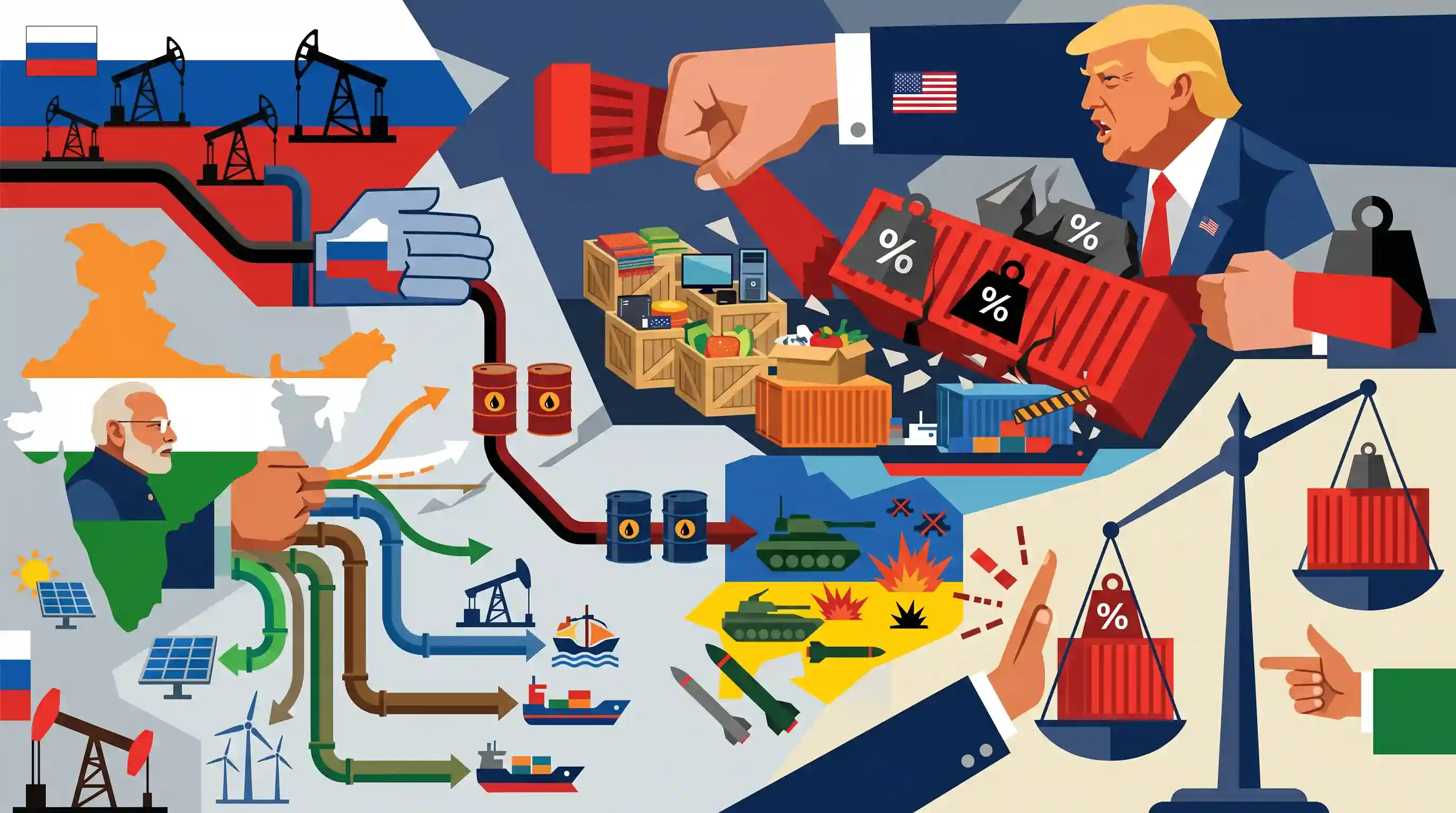
This development is a classic case study of the clash between a nation's strategic autonomy (securing affordable energy) and superpower coercion (trade tariffs and sanctions). It is crucial for understanding the contemporary challenges in Indo-US bilateral ties, the weaponization of global trade, and the complex geopolitical fallout of the Russia-Ukraine war on developing economies.
Summary
U.S. President Donald Trump has escalated trade tensions by threatening 'massive tariffs' against India if it does not cease importing Russian crude oil. Trump claimed Prime Minister Narendra Modi assured him of halting the imports, but India maintains that it is 'broad-basing and diversifying' its energy sourcing in alignment with its national interest. The U.S. views these oil purchases as financial support for Russia's war in Ukraine and has responded by doubling tariffs on Indian goods to 50%, alongside an extra 25% punitive duty. India has strongly condemned these measures as 'unfair, unjustified and unreasonable,' underscoring the growing friction between New Delhi's pursuit of strategic autonomy in energy security and Washington's coercive protectionist policies.
Key Points
- U.S. President Donald Trump warned India of 'massive tariffs' if it continues importing Russian crude oil.
- Trump claimed PM Narendra Modi assured him India would halt Russian oil purchases, but India publicly stated it is diversifying energy sourcing based on market conditions.
- The U.S. has doubled tariffs on Indian goods to 50%, including an additional 25% duty specifically targeting the procurement of Russian crude oil.
- India has termed the U.S. trade actions as 'unfair, unjustified and unreasonable', defending its energy strategy as essential for its national interest.
Prelims Trap
US punitive tariffs on India for Russian oil imports are authorized under the WTO framework.
These are unilateral measures bypassing the WTO's dispute settlement mechanisms, often conflicting with core MFN principles of multilateral trade.
Static Concepts Connected
What is the Most Favored Nation (MFN) principle under the WTO?
- Core principle: Requires WTO members to apply the same tariff rates equally to all other members, preventing discrimination.
- Key exceptions: Free Trade Agreements, special access for developing nations, and national security exceptions (often misused for unilateral tariffs).
How do primary and secondary economic sanctions differ?
- Primary sanctions: Prohibit citizens and companies of the sanctioning country from doing business with the target nation.
- Secondary sanctions: Target third-party nations or foreign entities to prevent them from trading with the sanctioned country, often lacking international legal mandate.
Cross-Topic Patterns
Energy Security + Foreign Policy
India's high import dependency (85%+) for crude forces an integration of GS-3 energy economics with GS-2 strategic autonomy, prioritizing inflation-control over Western geopolitical dictates.
Weaponization of Trade vs WTO
Links to the broader crisis at the WTO. Using tariffs as geopolitical coercion tools bypasses multilateral dispute resolution, driving global trade fragmentation.

Unilateral tariffs and secondary sanctions testing India's strategic autonomy will likely form a core GS-2 India-US relations question.
Linked PYQs · 3
Linked PYQs · 3
- 2012MainsGS2
Discuss the likely negative impact of the protectionist measures proposed by the US on India's software industry.
- 2018MainsGS2
What are the key areas of reform if the WTO has to survive in the present context of "Trade War', especially keeping in mind the interest of India?
- 2018MainsGS3
“Access to affordable, reliable, sustainable and modern energy is the sine qua non to achieve Sustainable Development Goals (SDGs).” Comment on the progress made in India in this regard.
