US Mediation and Prisoner Exchange in Russia Ukraine Conflict
Source:Indian Express ↗
Why It Matters
The mediation by the US in the Russia-Ukraine war is crucial for understanding shifting global power dynamics and diplomatic efforts in protracted conflicts. Additionally, the historical context of Victory Day connects to World History topics in the UPSC syllabus.
Summary
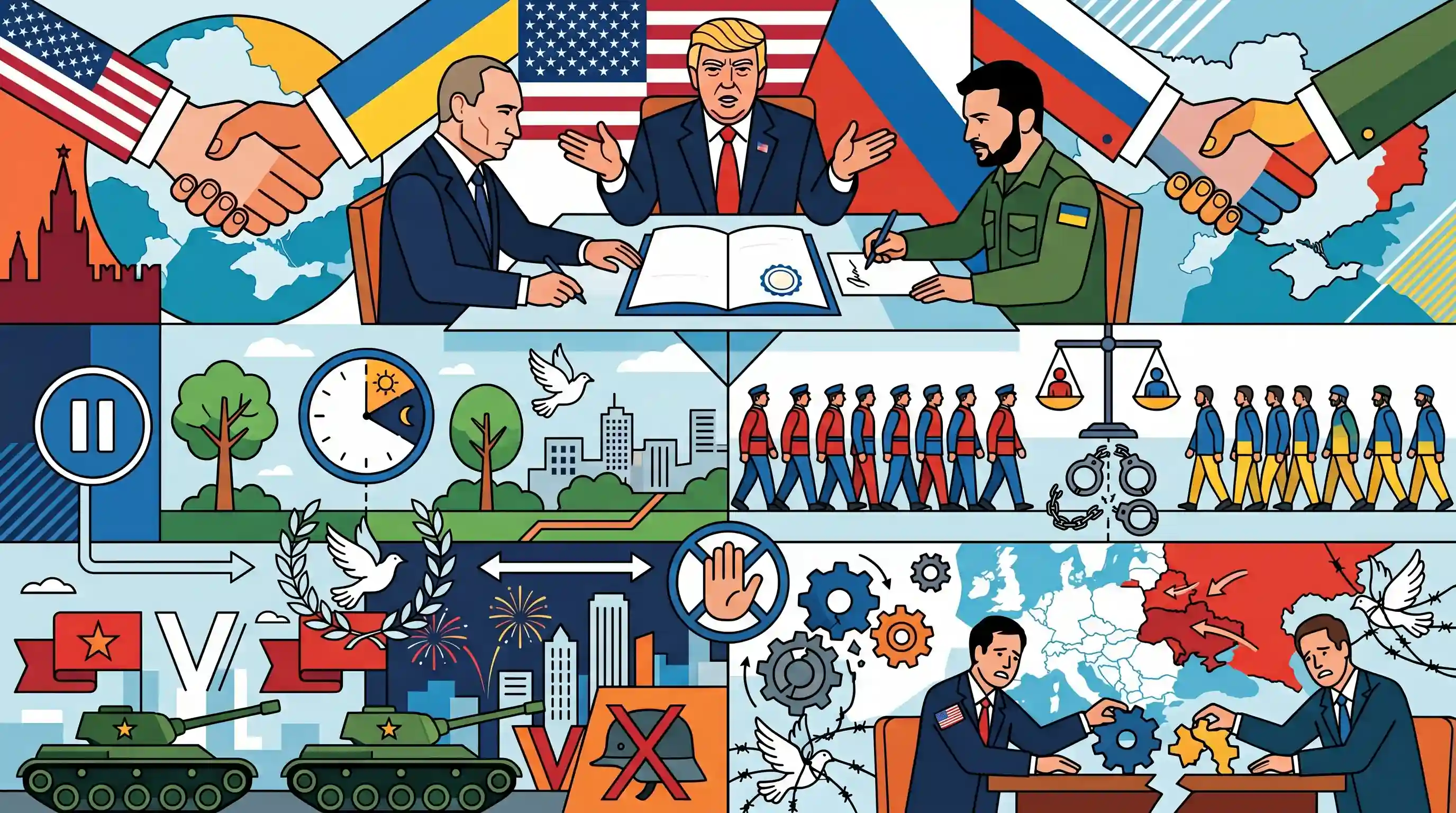
US President Donald Trump has secured a three-day ceasefire and a 2,000-prisoner exchange between Russia and Ukraine, with both Vladimir Putin and Volodymyr Zelenskyy agreeing to the pause. The temporary truce coincides with Russia's Victory Day, marking the defeat of Nazi Germany in WWII. Despite this breakthrough, broader diplomatic efforts to end the conflict permanently remain stalled, according to US Secretary of State Marco Rubio.
Key Points
- US President Donald Trump successfully brokered a three-day ceasefire between Russia and Ukraine, running from May 9 to May 11.
- The agreement includes a large-scale prisoner exchange, with 1,000 prisoners released by each side.
- The timing of the ceasefire aligns with Russia's Victory Day, which commemorates the defeat of Nazi Germany in World War II.
- US Secretary of State Marco Rubio stated that while the US is prepared to help, broader efforts to reach a lasting peace settlement remain stagnated.
Important Terms
Ceasefire Agreement

A formal agreement between opposing sides in a conflict to stop fighting, often as a temporary measure to allow for humanitarian aid or political negotiations.
UPSC context
GS Paper 2: International Relations; tests understanding of conflict resolution mechanisms and diplomatic vocabulary in global geopolitics.
Victory Day (Russia)
An annual Russian holiday on May 9th commemorating the Soviet Union's 1945 victory over Nazi Germany; it serves as a major symbol of Russian military pride and national identity.
UPSC context
GS Paper 1: World History; covers the aftermath of World War II and the historical roots of contemporary Russian ideology.
Third Geneva Convention
A 1949 international treaty establishing legal protections for Prisoners of War (PoWs), requiring they be treated humanely and repatriated without delay after active hostilities end.
UPSC context
GS Paper 2: International Treaties & Agreements; crucial for questions on International Humanitarian Law and the rights of combatants.
Mediation
A method of peaceful dispute settlement where a neutral third party assists conflicting states in reaching a mutually acceptable agreement through dialogue and compromise.
UPSC context
GS Paper 2: International Relations; tests knowledge of Article 33 of the UN Charter and roles of global powers in diplomacy.
Truce
A temporary, often informal or localized cessation of hostilities, usually agreed upon for a specific non-combat purpose such as a holiday or the removal of casualties.
UPSC context
GS Paper 2: IR; highlights the technical distinction between various levels of pauses in military conflict.
Prelims Trap
"The US-brokered ceasefire agreement legally terminates the state of war between Russia and Ukraine."
A ceasefire is merely a temporary, localized suspension of hostilities. It does not legally terminate a state of war—that requires a formal peace treaty.
Static Concepts Connected
How does international law protect Prisoners of War (PoWs)?
- Third Geneva Convention: The 1949 Third Geneva Convention forms the core legal framework ensuring humane treatment, medical care, and protection against violence for PoWs.
- Repatriation: PoWs must be released and repatriated without delay after the cessation of active hostilities, though wartime swaps are common.
- ICRC Mandate: The International Committee of the Red Cross (ICRC) has a mandate to visit PoWs, monitor living conditions, and facilitate communication with families.
Why does Russia celebrate Victory Day on May 9 instead of May 8?
- Time Zone Difference: Nazi Germany signed the formal surrender late on May 8, 1945 (V-E Day), in Berlin. Due to time zones, it was already May 9 in Moscow.
- Not the End of WWII: The day is distinct from the formal end of WWII, which occurred in September 1945 after Japan's surrender in the Pacific theatre.
Cross-Topic Patterns
Decline of UN in Hard Security
US brokering this truce outside formal UN frameworks highlights the continued marginalization of the UN Security Council in resolving major geopolitical and hard security conflicts.
Prisoner Swaps as CBMs
Like the India-Pakistan exchange of nuclear facility lists, large-scale prisoner swaps serve as foundational Confidence-Building Measures (CBMs) to de-escalate tensions before structural peace talks.

Expect a Prelims match-the-following on Geneva Conventions (I-IV) and their subjects (e.g., Third for PoWs), linked to recent conflicts.
Linked PYQs · 3
Linked PYQs · 3
- 2025MainsGS2
"The reform process in the United Nations remains unresolved, because of the delicate imbalance of East and West and entanglement of the USA vs. Russo-Chinese alliance.” Examine and critically evaluate the East-West policy confrontations in this regard.
- 2015MainsGS1
To what extent can Germany be held responsible for causing the two World Wars? Discuss critically.
- 2021MainsGS1
"There arose a serious challenge to the Democratic State System between the two World Wars.” Evaluate the statement.
