Structural Inequalities Drive the Decline of Western Liberal Order
Source:The Hindu ↗
Why It Matters
Provides a critical, structural framework to analyze current geopolitical shifts for GS-2 (International Relations). It challenges the narrative that individual leaders dictate systemic changes, emphasizing how structural inequalities and the waning of globalization drive sovereign nationalism and alter the global world order.
Summary
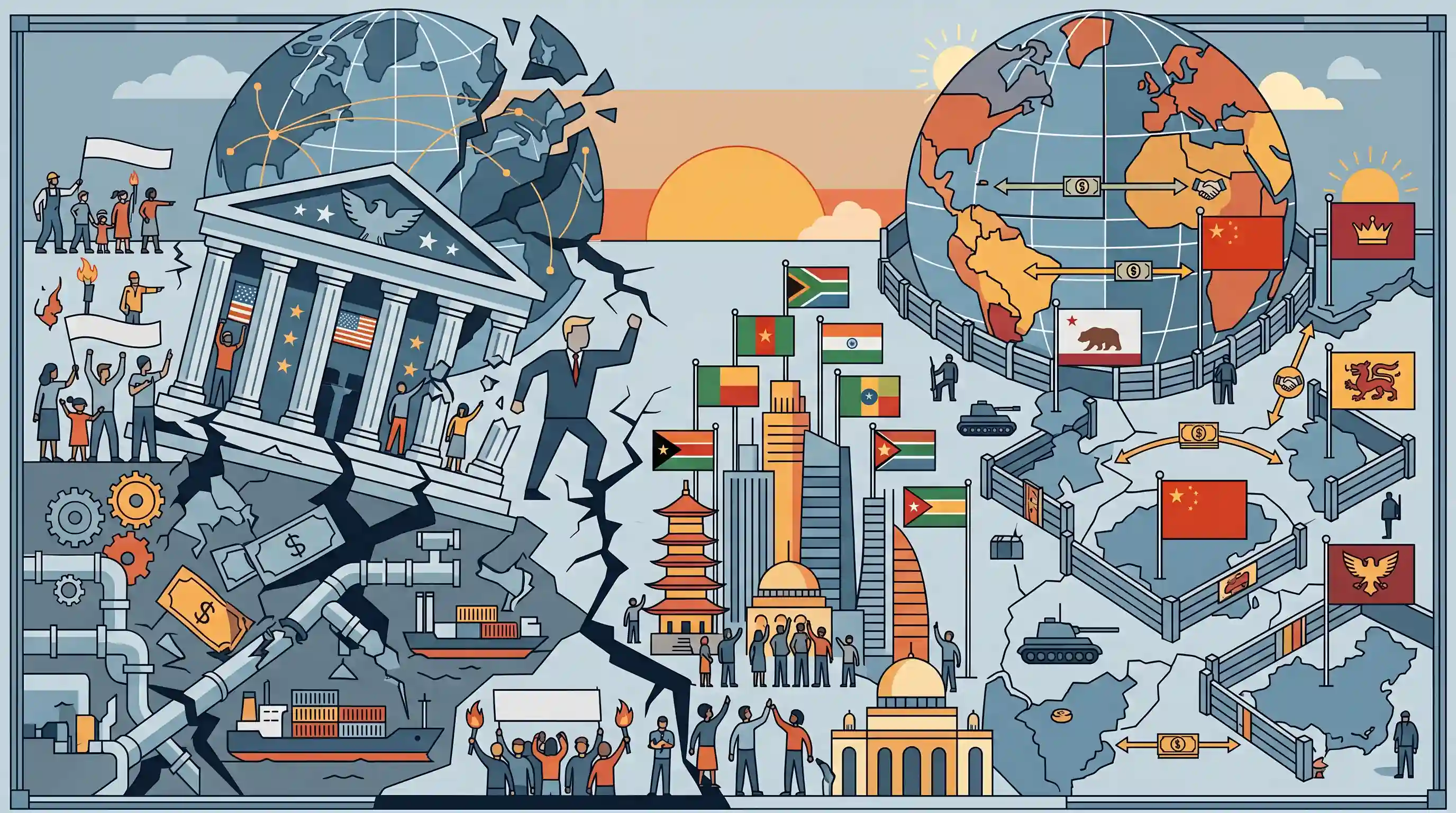
The article by Amitav Acharya posits that Donald Trump’s resurgence and his inward-looking policies are a consequence rather than the cause of the West's decline. The structural weakening of the liberal international order stems from long-standing economic inequalities spurred by hyper-globalization, the failure of neoliberalism, and the subsequent populist backlash. This internal fracturing in Western democracies is paralleled externally by the rise of the Global South and the transition towards a multipolar, transactional world. Consequently, the post-Cold War era is increasingly characterized by sovereign nationalism rather than Western-led universalism.
Key Points
- Donald Trump’s political rise and 'America First' approach are symptoms, not the root cause, of the structural decline of the Western liberal order.
- Economic inequalities fueled by hyper-globalization and the failures of neoliberal policies have created a populist backlash within Western democracies.
- The shift in global power, notably the rise of the Global South and a transition to multipolarity, was already eroding Western hegemony before Trump’s ascendance.
- The current geopolitical landscape is defined by waning globalization and a shift towards sovereign nationalism and transactional diplomacy over universalist, values-based internationalism.
Prelims Trap
"The Global South is a formal multilateral institution with binding economic treaties and a unified foreign policy."
The Global South is a loosely defined geopolitical concept grouping developing nations with shared histories, not a formal organization with binding rules or institutional architecture.
Static Concepts Connected
What are the core pillars of the US-led Liberal International Order (LIO)?
- Economic Pillar: Free trade, open markets, and global integration managed through Bretton Woods institutions (IMF, World Bank, WTO).
- Political Pillar: Promotion of liberal democracy, universal human rights, and the rule of law on a global scale.
- Security Pillar: Collective security frameworks and international alliances, heavily underpinned by American military hegemony and pacts like NATO.
What is Hyper-globalization and why did it trigger a populist backlash?
- The Concept: Deep, rapid economic integration post-1990s prioritizing unregulated capital flows and supply chain offshoring over domestic labor protections.
- Economic Fallout: It created severe wealth concentration and deindustrialization in Western working classes, fueling domestic inequalities.
- Populist Backlash: This inequality triggered the rise of inward-looking, protectionist leaders promising to restore national sovereignty over globalism.
Cross-Topic Patterns
Protectionism paralyzing WTO mechanisms
Western sovereign nationalism has directly led to blocked appointments in the WTO's Appellate Body, crippling global trade enforcement to favor unilateral tariffs and domestic subsidies.
BRICS+ and Multipolar Leverage
As the West's universalist order fractures, the Global South uses expanded platforms like BRICS+ and G20 to demand structural reforms in IMF quotas and the UNSC.

Mains GS2 will likely ask how India's 'multi-alignment' navigates the global shift from a rules-based liberal order to a transactional one.
Linked PYQs · 2
Linked PYQs · 2
- 2025MainsGS2
"With the waning of globalization, post-Cold War world is becoming a site of sovereign nationalism.” Elucidate.
- 2021MainsGS2
“The USA is facing an existential threat in the form of a China, that is much more challenging than the erstwhile Soviet Union.” Explain.
