US Section 122 Tariffs and Trade Implications for Indian Exports
Source:Indian Express ↗
Why It Matters
The article highlights the practical implications of shifting global trade regimes from multilateralism to protectionism. Understanding unilateral trade mechanisms like Section 122 helps aspirants analyze how domestic laws in major economies impact international supply chains, Indian exports, and overall macroeconomic stability.
Summary
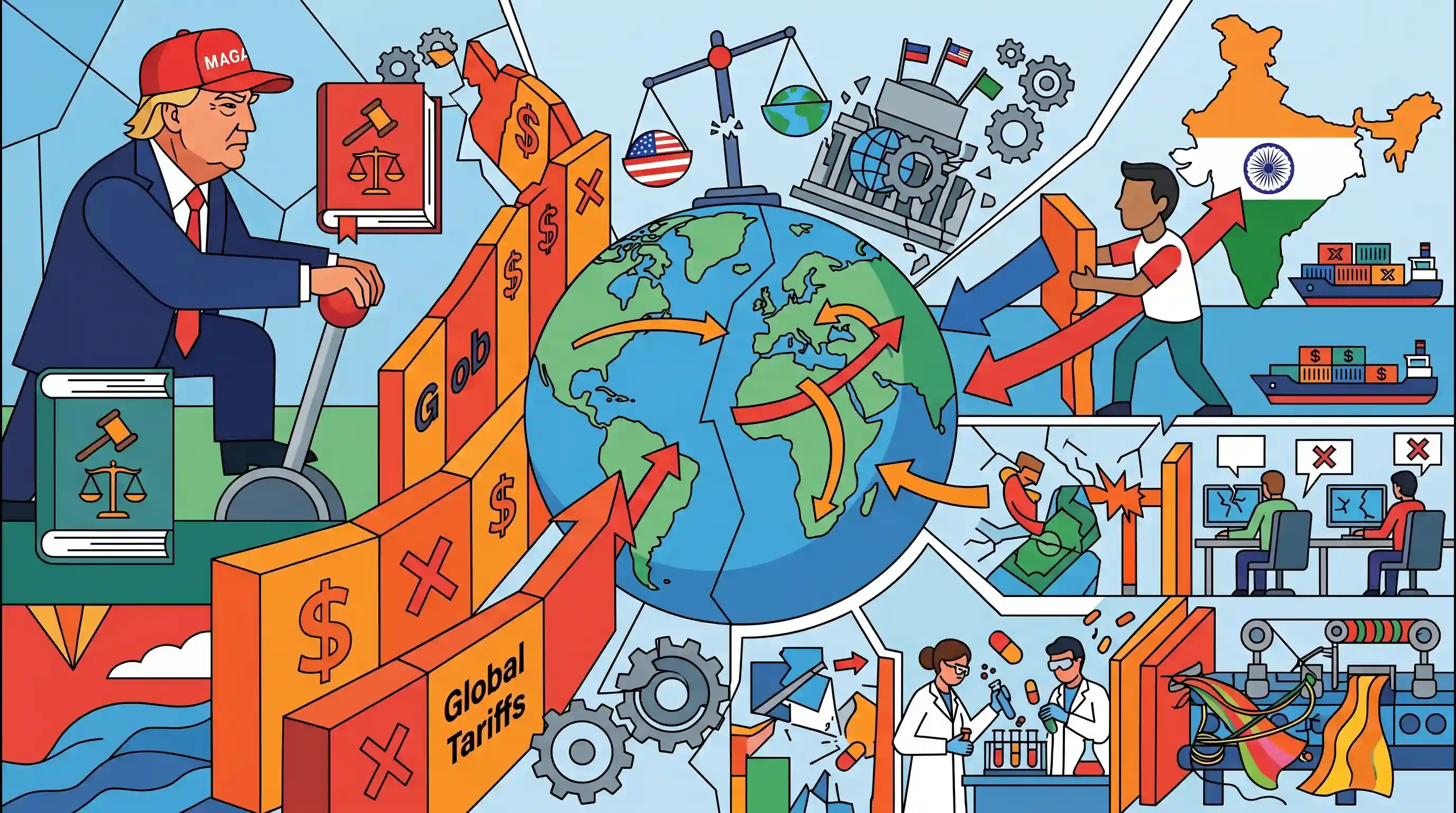
Donald Trump's proposed global tariffs, relying on Section 122 of the US Trade Act of 1974, reflect a significant pivot toward protectionism in US trade policy. The provision allows temporary import restrictions to correct balance-of-payments deficits, but utilizing it for broad global tariffs could disrupt the established World Trade Organization (WTO) framework. For India, which maintains a substantial trade surplus with the US, these measures pose a direct threat to export-driven sectors like IT, pharmaceuticals, and textiles. The proposal highlights broader challenges for the Indian economy in navigating a global trading environment increasingly characterized by protectionism, tariff barriers, and bilateral friction.
Key Points
- Section 122 of the US Trade Act of 1974 permits the US President to temporarily impose tariffs or quotas (historically up to 15%) to address large balance-of-payments deficits.
- Donald Trump's proposal to use this provision for sweeping global tariffs signals a major escalation in protectionist trade policies, threatening to bypass WTO norms.
- India, which maintains a significant trade surplus with the US, could face major tariff barriers affecting key export sectors such as IT, pharmaceuticals, and textiles.
- The shift towards broad import restrictions could spark retaliatory measures from global trading partners, disrupting international supply chains and challenging India's macroeconomic stability.
Important Terms
Section 122 of the Trade Act of 1974

U.S. law authorizing the President to impose temporary import surcharges (up to 15%) or quotas to address fundamental balance-of-payments deficits or dollar instability.
UPSC context
GS Paper II/III; tests knowledge of unilateral trade tools and their impact on Indian exports.
Balance of Payments (BoP)
A systematic record of all economic transactions between residents of a country and the rest of the world, including the current and capital accounts.
UPSC context
GS Paper III (Economy); fundamental concept for understanding external sector stability and trade deficits/surpluses.
World Trade Organization (WTO)
International body regulating global trade rules. It generally prohibits unilateral tariff hikes, favoring multilateral negotiations and non-discriminatory trade practices.
UPSC context
GS Paper II; focuses on international institutions and India's role in global trade governance.
Protectionism
Economic policy of shielding domestic industries from foreign competition through tariffs, quotas, or subsidies, often at the expense of global trade integration.
UPSC context
GS Paper II/III; relates to the effect of developed countries' policies on India's strategic and economic interests.
Trade Surplus
An economic condition where the value of a nation's exports exceeds its imports; a major driver of current US-India trade tensions.
UPSC context
GS Paper III; key metric for analyzing bilateral trade relations and currency dynamics.
Section 301 (Trade Act of 1974)
U.S. provision allowing investigations into foreign trade practices deemed 'unfair' or 'discriminatory,' often leading to retaliatory unilateral tariffs.
UPSC context
GS Paper II; tests understanding of coercive trade diplomacy and its impact on India's IT and pharma sectors.
Prelims Trap
India is shielded from Section 122 tariffs because it runs a persistent trade deficit with the US.
While India has a large overall global trade deficit, it consistently maintains a significant trade SURPLUS with the US, which makes it a target for these tariffs.
Static Concepts Connected
How does the WTO framework handle balance-of-payments (BoP) difficulties?
- GATT Article XII: GATT Article XII allows member countries to restrict imports to safeguard their external financial position and balance of payments.
- Temporary nature: Such restrictions must be temporary, price-based (like import surcharges), and applied non-discriminatorily across all WTO members.
- IMF Consultation: The WTO relies on the IMF's assessment of the member's financial situation to validate the necessity of BoP trade restrictions.
What are the key characteristics of India-US bilateral trade?
- Top Partner: The US consistently ranks as one of India's top two trading partners and its largest overall export destination.
- Trade Surplus: Unlike its trade with China or oil-producing nations, India enjoys a substantial merchandise and services trade surplus with the US.
- Key Exports: Major Indian exports driving this surplus include pharmaceuticals, IT services, textiles, and gems and jewellery.
Cross-Topic Patterns
Unilateralism overriding WTO dispute mechanisms
Invoking domestic laws like Section 122 bypasses the WTO's paralyzed Appellate Body, signaling a broader shift from rules-based multilateralism to pure unilateral protectionism.
BoP tariffs and Currency Watchlists
The US often couples trade-surplus targets with its Treasury's Currency Manipulator watchlist, directly linking domestic macroeconomic management (GS3) with international relations (GS2).

A GS2 mains question will likely link US domestic trade laws bypassing the WTO to the direct impact on India's export-led growth.
Linked PYQs · 3
Linked PYQs · 3
- 2025MainsGS3
What are the challenges before the Indian economy when the world is moving away from free trade and multilateralism to protectionism and bilateralism? How can these challenges be met?
- 2018MainsGS3
How would the recent phenomena of protectionism and currency manipulations in world trade affect macroeconomic stability of India?
- 2019MainsGS2
‘What introduces friction into the ties between India and the United States is that Washington is still unable to find for India a position in its global strategy, which would satisfy India's national self-esteem and ambitions.’ Explain with suitable examples.
