Navigating shifts in global energy trade under US policies
Source:Indian Express ↗
Why It Matters
Understanding the intersection of global energy trade and protectionist policies is crucial for UPSC aspirants. It forms the core of India's foreign policy challenges under changing US leadership, relevant for GS Paper 2 (International Relations) and GS Paper 3 (Energy Security). Questions often test how global geopolitical shifts impact India's strategic interests and import dependence.
Summary
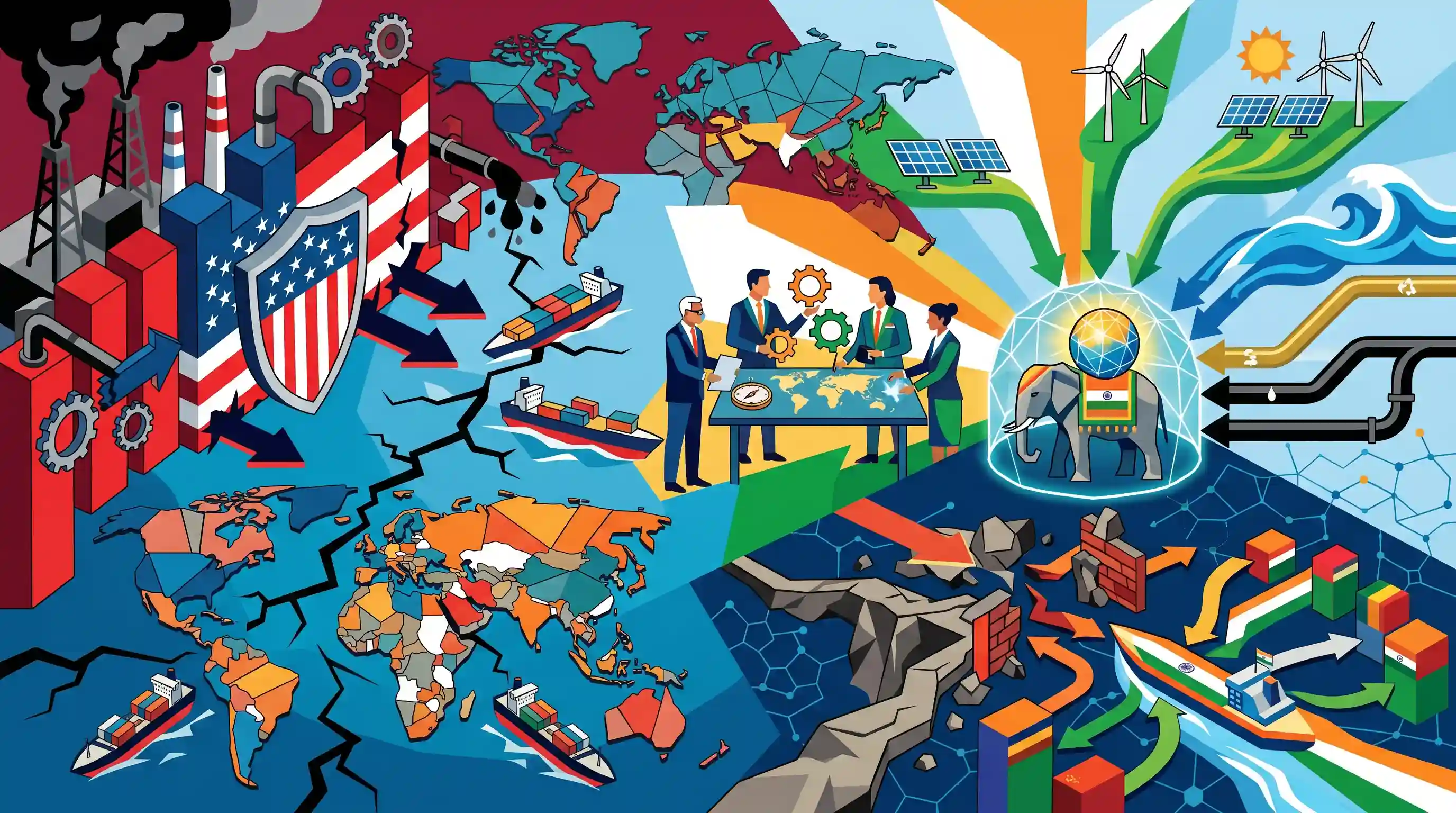
The article examines the transformative impact of the Trump administration's anticipated energy and trade policies on global markets. With a focus on increased domestic fossil fuel production and trade protectionism, the US is poised to disrupt existing energy supply chains. This shifting geopolitical landscape mandates that countries develop new diplomatic and negotiation skills to secure their energy needs. For major importers like India, the changing dynamics underscore the urgency of diversifying energy sources, navigating complex bilateral trade wars, and integrating energy security seamlessly into overarching foreign policy and strategic planning.
Key Points
- The return of Trump-era policies signals a shift towards 'America First' trade protectionism and increased US fossil fuel production, fundamentally altering global energy dynamics.
- Disruptions in established global energy supply chains are expected due to potential tariffs and aggressive trade negotiations by the US.
- Nations will require new strategic and diplomatic skills to manage energy trade, focusing on bilateral negotiations rather than relying solely on multilateral frameworks.
- For India, heavily dependent on energy imports, navigating this new era necessitates diversifying energy sources, securing critical supply chains, and deftly balancing relationships with global powers.
- The geopolitical landscape will increasingly see the weaponization of energy trade, compelling importers to integrate energy security more tightly with broader foreign policy objectives.
Prelims Trap
India's highest share of crude oil imports now comes from the United States due to the Strategic Energy Partnership.
While India is boosting US crude imports to diversify, Russia and Middle Eastern nations (Iraq, Saudi Arabia) remain India's top crude oil suppliers.
Static Concepts Connected
What is the status and purpose of India's Strategic Petroleum Reserves (SPR)?
- Current Locations: Phase I includes underground rock caverns at Visakhapatnam, Mangaluru, and Padur, holding a total capacity of 5.33 MMT.
- Strategic Buffer: Designed to provide a buffer against short-term global supply disruptions, currently covering approximately 9.5 days of India's crude requirement.
- Managing Agency: Managed by Indian Strategic Petroleum Reserves Limited (ISPRL), a special purpose vehicle under the Ministry of Petroleum and Natural Gas.
Which Indian Ocean choke points are critical for India's energy trade?
- Strait of Hormuz: The primary transit bottleneck for crude oil shipments moving from the resource-rich Persian Gulf directly to India.
- Bab-el-Mandeb: Connects the Red Sea to the Gulf of Aden; crucial for the transit of US crude and LNG arriving via the Atlantic.
- Strait of Malacca: A vital passage for potential energy shipments from Far East Russia and for securing broader Indo-Pacific trade lines.
Cross-Topic Patterns
Energy Security + Maritime Choke Points
The shift towards US crude and LNG forces India to secure sea lines of communication passing through the Atlantic and Indian Oceans, elevating the strategic importance of the Western IOR.
Bilateralism vs. WTO Multilateralism
As the US bypasses WTO frameworks for aggressive bilateral energy tariffs, India’s economic diplomacy must pivot to FTA-style mini-deals and strategic partnerships to secure energy exemptions.

Expect a 2026 Mains question linking US trade protectionism, India's 89% oil import dependency, and maritime security in the Indian Ocean.
Linked PYQs · 4
Linked PYQs · 4
- 2025MainsGS2
"Energy security constitutes the dominant kingpin of India's foreign policy, and is linked with India's overarching influence in Middle Eastern countries.” How would you integrate energy security with India's foreign policy trajectories in the coming years?
- 2018MainsGS2
What are the key areas of reform if the WTO has to survive in the present context of "Trade War', especially keeping in mind the interest of India?
- 2024MainsGS2
Discuss the geopolitical and geostrategic importance of Maldives for India with a focus on global trade and energy flows. Further also discuss how this relationship affects India's maritime security and regional stability amidst international competition ?
- 2012MainsGS2
Discuss the likely negative impact of the protectionist measures proposed by the US on India's software industry.
