US Imposes Asymmetric Tariffs Under Bilateral Philippine Trade Deal
Source:Indian Express ↗
Why It Matters
This development is a textbook example of the global shift from multilateral free trade to protectionist bilateralism. It is highly relevant for GS3 economics and GS2 international relations, providing a concrete case study for analyzing the impact of weaponized tariffs on global trade norms and developing economies.
Summary
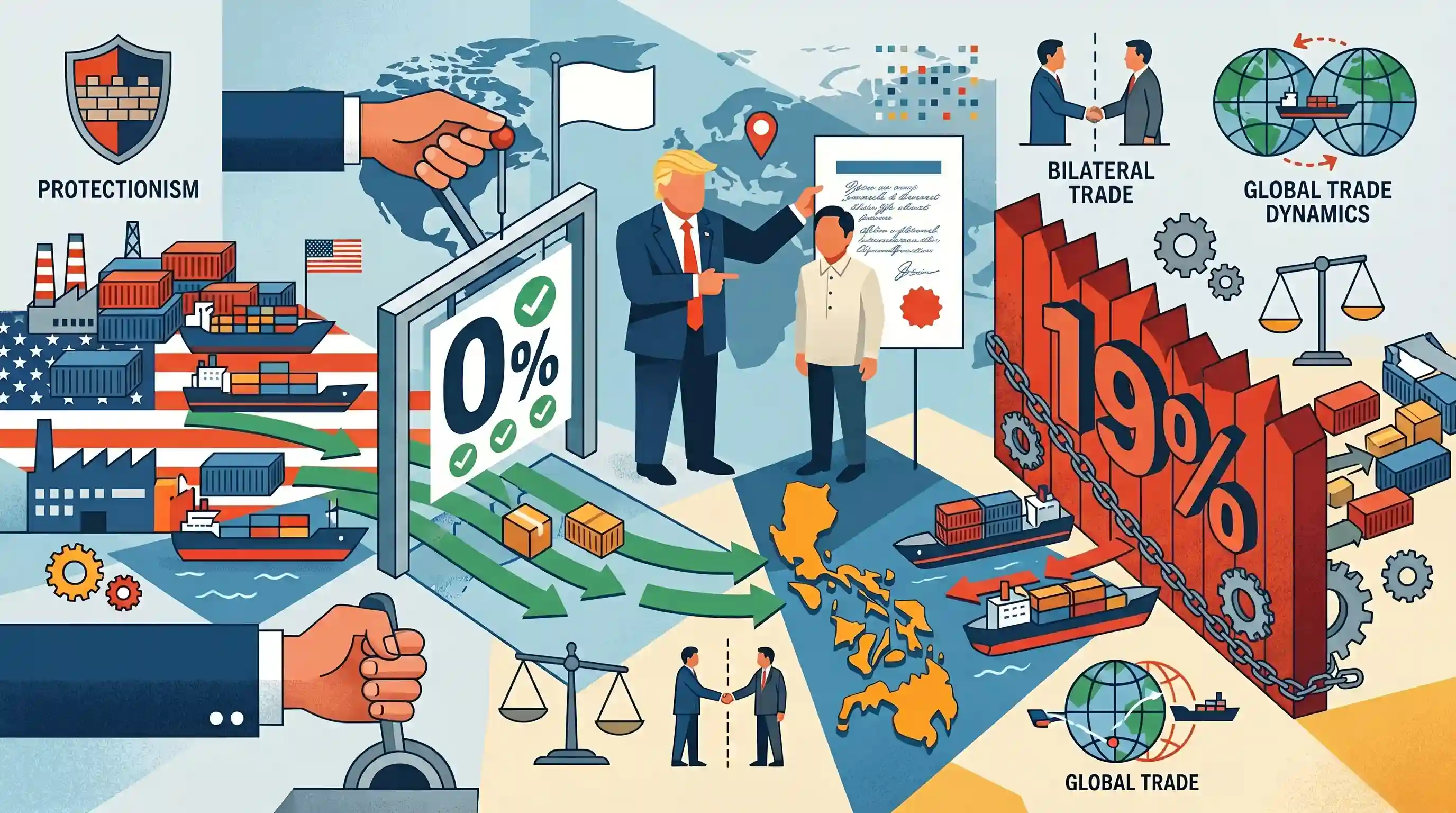
US President Donald Trump announced an asymmetric trade agreement with the Philippines, wherein US exports will enter the Philippines duty-free, while Philippine exports to the US will face a 19% tariff. Finalized after a meeting with Philippine President Ferdinand Marcos Jr., the deal highlights the US administration's aggressive 'America First' protectionist stance. It serves as a clear example of utilizing tariff threats as leverage to secure favorable, unilateral trade terms, marking a stark departure from traditional reciprocal free trade principles.
Key Points
- US President Donald Trump finalized a bilateral trade deal with the Philippines following a meeting with President Ferdinand Marcos Jr.
- The agreement features a highly asymmetric tariff structure: US goods exported to the Philippines will face zero tariffs, while Philippine goods exported to the US will incur a 19% tariff.
- This arrangement reflects Trump's 'America First' protectionist trade policy, utilizing the threat of high tariffs to extract unilateral concessions.
- The deal exemplifies a broader global shift away from multilateral free trade norms towards aggressive bilateralism and managed trade.
Prelims Trap
Developed nations can legally enforce non-reciprocal, asymmetric tariffs against developing nations in bilateral FTAs under WTO rules.
WTO's GATT Article XXIV requires FTAs to mutually eliminate duties. Non-reciprocal preferences (S&DT) are legally allowed only *in favor* of developing nations, never against them.
Static Concepts Connected
What are the key exceptions to the WTO's Most-Favoured-Nation (MFN) principle?
- Free Trade Agreements: GATT Article XXIV permits bypassing MFN if nations form an FTA or Customs Union that mutually eliminates duties on 'substantially all trade'.
- Special & Differential Treatment: Allows developed nations to offer non-reciprocal tariff concessions (like the Generalized System of Preferences) to benefit developing countries.
- Trade Remedies: Allows targeted tariffs like Anti-dumping or Countervailing duties to counter specific unfair trade practices (like dumping or illegal subsidies) by individual nations.
Cross-Topic Patterns
Indo-Pacific alliances vs Protectionist trade
The Philippines is a core US security ally against China, yet faces punitive tariffs. This highlights a growing divergence between domestic geoeconomic protectionism and global geopolitical security frameworks.
WTO Appellate Body paralysis
Blatantly asymmetric bilateral deals thrive because the WTO's dispute settlement mechanism remains crippled, leaving developing nations without institutional recourse against unilateral actions by superpowers.

Expect a 2026 prelims statement testing GATT Article XXIV exceptions (FTAs) vs. Special & Differential Treatment in non-reciprocal trade.
Linked PYQs · 2
Linked PYQs · 2
- 2025MainsGS3
What are the challenges before the Indian economy when the world is moving away from free trade and multilateralism to protectionism and bilateralism? How can these challenges be met?
- 2020MainsGS2
What is the significance of Indo-US defence deals over Indo-Russian defence deals? Discuss with reference to stability in the Indo-Pacific region.
