Transgender Persons Amendment Bill faces implementation concerns
Source:Indian Express ↗
Why It Matters
The article sheds light on the practical implementation challenges of social justice legislation in India. For UPSC aspirants, it illustrates how bureaucratic complexity in amendments can defeat the purpose of welfare schemes for vulnerable groups like transgender persons, serving as an excellent case study for GS2 answers on social justice and public policy.
Summary
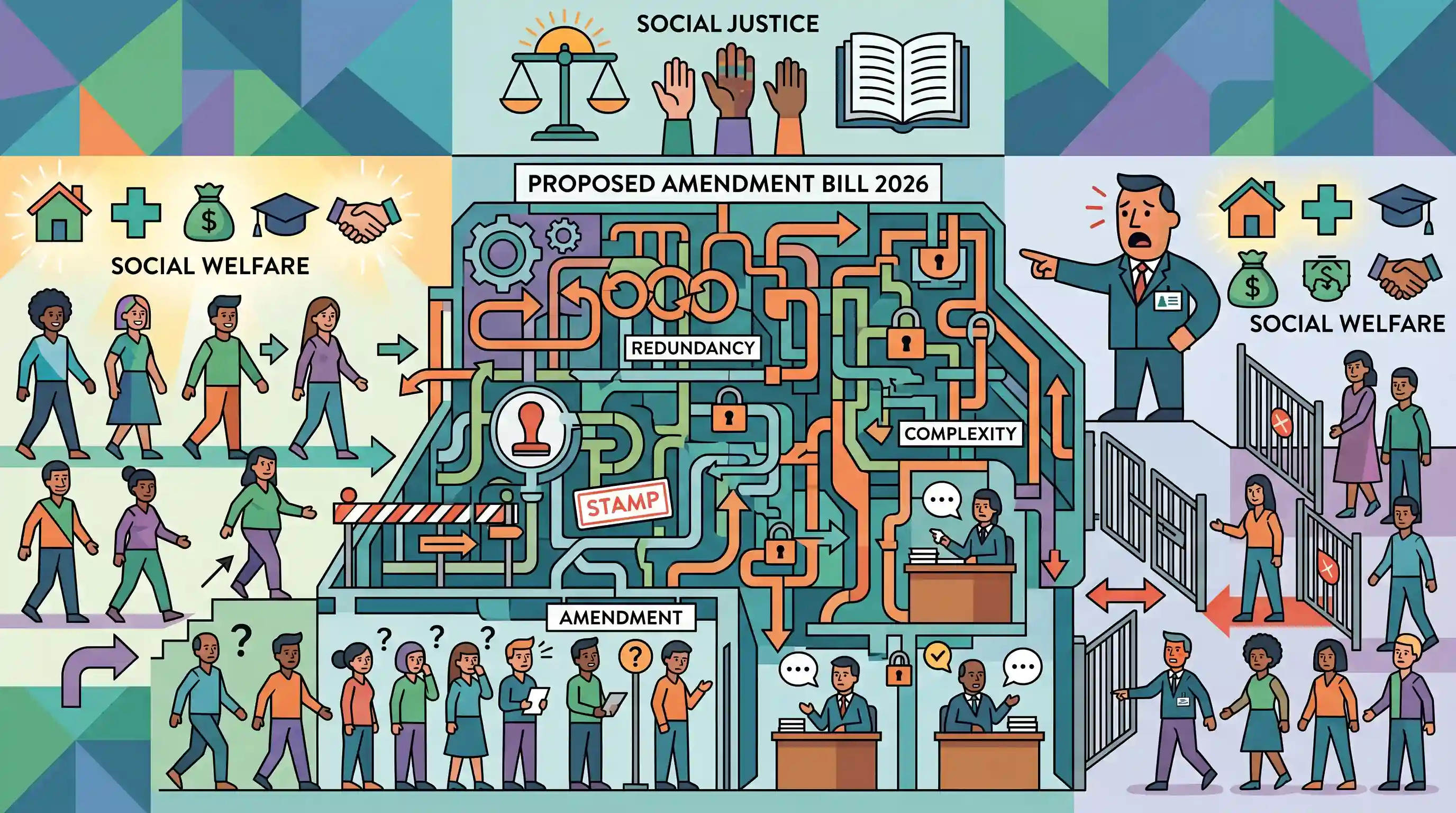
The Vice-President of the Maharashtra Transgender Board has raised alarms over the proposed Transgender Persons (Protection of Rights) Amendment Bill, 2026, describing it as redundant and overly complicated. Critics argue that the bureaucratic hurdles introduced by the amendment could inadvertently exclude genuine transgender individuals from accessing essential social welfare schemes. This highlights the recurring challenge in public policy where complex regulatory frameworks meant for the protection of vulnerable sections can become barriers to effective social justice.
Key Points
- The Vice-President of the Maharashtra Transgender Board has expressed strong opposition to the proposed Transgender Persons (Protection of Rights) Amendment Bill, 2026.
- The proposed amendment is criticized for being redundant and introducing complicated procedures that may act as administrative hurdles.
- There is a significant concern that the revised provisions could inadvertently exclude genuine beneficiaries within the transgender community from accessing welfare and social justice schemes.
- The opposition from the state-level board highlights a disconnect between top-down legislative amendments and the practical, on-ground realities of vulnerable sections seeking state support.
Important Terms
Transgender Persons (Protection of Rights) Amendment Bill, 2026

A 2026 proposal narrowing the definition of "transgender," removing the right to self-identification, and mandating medical board verification for identity certificates, aiming to prevent benefit fraud.
UPSC context
GS II: Social Justice; tests understanding of legislative changes affecting vulnerable sections and constitutional rights like self-determination.
Transgender Persons (Protection of Rights) Act, 2019
The principal legislation providing legal recognition to transgender persons, prohibiting discrimination in education, employment, and healthcare, and establishing the National Council for Transgender Persons.
UPSC context
GS II: Governance and Laws for Vulnerable Sections; essential for discussing the evolution of transgender rights in India.
NALSA v. Union of India (2014)
The landmark Supreme Court ruling that recognized transgender persons as a "third gender" and upheld the fundamental right to self-determine one's gender identity under Article 21.
UPSC context
GS II: Indian Constitution and Judiciary; a benchmark for judicial activism and expansion of Fundamental Rights.
Self-perceived Gender Identity
The principle that an individual's own sense of their gender is the sole basis for legal recognition, without requiring medical intervention or state approval.
UPSC context
GS II: Social Justice; relates to individual autonomy, dignity, and the conflict between medical gatekeeping and personal rights.
Maharashtra Transgender Welfare Board
A state-level statutory body responsible for implementing welfare schemes, issuing identity certificates, and protecting the rights of transgender individuals within Maharashtra.
UPSC context
GS II: Statutory Bodies; illustrates the role of state-level institutions in executing social welfare policies.
Prelims Trap
"The NALSA judgment mandated certification by a Medical Board to legally recognize a person as third gender."
The NALSA judgment (2014) and the original 2019 Act established "self-perceived gender identity". Medical gatekeeping is proposed in the 2026 Amendment Bill, not the original framework.
Static Concepts Connected
What were the key directives of the NALSA v. Union of India (2014) verdict?
- Third Gender: Legally recognized transgender individuals as a distinct "third gender" for the first time in India.
- Self-determination: Upheld the right to self-identification of gender without requiring any medical intervention or sex reassignment surgery.
- Fundamental Rights: Affirmed that fundamental rights under Articles 14, 15, 16, 19, and 21 apply equally to transgender individuals.
What is the mandate and composition of the National Council for Transgender Persons (NCTP)?
- Statutory Body: It is a statutory body constituted under the Transgender Persons (Protection of Rights) Act, 2019.
- Chairperson: It is headed by the Union Minister of Social Justice and Empowerment.
- Advisory Role: Advises the Central Government on formulating policies, programs, and legislation for the welfare of transgender persons.
Cross-Topic Patterns
Targeting mechanisms & exclusion errors
The shift from self-declaration to medical certification mirrors Aadhaar-linked PDS exclusions. Strict bureaucratic gatekeeping often transforms "inclusion policies" into exclusionary barriers for the most marginalized groups.
NALSA vs. Legislative Amendments
The 2026 amendment's proposed medical boards conflict with the Supreme Court's NALSA mandate of "self-perceived identity," highlighting a classic friction point between constitutional jurisprudence and legislative framing.

Expect a multi-statement Prelims question comparing NALSA's "self-determination" rights against the 2019 Act and 2026 Bill mechanisms.
Linked PYQs · 3
Linked PYQs · 3
- 2019MainsGS2
Performance of welfare schemes that are implemented for vulnerable sections is not so effective due to absence of their awareness and active involvement at all stages of policy process. Discuss.
- 2020PrelimsGS1
In India, Legal Services Authorities provide free legal services to which of the following type of citizens? 1. Person with an annual income of less than ₹ 1,00,000 2. Transgender with an annual income of less than ₹ 2,00,000 3. Member of Other Backward Classes (OBC) with an annual income of less than ₹ 3,00,000 4. All Senior Citizens Select the correct answer using the code given below:
- 2023MainsGS2
“Development and welfare schemes for the vulnerable, by its nature, are discriminatory in approach.” Do you agree? Give reasons for your answer.
