Transgender persons amendment act impact on gender affirmative care
Source:The Hindu ↗
Why It Matters
The article highlights the intersection of healthcare access, bodily autonomy, and state legislation concerning marginalized communities. For UPSC, it is crucial for GS-2 under mechanisms, laws, institutions, and Bodies constituted for the protection and betterment of vulnerable sections, as well as issues relating to the development and management of Social Sector/Services relating to Health.
Summary
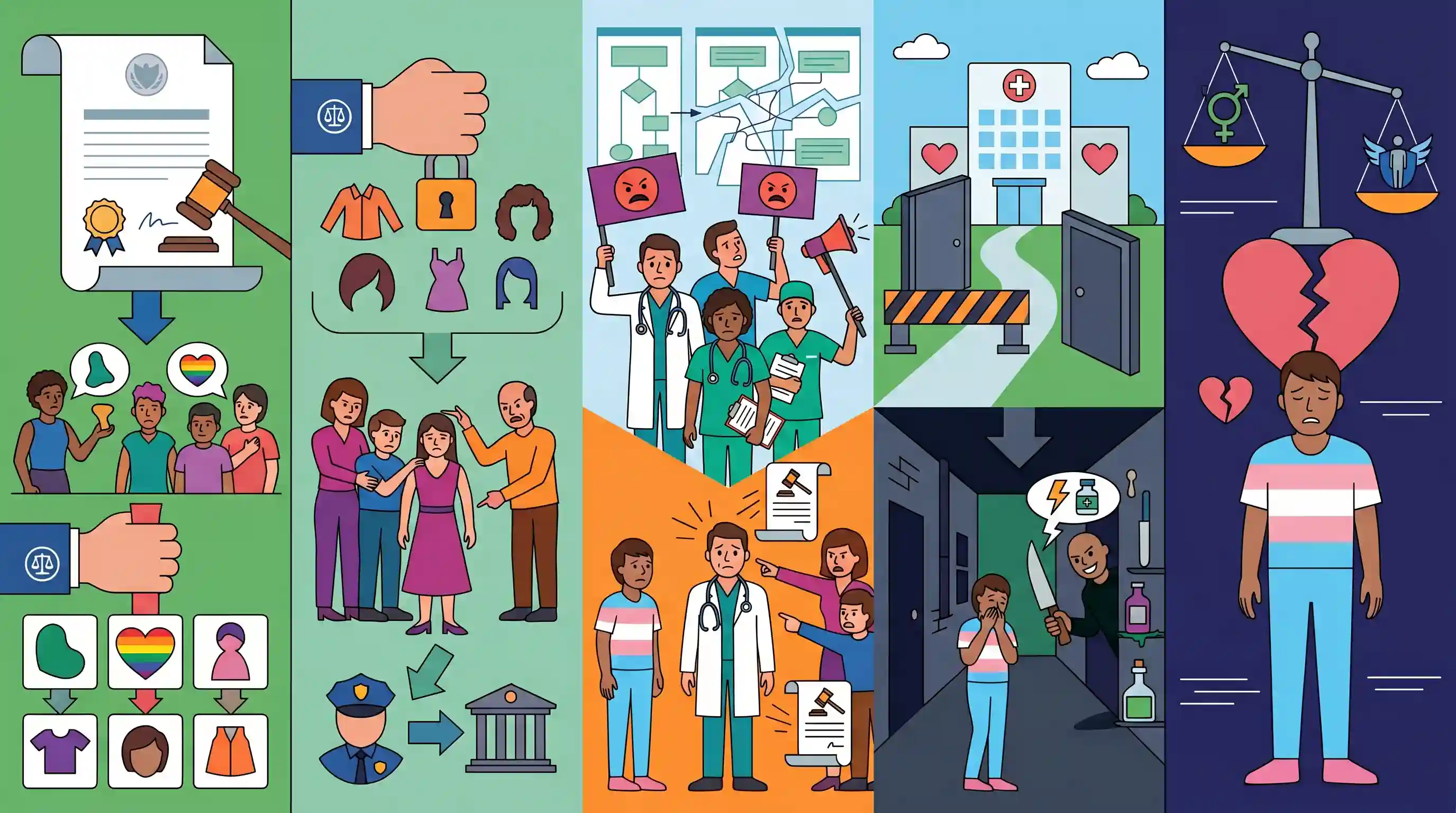
The Transgender Persons (Protection of Rights) Amendment Act 2026 has sparked significant backlash from health practitioners and advocacy groups in India. The amendment narrows the definition of a transgender person, removes the right to self-identification, and criminalizes forcing someone to present a transgender identity. Doctors and organizations like the Indian Association of Aesthetic Plastic Surgeons fear these changes will disrupt established treatment protocols and expose medical professionals to lawsuits from unsupportive families. This legal ambiguity threatens to drastically reduce access to gender-affirmative care, potentially driving transgender and non-binary individuals toward unsafe procedures and quackery, thereby severely impacting their fundamental right to health.
Key Points
- Health practitioners warn that the Transgender Persons (Protection of Rights) Amendment Act 2026 will disrupt gender-affirmative care and create severe access barriers.
- The amendment narrows the definition of a transgender person, removes the right to self-identification, and criminalizes 'compelling' someone to outwardly present a transgender identity.
- Medical professionals fear legal repercussions from families opposing gender-affirmative care, which could lead to a rise in unsafe medical procedures and quackery.
- The government claims the provisions are meant to prevent forced conversions and abuse, rather than to restrict 'legitimate' gender-affirmative care.
- Organizations like IAAPS, Mariwala Health Initiative, and Jan Swasthya Abhiyan have condemned the amendment for reinforcing outdated notions and restricting the right to health for marginalized gender identities.
Important Terms
Transgender Persons (Protection of Rights) Amendment Act, 2026

A 2026 legislative revision that narrows the definition of transgender persons, replaces self-identification with medical certification, and criminalizes certain presentation-related coercion, sparking concerns over bodily autonomy.
UPSC context
GS Paper II: Social Justice/Polity; tests knowledge of legislative changes affecting vulnerable sections and fundamental rights.
Right to Self-Identification
The legal principle, upheld in the 2014 NALSA judgment, allowing individuals to determine their own gender identity without mandatory medical intervention or biological proof.
UPSC context
GS Paper II: Judiciary; examines the conflict between individual autonomy and state certification processes.
NALSA vs Union of India (2014)
A landmark 2014 Supreme Court ruling that recognized transgender individuals as the 'third gender' and affirmed their fundamental rights under Articles 14, 15, 16, 19, and 21.
UPSC context
GS Paper II: Social Justice; the foundational legal precedent for transgender rights and affirmative action in India.
Gender-Affirmative Care (GAC)
A range of social, psychological, behavioral, and medical interventions (including hormone therapy and surgery) designed to support and affirm an individual’s gender identity.
UPSC context
GS Paper II: Governance/Health; relates to healthcare policy and the rights of marginalized communities.
Jan Swasthya Abhiyan (JSA)
A national network of civil society organizations and health activists in India (formed in 2001) advocating for the 'Right to Health' and equitable healthcare access.
UPSC context
GS Paper II: Social Justice; represents civil society's role in influencing public health policy and rights.
Indian Association of Aesthetic Plastic Surgeons (IAAPS)
The representative body of board-certified plastic surgeons in India, involved in setting standards for aesthetic procedures and gender-affirmative surgeries.
UPSC context
GS Paper II: Social Justice/Health; highlights the intersection of medical ethics, professional standards, and legal compliance.
Prelims Trap
The Transgender Persons Amendment Act 2026 upholds the NALSA judgment by legally enshrining the absolute right to self-identification of gender.
Aspirants often assume new acts expand rights. The 2026 Amendment explicitly REMOVES self-identification, contradicting the core libertarian principle of the 2014 NALSA judgment.
Static Concepts Connected
What were the core directives of the NALSA vs. Union of India (2014) judgment?
- Self-Identification: Recognized the fundamental right to self-identify one's gender (male, female, or third gender) under Article 21.
- Third Gender: Legally recognized transgender persons as a distinct "third gender" for the purpose of safeguarding their rights.
- Reservations: Directed the Centre and States to treat them as socially and educationally backward classes (SEBC) for affirmative action.
How is the Right to Health implicitly and explicitly protected under the Indian Constitution?
- Article 21: Expanded by judicial interpretation (e.g., Bandhua Mukti Morcha) to include the right to health and medical care under the Right to Life.
- Article 47 (DPSP): Obliges the State to raise the level of nutrition, the standard of living, and improve public health.
Cross-Topic Patterns
NALSA Doctrine vs. Legislative Gatekeeping
The shift from self-identification in the NALSA judgment to mandatory medical boards in 2026 highlights the recurring tension of legislative amendments curtailing rights expanded by judicial activism.
Medical Ethics vs. State Regulation
Similar to the MTP (Amendment) Act and Surrogacy laws, this act criminalizes certain medical practices, forcing doctors to navigate a tightrope between state mandates and fundamental patient care.

Expect a Mains Q on the tension between judicial progressivism (NALSA) and legislative protectionism in marginalized community rights.
Linked PYQs · 1
Linked PYQs · 1
- 2023MainsGS2
Explain the constitutional perspectives of Gender Justice with the help of relevant Constitutional Provisions and case laws.
