AI Language Models Driving Regional Expansion of Data Centres
Source:Indian Express ↗
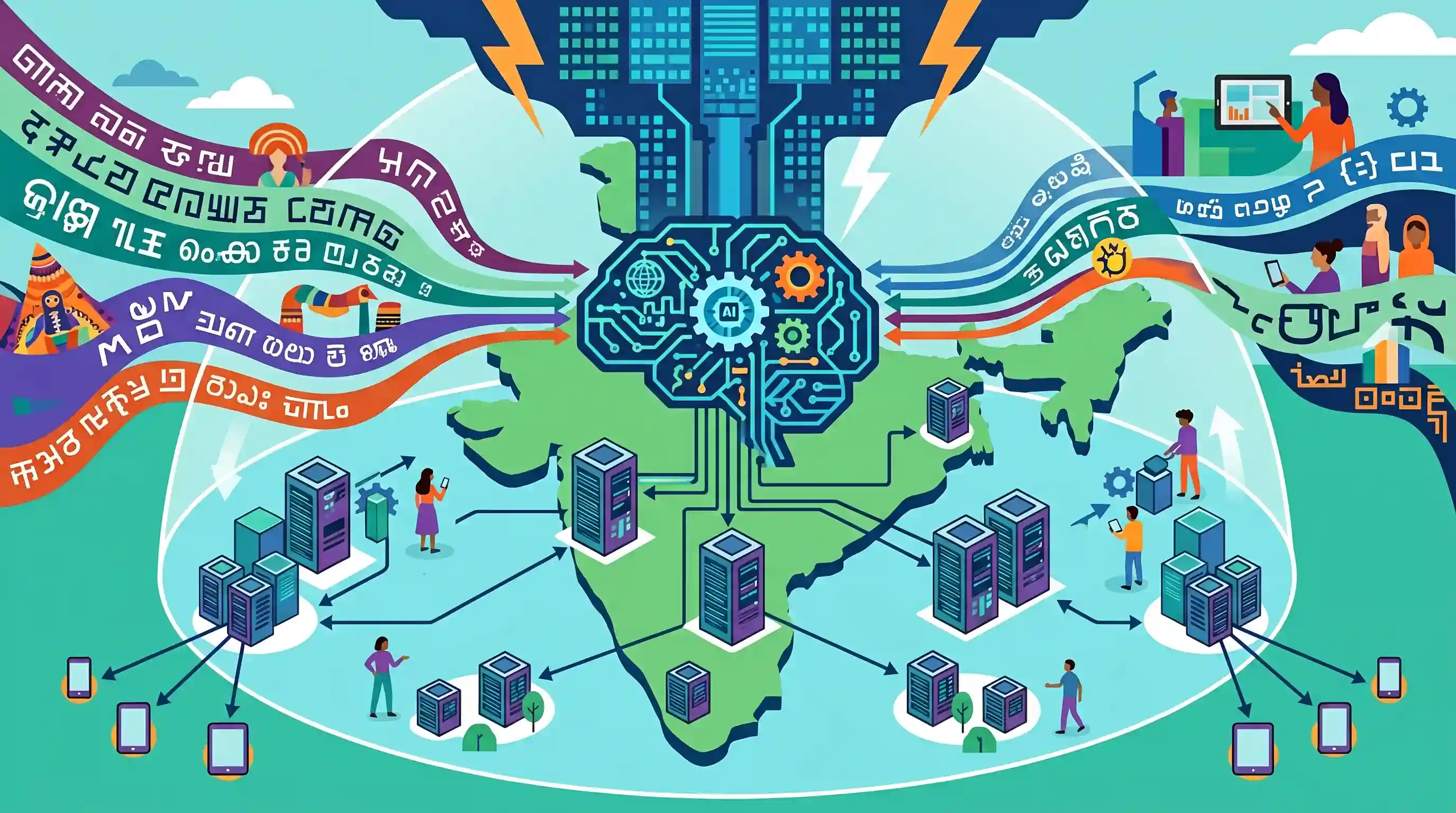
Why It Matters
Understanding the intersection of AI development, linguistic diversity, and digital infrastructure is crucial for grasping India's trajectory in the global tech landscape. It highlights the physical infrastructure requirements (data centres) needed to support abstract technological goals (indigenous AI), which is highly relevant for GS3 topics on IT, infrastructure, and indigenous technology development.
Summary
The development and training of Artificial Intelligence (AI) models tailored to the Indian context, particularly those focusing on the country's diverse regional languages, are expected to be major catalysts for the expansion of data centres. As initiatives to build indigenous Large Language Models (LLMs) gain momentum, the sheer computational requirements dictate the need for robust digital infrastructure. This demand is likely to drive the establishment of data centres not just in tier-1 cities, but across various regions, thereby supporting data localization, reducing latency, and fostering a decentralized digital economy in alignment with the goals of Digital India.
Key Points
- The training of Artificial Intelligence (AI) models specifically tailored to the Indian context and regional languages necessitates a massive increase in localized computational power.
- This demand for localized compute is projected to drive a significant regional expansion of data centres across India, moving beyond major metropolitan hubs.
- Developing indigenous Large Language Models (LLMs) capable of processing India's linguistic diversity requires data to be processed and stored closer to its source, reinforcing the need for data localization.
- The regional proliferation of data centres will not only support initiatives like the IndiaAI Mission and Bhashini but also boost local digital economies and reduce latency for end-users.
Important Terms
IndiaAI Mission

A comprehensive national initiative with a ₹10,371 crore outlay aimed at building a robust AI ecosystem, including sovereign compute infrastructure (10,000+ GPUs), foundational models, and datasets.
UPSC context
GS Paper III (Science & Technology/Economy). Tests knowledge of sovereign tech capacity, digital sovereignty, and high-tech infrastructure development.
Digital India
The flagship umbrella program launched in 2015 to transform India into a digitally empowered society and knowledge economy through improved infrastructure, e-governance, and digital literacy.
UPSC context
GS Paper II (Governance) and Paper III (Infrastructure). Essential for understanding e-governance, bridging the digital divide, and public service delivery.
Bhashini
An AI-powered translation platform under the National Language Translation Mission (NLTM) designed to break language barriers by providing digital services and content in 22+ Indian languages.
UPSC context
GS Paper II (Social Justice/Governance) and Paper III (S&T). Tests awareness of digital inclusion, linguistic diversity, and AI-driven social empowerment.
Prelims Trap
"The DPDP Act 2023 explicitly mandates physical localization of all personal data within Indian territory."
The DPDP Act 2023 uses a "negative list" approach for cross-border data transfers, rather than a blanket mandate requiring all personal data to be physically localized in India.
Static Concepts Connected
What distinguishes Edge Computing from traditional Cloud Computing?
- Processing Location: Edge processes data geographically closer to the device/source, whereas cloud relies on centralized, distant server farms.
- Latency Reduction: By avoiding round-trips to central servers, Edge provides real-time, low-latency processing critical for AI apps and autonomous systems.
- Bandwidth Efficiency: Edge mitigates bandwidth chokepoints by filtering and processing massive datasets locally before sending only essential insights to the cloud.
Why are AI and Generative AI data centres uniquely resource-intensive?
- Power Density: Generative AI server workloads consume 80-150 KW per rack, vastly exceeding the 15-20 KW required by traditional cloud servers.
- Cooling Footprint: High-density GPU clusters generate extreme heat, demanding uninterrupted 24x7 cooling systems that consume massive volumes of local water resources.
Cross-Topic Patterns
AI scaling up Digital Public Infrastructure (DPI)
Initiatives like Bhashini integrate with existing DPIs (UPI, ONDC) via voice-assisted interfaces in regional languages, dramatically expanding digital financial inclusion for non-English speakers.
AI Compute capacity vs Net Zero targets
The exponential 24x7 power demand for 10,000+ GPU clusters creates a direct friction point with India's Net Zero 2070 targets, driving the policy push for 'Green Data Centres'.

Expect a multi-statement Prelims 2026 question linking Edge Computing, Bhashini's NLP mandate, and DPDP Act data transfer rules.
Linked PYQs · 3
Linked PYQs · 3
- 2020PrelimsGS1
With the present state of development, Artificial Intelligence can effectively do which of the following? 1. Bring down electricity consumption in industrial units 2. Create meaningful short stories and songs 3. Disease diagnosis 4. Text-to-Speech Conversion 5. Wireless transmission of electrical energy Select the correct answer using the code given below:
- 2023MainsGS3
What is the status of digitalization in the Indian economy? Examine the problems faced in this regard and suggest improvements.
- 2023MainsGS3
Introduce the concept of Artificial Intelligence (AI). How does Al help clinical diagnosis? Do you perceive any threat to privacy of the individual in the use of Al in healthcare?
