Passenger train derailment in Ulyanovsk region of Russia
Source:The Hindu ↗
Why It Matters
Although a minor localized event, it brings geographic focus to Russia's Ural region (relevant for World Geography mapping) and touches upon the broader global issue of transportation infrastructure safety and disaster resilience.
Summary
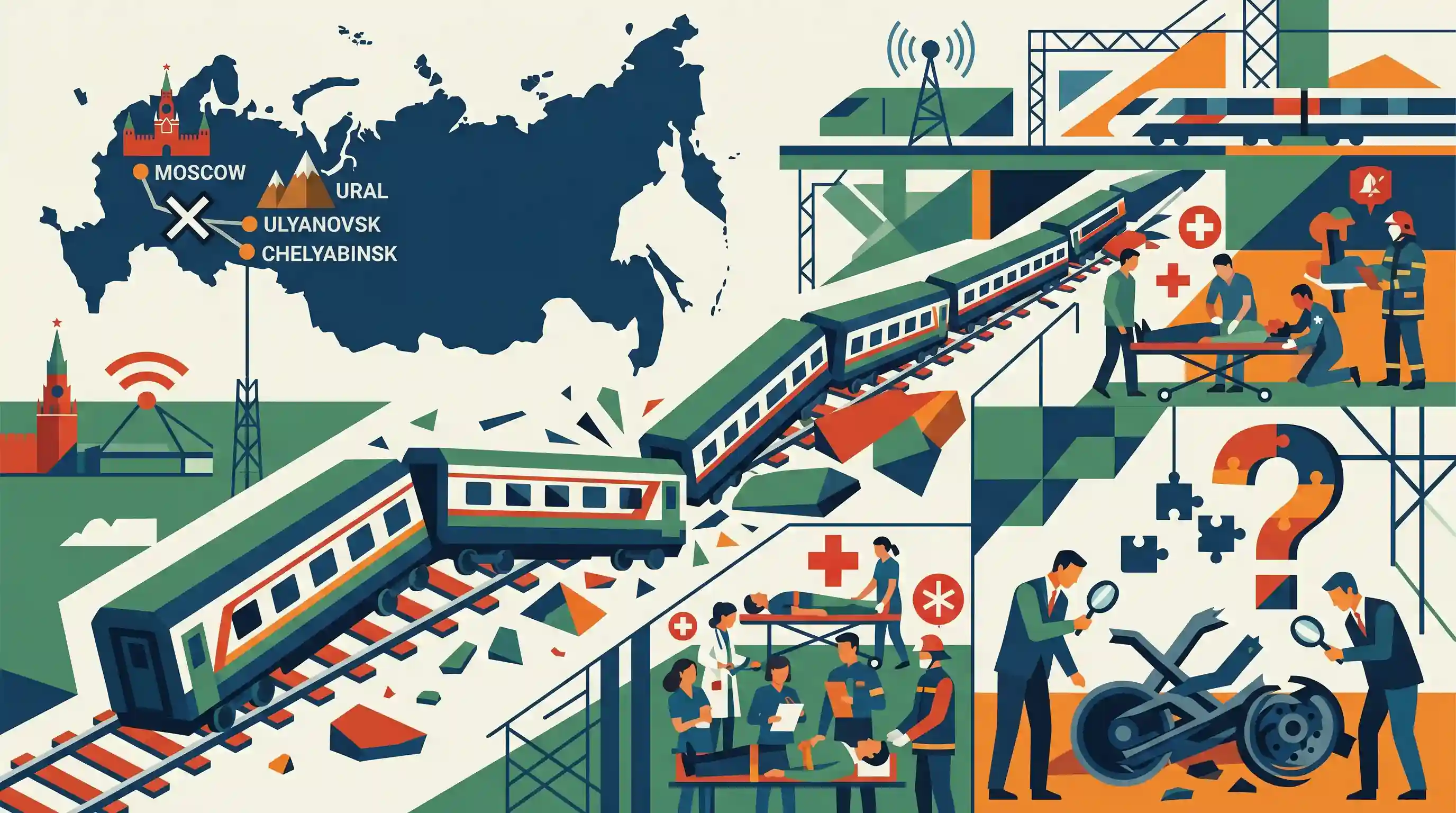
Seven people were injured when a passenger train derailed in Russia's Ulyanovsk region, approximately 900 km east of Moscow. The train was en route from Chelyabinsk in the Ural mountains to the capital. The cause of the incident, which saw seven carriages go off the tracks, remains unknown.
Key Points
- A passenger train travelling from Chelyabinsk in the Urals to Moscow derailed in the Ulyanovsk region of Russia.
- Seven train carriages went off the tracks, causing injuries to at least seven people.
- The exact cause of the derailment is currently unknown.
Prelims Trap
"The Volga River, Europe's longest river, flows south through Russia and discharges into the Black Sea."
The Volga River actually drains into the Caspian Sea, an endorheic basin. Aspirants frequently confuse its outfall with the Danube, which empties into the Black Sea.
Static Concepts Connected
What is the geographical significance of the Ural Mountains and the Volga River?
- Ural Mountains: Old fold mountains running north-to-south, acting as the traditional natural boundary between Europe and Asia. Highly rich in industrial minerals.
- Volga River: Europe's longest river, functioning as a major transport artery in western Russia. It discharges into the Caspian Sea, the world's largest inland body of water.
What are India's primary frameworks and initiatives for mitigating railway derailments?
- Kavach System: An indigenous Automatic Train Protection (ATP) system utilizing RFID technology and ultra-high frequency radio communication to trigger automatic braking and prevent collisions.
- Kakodkar Committee: A landmark high-level safety review committee that recommended establishing an independent statutory Railway Safety Authority and stopping the diversion of safety funds.
Cross-Topic Patterns
Old Fold Mountains & Industrial Corridors
The Urals share geological traits with other old fold mountains (like the Appalachians and Aravallis), functioning as heavily industrialized regions due to extensive mineral and coal deposits.
Disaster Mitigation in Railways
Global derailments prompt reviews of India's GS3 infrastructure goals, keeping focus on the deployment bottlenecks of the indigenous Kavach ATP system and the Anil Kakodkar Committee recommendations.

Expect a match-the-following Prelims question on major world rivers and their terminal water bodies (Volga-Caspian, Danube-Black Sea).
Linked PYQs · 2
Linked PYQs · 2
- 2024MainsGS3
What is disaster resilience? How is it determined? Describe various elements of a resilience framework. Also mention the global targets of Sendai Framework for Disaster Risk Reduction (2015–2030).
- 2024PrelimsGS1
Consider the following information (Region — Name of the mountain range — Type of mountain): 1. Central Asia — Vosges — Fold mountain 2. Europe — Alps — Block mountain 3. North America — Appalachians — Fold mountain 4. South America — Andes — Fold mountain In how many of the above rows is the given information correctly matched?
