TRAI crackdown on spam mobile connections and consumer protection
Source:The Hindu ↗
Why It Matters
This article illustrates the regulatory enforcement mechanisms deployed by statutory bodies like TRAI to combat digital fraud, protect consumer privacy, and ensure telecom security.
Summary
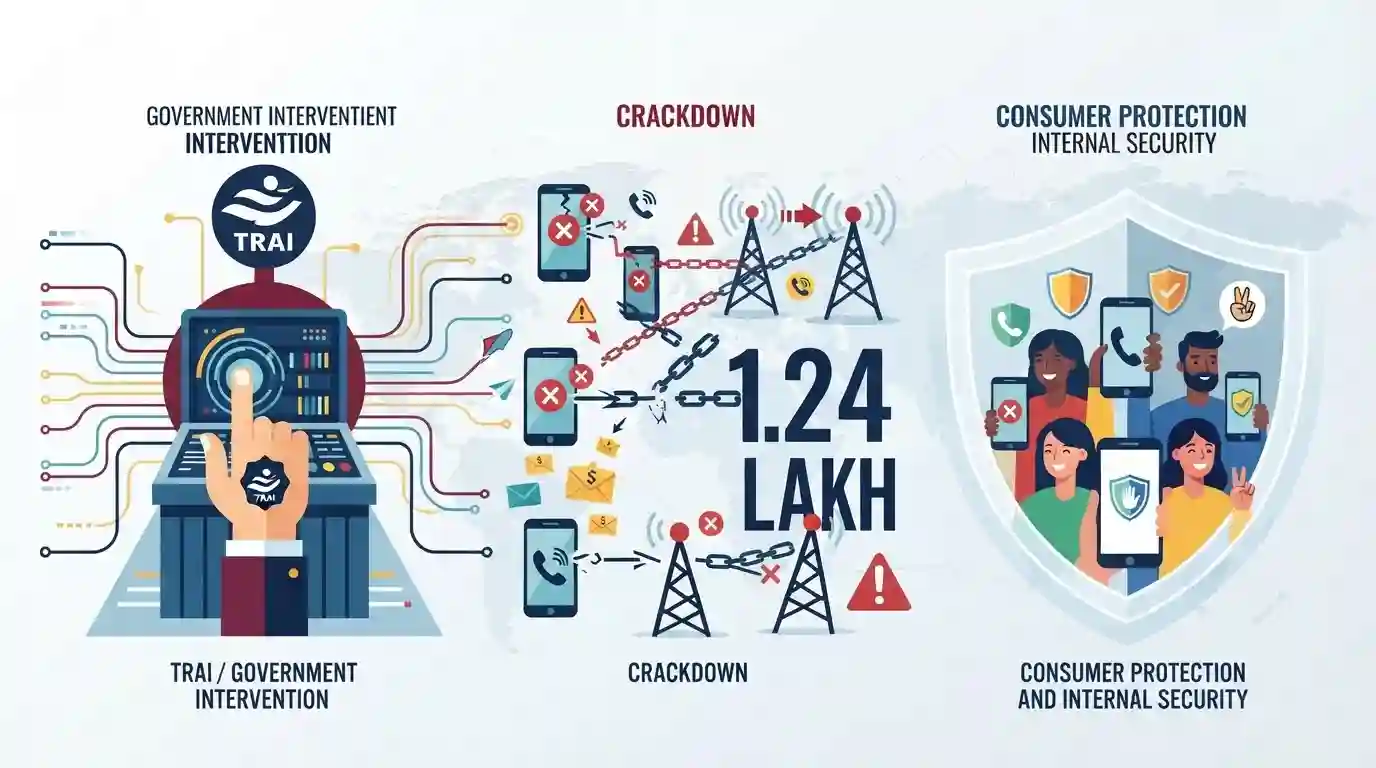
TRAI cracked down heavily on unsolicited commercial communication by barring or disconnecting over 1.24 lakh mobile connections in the July-September quarter, emphasizing robust telecom regulation and consumer protection against digital fraud.
Key Points
- TRAI barred and disconnected over 1.24 lakh mobile connections between July and September due to spam and unsolicited commercial communication.
- The crackdown aims to curb rising digital fraud, unsolicited telemarketing calls, and intrusive SMS messages.
- Highlights the growing role of regulatory authorities in enforcing consumer protection and digital security standards in telecommunications.
- Reinforces the interface between telecom regulation, digital privacy, and cybersecurity frameworks in India.
Important Terms
Telecom Regulatory Authority of India (TRAI)

An independent statutory body established in 1997 under the TRAI Act to regulate telecommunications services, fix tariffs, protect consumer interests, and ensure fair competition in India.
UPSC context
UPSC GS Paper II (Polity & Governance — Statutory Bodies) and GS Paper III (Economy/Technology — Telecom Sector Regulation).
TRAI
India's premier statutory regulator for the telecommunications sector, tasked with monitoring service quality, curbing unsolicited commercial communication, and safeguarding telecom consumers.
UPSC context
UPSC GS Paper III (Internal Security & Technology — Telecom Regulation and Consumer Protection).
Digital Personal Data Protection Act 2023
India's foundational legislation enacted in 2023 to regulate the processing of digital personal data, balancing citizens' privacy rights with lawful data usage by entities.
UPSC context
UPSC GS Paper II (Polity & Governance — Governance/Rights) and GS Paper III (Cyber Security & Information Technology).
Prelims Trap
TRAI cracked down heavily by arresting rogue telemarketers and seizing financial assets used in digital fraud.
Aspirants often assume TRAI can directly arrest telemarketers or freeze bank accounts, whereas its enforcement relies on barring telecom resources and directing TSPs (Telcos) to disconnect services.
Static Concepts Connected
What are the statutory powers and structural mandate of the Telecom Regulatory Authority of India (TRAI)?
- Statutory Body: Statutory origin established under the TRAI Act of 1997 to regulate telecom services and tariffs in India.
- Regulatory Role: Empowered to notify regulations on quality of service, interconnection, and curbing unsolicited commercial communication (UCC).
- Appellate Mechanism: Telecom Disputes Settlement and Appellate Tribunal (TDSAT) hears appeals against TRAI orders, separating regulation from dispute resolution.
Cross-Topic Patterns
Telecom Spam vs. Digital Personal Data Protection
TRAI's anti-spam regulations intersect with the DPDP Act 2023, where intrusive telemarketing violates consent frameworks and right to privacy.

TRAI's DLT framework and TCCCPR 2018 rules for commercial calls are prime candidates for a conceptual prelims match statement.
Linked PYQs · 2
Linked PYQs · 2
- 2024MainsGS3
Describe the context and salient features of the Digital Personal Data Protection Act, 2023.
- 2015MainsGS2
For achieving the desired objectives, it is necessary to ensure that the regulatory institutions remain independent and autonomous. Discuss in the light of the experiences in recent past.
