TRAI AI Guidelines and Telecom Sector Accountability Framework
Source:Indian Express ↗
Why It Matters
It highlights the evolving regulatory landscape for emerging technologies like AI in critical sectors such as telecommunications, directly linking technology governance with consumer data protection and accountability.
Summary
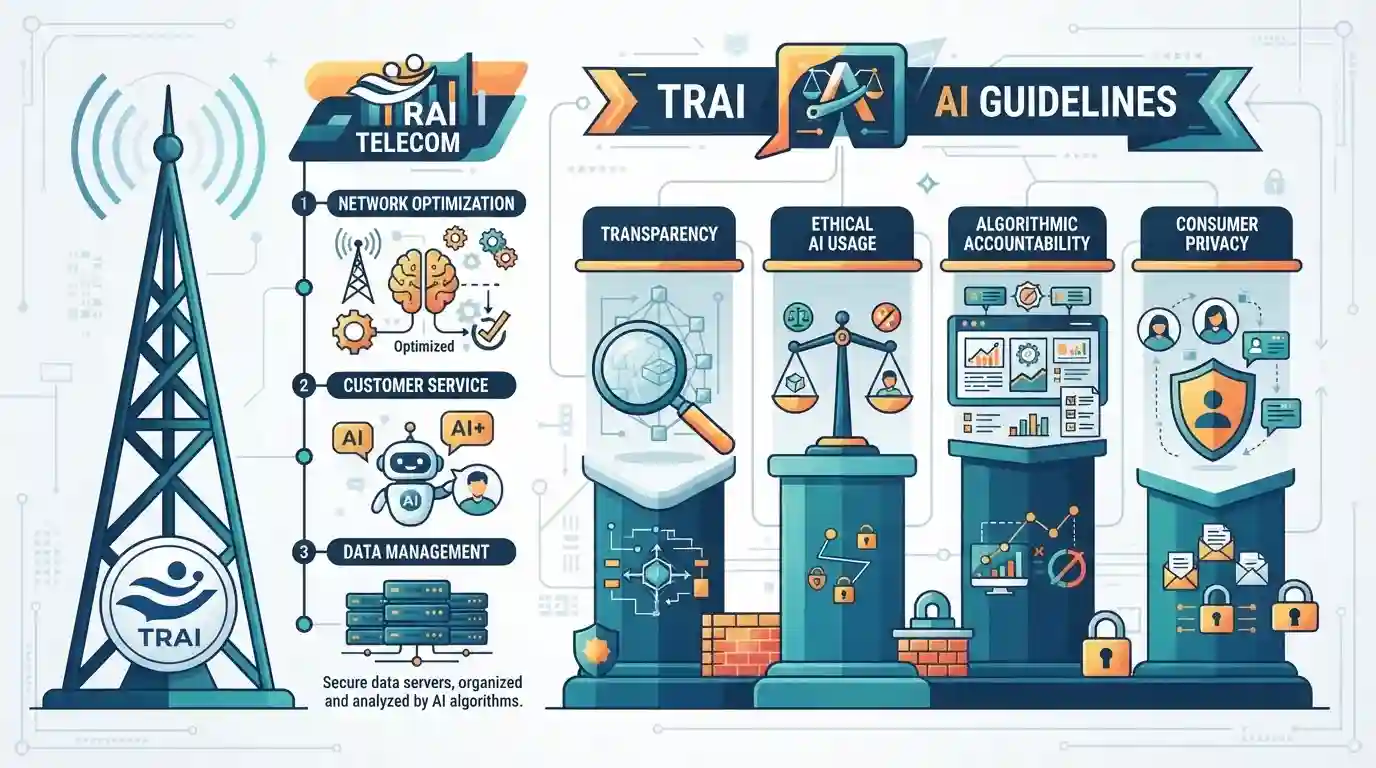
The Telecom Regulatory Authority of India (TRAI) has introduced new guidelines addressing the governance and accountability of Artificial Intelligence (AI) deployments within the telecom sector. As telecom companies increasingly adopt AI for network optimization, customer service chatbots, and data management, TRAI's framework focuses on transparency, ethical AI usage, algorithmic accountability, and safeguarding consumer privacy against potential abuses.
Key Points
- TRAI has proposed comprehensive guidelines focusing on accountability, transparency, and data protection in the deployment of Artificial Intelligence by telecom companies.
- The guidelines aim to address emerging challenges in AI-driven telecom services, such as algorithmic bias, consumer privacy, and network security.
- Telecom operators are expected to establish ethical governance frameworks and transparent grievance redressal mechanisms for AI applications.
- Emphasizes the co-regulation or statutory compliance model to balance technological innovation with consumer rights protection.
Important Terms
Telecom Regulatory Authority of India (TRAI)

An independent statutory body established under the TRAI Act, 1997, to regulate telecommunications services, tariffs, and ensure fair competition and consumer interest in India's telecom sector.
UPSC context
UPSC GS Paper III (Science & Tech / Economy): Tests regulatory bodies, telecom governance, and emerging tech policy frameworks.
Digital Personal Data Protection Act
India's apex legislative enactment governing the processing, storage, and privacy safeguards of citizens' digital personal data by entities (data fiduciaries).
UPSC context
UPSC GS Paper II & III (Polity/Cybersecurity): Tests fundamental rights (right to privacy), data governance, and digital regulation.
Department of Telecommunications
The principal central government department under the Ministry of Communications responsible for formulating telecom policies, issuing licenses, and managing national spectrum.
UPSC context
UPSC GS Paper III (Internal Security / Infrastructure): Tests administrative frameworks, telecom infrastructure, and national security oversight.
Prelims Trap
TRAI's statutory AI guidelines apply universally across all IT and tech startup sectors in India.
Aspirants often confuse TRAI with MeitY when assuming who issues statutory AI guidelines for telecom operators. TRAI issues recommendations and regulatory frameworks for telecom, while the Department of Telecommunications (DoT) and MeitY handle broader national AI strategies.
Static Concepts Connected
What are the core functions and constitutional/statutory status of TRAI in India?
- Statutory Basis: Statutory body established under the Telecom Regulatory Authority of India Act, 1997.
- Mandate: Regulates telecom services, fixes tariffs, ensures fair competition, and protects consumer interests.
- Binding Nature: Recommendations of TRAI are generally not binding on the central government/DoT, though specific licensing terms draw from its framework.
Cross-Topic Patterns
Telecom Regulation + Digital Personal Data Protection
TRAI's push for algorithmic accountability in telecom parallels similar efforts by MeitY and DPDP Act enforcement for digital platforms.
AI Governance + Critical Infrastructure Cybersecurity
As critical telecom infrastructure adopts autonomous AI, regulatory compliance directly intersects with national cybersecurity and threat mitigation frameworks.

TRAI's AI governance guidelines + DPDP Act compliance for telecom operators is a high-yield match for Mains GS-3 questions.
Linked PYQs · 3
Linked PYQs · 3
- 2023MainsGS3
Introduce the concept of Artificial Intelligence (AI). How does Al help clinical diagnosis? Do you perceive any threat to privacy of the individual in the use of Al in healthcare?
- 2022MainsGS3
What are the different elements of cyber security ? Keeping in view the challenges in cyber security, examine the extent to which India has successfully developed a comprehensive National Cyber Security Strategy.
- 2024MainsGS3
Describe the context and salient features of the Digital Personal Data Protection Act, 2023.
